
A pantry is one of those spaces that quietly decides how functional and “expensive” a kitchen feels. Most people think luxury kitchens are defined by marble countertops, big islands, or high-end appliances—but in reality, the pantry is where daily life actually happens. And if that space is messy, poorly organized, or visually chaotic, the entire kitchen experience feels lower quality, no matter how expensive everything else looks.
The problem is that pantries are usually treated as storage dumping zones instead of designed systems. Things get placed wherever there is space: half-open packets, mismatched jars, random containers, and expired items pushed to the back. Over time, this creates visual clutter and functional stress. You stop knowing what you have, you buy duplicates, and cooking becomes slower than it should be. It doesn’t matter how big your pantry is—without structure, it will always feel messy.
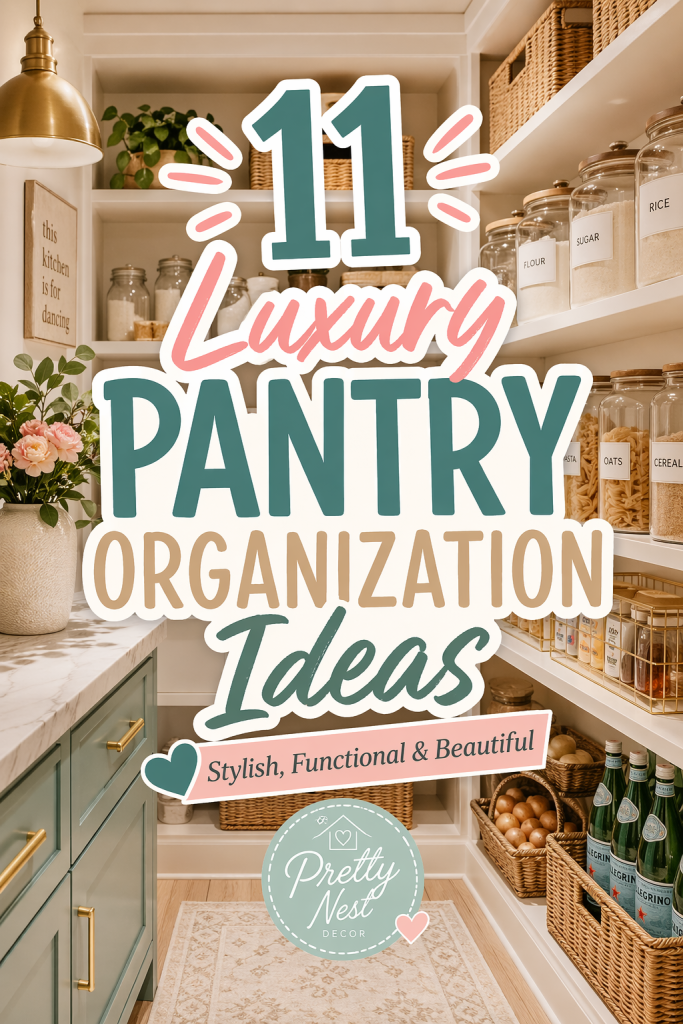
Luxury pantry design is not about having more storage. It’s about having controlled visibility. Everything has a place, everything is easy to access, and nothing feels hidden or forgotten. The difference is not just aesthetic—it directly affects efficiency. A well-organized pantry reduces decision fatigue, saves time, and makes everyday cooking feel smoother and more intentional.
Another major misunderstanding is that luxury organization means complicated systems. In reality, the best pantry setups are simple, repeatable, and easy to maintain. If a system is too complex, it fails within a week. True luxury design works because it fits into real routines, not just staged photos. It looks clean because it stays clean, not because it was styled once.
Lighting also plays a much bigger role in pantry spaces than people realize. Dark shelves make even organized items look messy. Poor visibility leads to wasted products and forgotten ingredients. Luxury pantries always prioritize visibility first—clear containers, open shelving balance, and lighting that removes shadows. When everything is visible, everything becomes easier to manage.
Another key element is uniformity. Clutter is not just physical—it’s visual inconsistency. Different packaging sizes, colors, and shapes create noise in the brain even when the space is technically organized. That’s why high-end pantry systems rely heavily on matching containers, labels, and structured layouts. It’s not about being minimal for aesthetics; it’s about reducing visual chaos so the brain can process the space faster.
But organization alone is not enough without zoning. Luxury pantries are divided into logical sections: breakfast zone, snacks zone, cooking essentials, baking items, beverages, and so on. This zoning system turns random storage into a functional map. Instead of searching, you simply move to the correct section. This is what makes professional kitchens efficient—and the same principle applies at home.
There is also a psychological side to pantry design. A cluttered pantry creates micro-stress every time you open the door. Even if you don’t consciously notice it, your brain registers disorder. Over time, this small stress adds up. On the other hand, a clean, structured pantry creates a sense of control. It makes daily routines feel easier and more intentional, even during busy days.
Luxury pantry organization also focuses on accessibility. Frequently used items should be easy to reach, while less-used items can be stored higher or deeper. This hierarchy prevents unnecessary movement and keeps daily cooking flow smooth. It may seem like a small detail, but it dramatically changes how efficient a kitchen feels.
Ultimately, pantry organization is not about perfection. It’s about systems that work in real life. The goal is not to create a showroom—it’s to create a space that stays functional without constant effort. When done right, a pantry stops being a storage problem and becomes a support system for your entire kitchen.
In this guide, you’ll explore 11 luxury pantry organization ideas that focus on real structure, not just aesthetic styling. These ideas are designed to improve visibility, efficiency, and long-term maintenance so your pantry doesn’t just look organized for a day—it stays organized in everyday life.
Because in luxury homes, organization is not decoration.
It’s design logic.
1. Clear Glass Jar System with Uniform Labels (Luxury Visual Order Method)
This is the foundation of every high-end pantry. If your pantry looks messy even when it’s “organized,” the problem is almost always visual inconsistency—not actual storage. Different packets, colors, and packaging styles create chaos for the eye, even if everything is technically in place.
What it is
A pantry system where all dry goods (rice, pasta, lentils, cereals, snacks) are transferred into matching clear glass or acrylic jars with consistent labeling. Everything becomes visible, uniform, and easy to identify at a glance.
It creates instant visual calm and structure.
How to implement it (practical steps)
This system is simple but must be consistent.
- Choose identical jar shapes (square or cylindrical for clean stacking)
- Use transparent material so contents are always visible
- Transfer all dry goods from original packaging into jars
- Create uniform labels (same font, same size, same placement)
- Group jars by category (breakfast, grains, snacks, baking)
- Keep frequently used items at eye level for easy access
If your pantry is small, start with only the most-used items first.
If your pantry is large, fully convert all dry goods into jars for maximum impact.
Best for
- Modern and minimalist kitchens
- Small or cluttered pantries
- People who want visual cleanliness
- Daily-use cooking spaces
This works best when you want your pantry to look instantly organized without effort every time you open it.
Pro tip
Use airtight lids to maintain freshness and prevent moisture damage—luxury organization must also be functional.
Mistake to avoid
Don’t mix different jar styles. Even small inconsistencies destroy the luxury uniform look.
2. Zoning System Pantry Layout (Functional Luxury Organization)
This is where real luxury organization begins—not in containers, but in structure. Most people randomly place items wherever they fit. That creates constant searching, duplication of products, and daily frustration. Luxury pantries solve this by creating logical zones.
What it is
A pantry layout divided into clearly defined sections based on use categories, such as breakfast zone, cooking essentials, baking area, snacks, beverages, and storage overflow. Each category has a fixed physical space.
It turns your pantry into a mapped system instead of random storage.
How to implement it (practical steps)
You don’t need renovation—just structure.
- Divide pantry into clear categories based on daily use
- Assign one shelf or section per category
- Label each zone visually or mentally for consistency
- Keep breakfast items together (cereals, oats, spreads)
- Keep cooking essentials near eye level (oil, spices, sauces)
- Store rarely used items higher or lower
If your pantry is small, combine similar categories but keep separation clear.
If your pantry is large, create strict zones with dedicated shelves.
Best for
- Family kitchens with frequent cooking
- Busy households
- Medium to large pantries
- People who want faster daily routines
This works best when you want to stop searching and start directly accessing what you need.
Pro tip
Place “daily use” items between waist and eye level—this reduces movement and improves speed.
Mistake to avoid
Don’t rearrange zones frequently. Stability is what keeps the system efficient.
3. Pull-Out Drawer Pantry System (Hidden Luxury Accessibility)
This is one of the most functional luxury pantry upgrades because it solves a major hidden problem: deep shelves. Items placed at the back of shelves are often forgotten, wasted, or duplicated. Pull-out systems eliminate that completely.
What it is
A pantry system using sliding drawers or pull-out baskets that allow full visibility of stored items without reaching into deep shelves. Everything comes forward with a simple pull, making access effortless and organized.
It creates both luxury feel and real efficiency.
How to implement it (practical steps)
This works best in built-in pantry units or modular storage.
- Install pull-out drawers or sliding baskets in pantry shelves
- Assign each drawer a category (snacks, spices, canned goods)
- Use shallow containers inside drawers for better visibility
- Avoid overfilling—keep space for easy sliding access
- Label drawer fronts for quick identification
- Maintain alignment so drawers glide smoothly
If you don’t have built-in systems, use portable pull-out bins instead.
If your pantry is deep, prioritize this system for bottom shelves first.
Best for
- Deep or narrow pantries
- Modern modular kitchens
- People who struggle with cluttered shelves
- High-efficiency cooking spaces
This works best when you want zero wasted space and full access to everything.
Pro tip
Group heavy items like cans or jars in lower drawers to avoid lifting strain.
Mistake to avoid
Don’t overload drawers. Overfilling destroys the smooth “luxury” movement and causes disorganization.
4. Tiered Shelf Riser System (Multi-Level Visibility Upgrade)
This is one of the simplest luxury pantry upgrades, but it changes everything in terms of visibility. Most pantries fail not because they lack space, but because items are hidden behind each other. When everything sits on a flat shelf, the back row becomes invisible—and that’s where chaos starts.
What it is
A tiered shelf system uses stepped risers or multi-level organizers inside shelves so items are displayed in layers instead of a single flat row. Each item becomes visible, accessible, and logically arranged.
It turns “hidden storage” into “display storage.”
How to implement it (practical steps)
This is an easy, non-permanent upgrade.
- Place tiered risers on pantry shelves (metal, acrylic, or wood)
- Arrange items in ascending levels—back higher, front lower
- Keep similar items grouped together (spices, cans, jars)
- Avoid overcrowding each tier—leave small breathing space
- Use uniform containers where possible for cleaner visuals
- Place frequently used items on front and middle levels
If your shelf is deep, use multiple risers side by side.
If your pantry is small, start with one shelf first and expand.
Best for
- Small to medium pantries
- Spice organization
- Canned goods and jars
- People who struggle with hidden items
Use clear or light-colored risers so they don’t visually clutter the shelf.
Mistake to avoid
Don’t stack items randomly on tiers. Each level should still follow a category structure.
5. Luxury Labeling System (Visual Consistency Control Method)
A pantry can be fully organized and still look messy if labeling is inconsistent. Luxury organization is not just about where things are—it’s about how clearly your brain can read the system at a glance. Labels are what turn storage into a designed system.
What it is
A uniform labeling system applied to all jars, containers, baskets, and drawers using the same font, size, and placement. It creates a clean, structured visual language across the entire pantry.
It removes confusion and improves aesthetic flow.
How to implement it (practical steps)
Consistency is more important than design complexity.
- Choose one label style (minimal, bold, or handwritten—never mix)
- Use waterproof or oil-resistant label material for durability
- Apply labels at the same height on all containers
- Keep wording simple (Rice, Sugar, Pasta, Snacks)
- Avoid decorative or overly complex fonts
- Group labels visually aligned for a grid-like appearance
If your pantry is small, label only main categories first.
If your pantry is large, extend labeling to subcategories.
Best for
- Glass jar pantries
- Open shelving systems
- Minimalist kitchens
- High-organization households
This works best when you want a clean, magazine-style pantry look.
Pro tip
Use black text on white or transparent labels for maximum clarity and luxury feel.
Mistake to avoid
Don’t mix handwritten labels with printed ones—it breaks visual consistency immediately.
6. Vertical Storage Stack System (Space Maximization Luxury Method)
Most pantry space is wasted vertically. People only use shelf surfaces but ignore the height above and below. Luxury pantry design focuses on maximizing vertical flow without making things feel crowded or inaccessible.
What it is
A system that uses stackable containers, vertical racks, and layered storage to fully utilize height inside shelves. Instead of spreading items horizontally, everything is built upward in structured layers.
It increases storage capacity without expanding space.
How to implement it (practical steps)
This method is about smart stacking, not random piling.
- Use stackable bins or containers that lock safely together
- Store lighter items on top, heavier items on bottom
- Group similar products into vertical stacks (snacks, packets, boxes)
- Use vertical racks for bottles or cans
- Avoid unstable stacking—everything should feel secure
- Keep frequently used items in easy-reach lower stacks
If your shelves are tall, create two vertical layers per shelf.
If your pantry is small, prioritize stackable systems only.
Best for
- Small kitchens with limited pantry space
- Apartments and compact homes
- Bulk storage organization
- High-efficiency storage needs
This works best when you want more storage without adding new shelves.
Pro tip
Choose transparent or semi-transparent stackable bins so you can see contents without unstacking everything.
Mistake to avoid
Don’t stack unstable containers loosely—luxury organization must also feel structurally safe, not messy or risky.
7. Open Shelf Display Pantry Styling (Luxury “Kitchen Boutique” Look)
This is where pantry design stops being purely storage and starts behaving like interior styling. Instead of hiding everything behind closed doors, selected items are intentionally displayed in a controlled, aesthetic way. The goal is not exposure—it’s curated visibility.
What it is
An open shelving pantry system where everyday essentials are arranged like a boutique display using matching containers, balanced spacing, and visual symmetry. It mixes functionality with decor-level presentation.
It turns pantry items into part of the kitchen aesthetic.
How to implement it (practical steps)
This requires restraint more than decoration.
- Use open shelves for visually pleasing items only (jars, bottles, baskets)
- Keep original packaging hidden or transferred into containers
- Arrange items in color harmony or size progression
- Leave intentional empty space—don’t fill every inch
- Group items by category but keep visual balance
- Add minimal styling elements like a small plant or tray
If your pantry is small, limit open shelving to one section only.
If your pantry is large, combine open + closed storage for balance.
Best for
- Modern luxury kitchens
- Aesthetic-focused homes
- Content creators or Pinterest-style interiors
- Organized households with stable routines
This works best when you want your pantry to feel like part of the interior design, not hidden storage.
Pro tip
Stick to neutral-toned containers (white, glass, beige) to maintain a calm luxury palette.
Mistake to avoid
Don’t overcrowd shelves—open storage only looks luxury when it has breathing space.
8. Hidden Basket System for Quick Clutter Control (Effortless Clean Look)
Every pantry has “mess items”—random packets, half-used snacks, or irregular shapes that don’t fit jars. Instead of letting them break visual order, luxury organization hides them in structured containment systems.
What it is
A basket-based storage system using uniform baskets or bins to group miscellaneous items while maintaining a clean exterior look. Everything inside may be mixed, but visually it appears controlled.
It’s structured chaos hidden inside clean design.
How to implement it (practical steps)
This system is about fast organization.
- Use identical baskets or bins for consistency
- Assign each basket a category (snacks, baking extras, backups)
- Place items loosely inside—no need for perfect arrangement
- Label baskets clearly on the front or top
- Store baskets in designated shelf zones
- Regularly empty and reset every few weeks
If your pantry gets messy often, this becomes your “reset system.”
If your pantry is already organized, use baskets for overflow only.
Best for
- Busy households
- Families with kids
- Pantries with mixed packaging items
- Quick-clean organization systems
This works best when you want your pantry to look clean even when real life is messy.
Pro tip
Choose woven, matte, or fabric baskets for a soft luxury feel instead of plastic bins.
Mistake to avoid
Don’t use random basket styles—uniformity is what keeps the luxury look intact.
9. Built-In Pantry Lighting System (Functional Luxury Illumination)
Lighting is the most ignored part of pantry organization, yet it is what makes everything else look premium. Even perfectly organized shelves can look dull or messy if they are poorly lit. Luxury pantries always prioritize visibility and atmosphere through lighting.
What it is
Integrated lighting inside pantry shelves, cabinets, or ceiling edges using LED strips or spotlights to illuminate every section clearly. It ensures no dark corners and enhances the visual clarity of all stored items.
It transforms storage into a showroom-like space.
How to implement it (practical steps)
This works best with planned shelving or minor upgrades.
- Install LED strip lights under each shelf or cabinet layer
- Use warm white lighting for a soft luxury glow
- Ensure even distribution—no harsh shadows or dark gaps
- Add motion sensors if possible for convenience
- Hide wiring for a clean, built-in finish
- Combine with glass jars for maximum visibility effect
If your pantry is small, focus lighting on upper shelves.
If your pantry is large, layer lighting across all levels.
Best for
- Modern luxury kitchens
- Walk-in pantries
- Dark or enclosed storage spaces
- High-end home renovations
This works best when you want your pantry to feel bright, clean, and high-end at all times.
Pro tip
Use diffused LED covers to avoid harsh glare on shiny containers.
Mistake to avoid
Don’t use cool blue-white lighting—it makes food storage look cold and uninviting.
10. Pull-Out Spice Rack Wall System (High-Efficiency Luxury Cooking Zone)
This is the kind of pantry upgrade that doesn’t just improve appearance—it changes how fast you cook. Spices are usually the most chaotic part of any pantry. Small bottles, different brands, expired duplicates, and zero visibility at the back of shelves. Luxury organization fixes this with accessibility and structure.
What it is
A vertical pull-out rack system specifically designed for spices, condiments, and small bottles. Instead of stacking spices on deep shelves, they are arranged in slim sliding panels or pull-out columns where everything is visible at once.
It turns a clutter zone into a controlled, fast-access system.
How to implement it (practical steps)
This system works best in narrow pantry gaps or beside cabinets.
- Install slim pull-out racks or vertical sliding trays
- Assign each row to a category (spices, sauces, oils)
- Use uniform spice jars for visual consistency
- Label lids and sides for quick identification
- Arrange frequently used spices at eye level
- Keep heavier bottles on lower levels for stability
If your pantry is small, dedicate just one narrow section.
If your cooking is frequent, expand into multiple pull-out columns.
Best for
- Daily cooking kitchens
- Small or narrow pantry spaces
- Organized meal-prep households
- Modern modular kitchen designs
This works best when you want cooking efficiency and visual order together.
Pro tip
Alphabetize spices or group them by cuisine type (daily, baking, international).
Mistake to avoid
Don’t mix old and new packaging—always transfer into uniform jars for clarity.
11. Color-Coordinated Pantry Aesthetic System (Visual Harmony Luxury Method)
This is the final layer of luxury pantry design: visual psychology. Even when a pantry is organized, it can still feel chaotic if colors clash. Luxury interiors reduce visual noise by controlling color flow. This creates calmness and makes the space feel expensive instantly.
What it is
A pantry organization method where items are arranged and contained in a controlled color palette—either through matching containers, neutral tones, or grouped product colors. The goal is visual harmony across the entire pantry.
It makes the space feel curated instead of random.
How to implement it (practical steps)
This is about editing what you see.
- Use a neutral base palette (white, beige, glass, wood tones)
- Replace colorful packaging with clear or uniform containers
- Group similar color tones together in sections
- Avoid mixing too many bright packaging colors on open shelves
- Use labels in a single consistent font and color
- Keep decorative elements minimal and aligned with palette
If your pantry is visually busy, start by converting just one shelf at a time.
If your pantry is already organized, refine color consistency instead of restructuring.
Best for
- Aesthetic-focused kitchens
- Pinterest-style interiors
- Minimalist or luxury homes
- Open shelf pantry designs
This works best when you want your pantry to feel calm, expensive, and visually intentional.
Pro tip
Stick to one “dominant neutral” and one accent tone only—too many colors break luxury consistency.
Mistake to avoid
Don’t prioritize color over function. Organization must always stay practical first, aesthetic second.