
A home office is no longer a “luxury extra” in modern life—it has become a core part of how people work, think, and earn. But here’s the uncomfortable truth: most home offices are badly designed, even when they look expensive at first glance. People buy a desk, add a chair, maybe hang a frame, and call it a workspace. Functionally, it works. Mentally, it doesn’t.
The real issue is that most home offices are built like furniture setups, not like productivity environments. There is a huge difference between a room that simply contains a desk and a room that actively supports focus, clarity, and long working hours without draining energy. That difference is what separates a basic workspace from a luxury home office.

A luxury home office is not defined by price tags or branded furniture. It is defined by how it feels to sit inside it for hours. Does the space make you focus or distract you? Does it feel cluttered or controlled? Does it support deep thinking or constant interruption? These are the real design questions that matter.
One of the most overlooked problems in home offices is visual noise. Even if everything is “organized,” the presence of mismatched colors, random cables, open storage, and inconsistent materials creates mental overload. The brain constantly processes background clutter, which reduces focus without you even realizing it. This is why people feel tired faster in poorly designed workspaces.
Luxury office design solves this through intentional simplicity. Not empty space for aesthetics, but structured minimalism where every object has a purpose and a place. When your eyes are not distracted, your mind becomes clearer. That is the foundation of high-performance environments.
Lighting is another critical factor that people underestimate. Harsh overhead lighting creates fatigue, while dim lighting reduces alertness. A luxury home office uses layered lighting—natural light when possible, soft ambient lighting for overall balance, and focused task lighting for work areas. This combination supports both energy and comfort throughout the day.
Ergonomics also play a major role, but not just in terms of chairs and desks. True luxury workspace design considers body movement, posture alignment, screen height, and even walking flow in the room. If you feel physically strained after working, the space is not designed correctly, no matter how stylish it looks.
Another key element is emotional tone. A home office should not feel like a stressful corporate cubicle, but it also should not feel like a bedroom or lounge. It needs its own identity—a space that signals focus when you enter it. This psychological separation is what helps the brain switch into “work mode” naturally.
Material selection also defines luxury perception. Wood textures add warmth and grounding. Metal accents bring structure and precision. Glass elements create openness. When these materials are balanced correctly, the office feels cohesive instead of random. Poor combinations, on the other hand, make even expensive setups feel cheap.
Storage is another silent productivity factor. Visible clutter kills focus. Hidden storage, closed cabinets, and clean desk surfaces are not just aesthetic choices—they directly affect how quickly and clearly you can think. Luxury offices prioritize “hidden organization,” where tools are accessible but not visually present.
Ultimately, a home office is not just a place to work—it is a system that shapes how effectively you think, decide, and perform. If the space is chaotic, your workflow becomes chaotic. If the space is structured, your mind follows that structure.
In this guide, you’ll explore 11 luxury home office inspiration ideas that focus on real design principles used in high-end workspaces. These are not just visual trends—they are functional systems that improve focus, reduce fatigue, and create a workspace that actually supports productivity instead of draining it.
Because in modern living, your workspace is not separate from your success.
It is part of it.
1. Executive Minimal Desk Setup (Clean Focus-Driven Workspace)
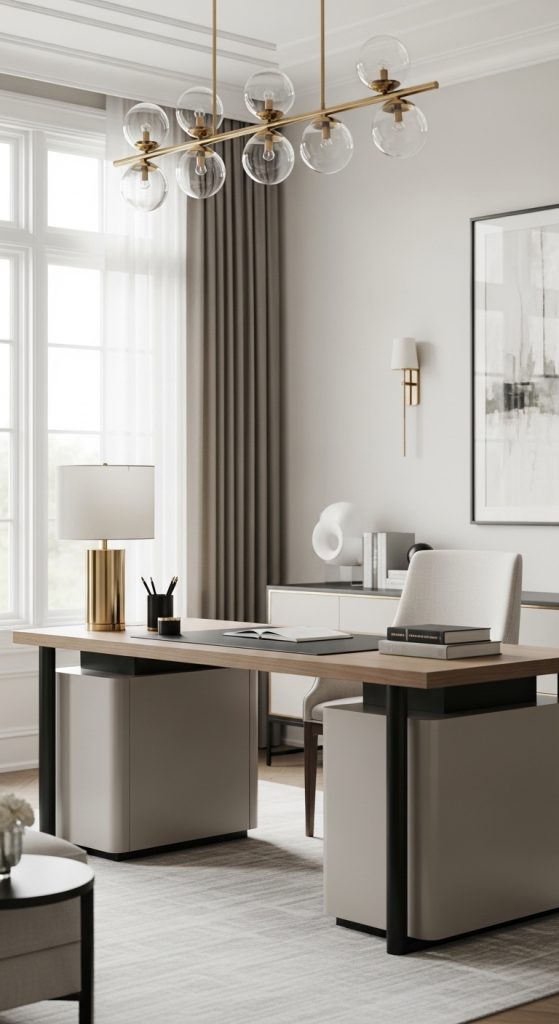
Most home offices fail because they are visually overloaded. Too many objects on the desk create mental friction, even if everything is “organized.” Luxury workspaces remove unnecessary visual noise and keep only what directly supports work.
What it is
An executive-style minimalist desk setup with a clean surface, hidden storage, and carefully selected essentials. The focus is on open space, symmetry, and uninterrupted work flow.
It feels controlled, calm, and mentally clear.
How to implement it (practical steps)
This is less about buying furniture and more about removing clutter.
- Choose a simple desk with clean lines (wood, matte white, or black)
- Keep only essential items on the surface (laptop, lamp, notebook)
- Use hidden drawers or organizers for everything else
- Align items symmetrically for visual balance
- Use cable management trays to hide wires completely
- Avoid decorative overload on the desk itself
If your space is small, prioritize vertical storage instead of desk clutter.
If your space is large, keep the desk as the “empty center” of focus.
Best for
- Professionals and remote workers
- Study-focused setups
- Minimalist interiors
- High-focus tasks (writing, planning, designing)
This works best when you want your mind to stay clear and distraction-free.
Pro tip
Follow a “one surface rule”—if something doesn’t support work, it doesn’t stay on the desk.
Mistake to avoid
Don’t confuse minimal with empty. A completely sterile desk can feel uninspiring—balance is key.
2. Layered Lighting Productivity Setup (Focus + Comfort Balance System)
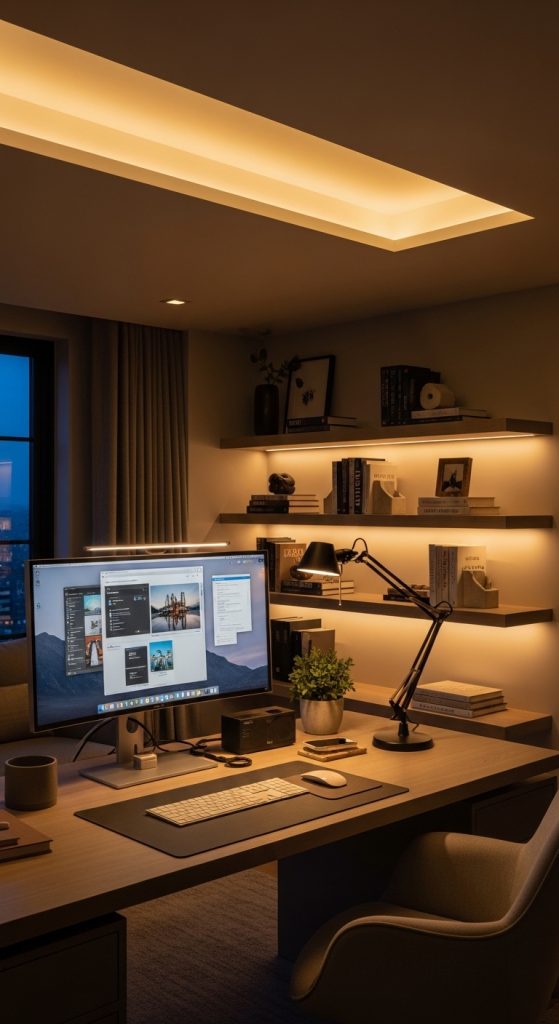
Lighting is the difference between a workspace that feels energizing and one that causes fatigue. Most home offices rely on a single ceiling light, which creates flat brightness and eye strain. Luxury offices use multiple lighting layers for control and comfort.
What it is
A three-layer lighting system combining ambient light, task lighting, and accent lighting to support long working hours. It allows you to adjust mood, brightness, and focus depending on the task.
It creates a flexible, professional-grade workspace environment.
How to implement it (practical steps)
Think in layers, not single sources.
- Use soft ambient lighting (ceiling light or wall wash)
- Add a focused desk lamp for task work
- Include warm accent lighting (shelf LEDs or corner lamps)
- Position desk near natural light if possible
- Use adjustable brightness for different times of day
- Avoid harsh white-only lighting setups
If your room is small, combine ambient and task lighting only.
If your room is large, include accent lighting for depth.
Best for
- Long working hours
- Study rooms and creative studios
- Eye-sensitive tasks (design, reading, writing)
- Productivity-focused environments
This works best when you want energy without fatigue.
Pro tip
Use warm-neutral lighting (2700K–4000K range) to maintain comfort without feeling sleepy.
Mistake to avoid
Don’t rely on overhead light alone—it flattens the space and drains focus quickly.
3. Built-In Storage Wall Office System (Hidden Organization Luxury Method)
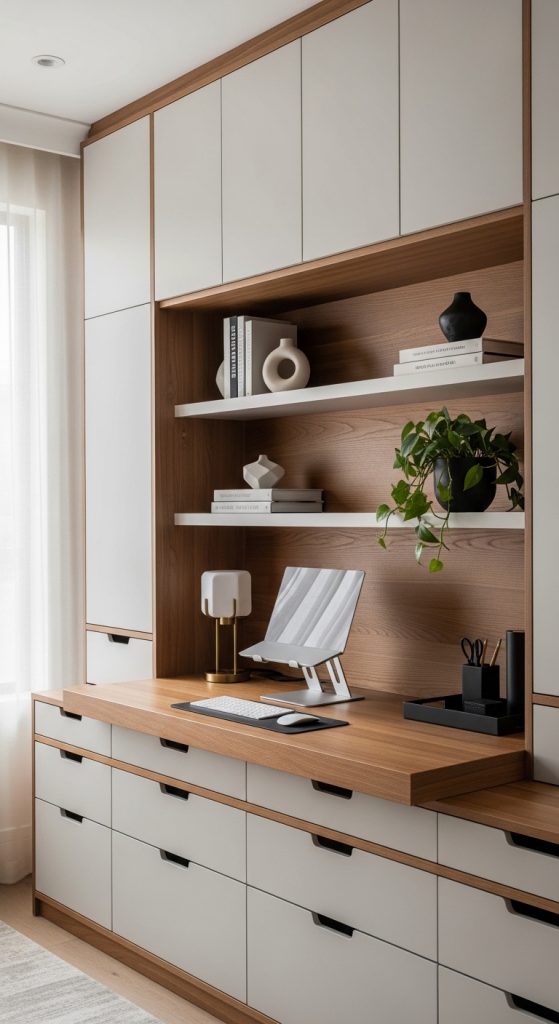
Clutter is the biggest enemy of focus. Even a clean desk loses its impact if the surrounding space is visually messy. Luxury home offices solve this by moving storage off the desk and into integrated wall systems.
What it is
A full or partial wall unit combining closed cabinets, open shelves, and hidden compartments designed to store office supplies, documents, and tech equipment. Everything has a place, but nothing feels visually exposed.
It creates a clean, architectural workspace.
How to implement it (practical steps)
This system is about structure, not decoration.
- Install floor-to-ceiling cabinets or modular wall units
- Use closed storage for cables, files, and equipment
- Reserve open shelves for minimal decorative or functional items
- Keep color palette consistent (white, wood, beige, black)
- Hide printers and bulky tech inside closed compartments
- Maintain a clear visual zone around the desk area
If your office is small, use vertical wall shelving instead of full cabinetry.
If your office is large, build a full integrated storage wall.
Best for
- Corporate-style home offices
- High-productivity work environments
- Small rooms needing organization
- People with lots of documents or equipment
This works best when you want a workspace that stays clean without constant effort.
Pro tip
Use push-to-open cabinets to maintain a handle-free, modern luxury look.
Mistake to avoid
Don’t leave storage partially open or mixed—half-closed systems create visual imbalance and clutter.
4. Dedicated Dual-Zone Work & Relax Setup (Productivity Balance System)
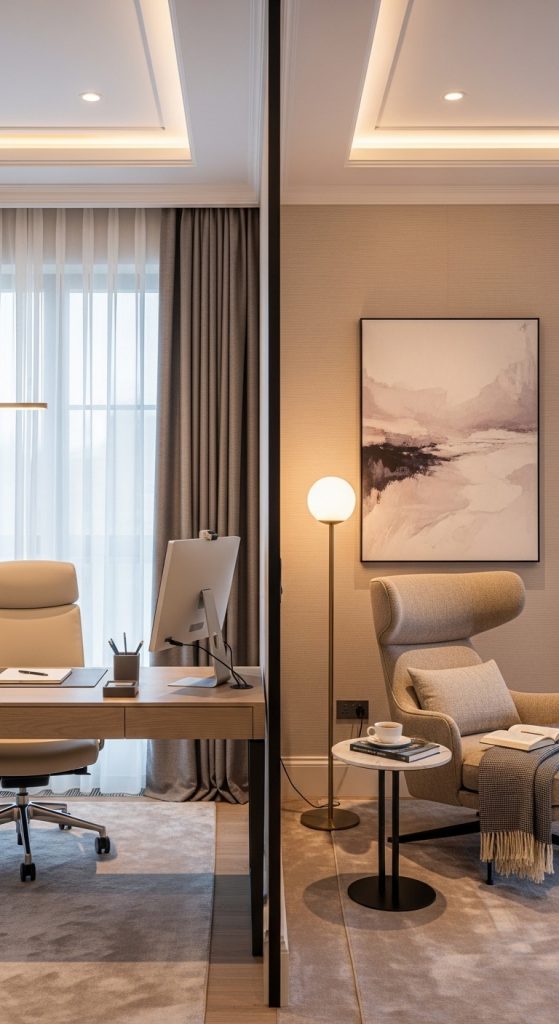
Most home offices fail because they force one mood into everything. Either the room feels too stiff and stressful, or it becomes too relaxed and distracting. Luxury workspace design solves this by separating mental zones inside the same room.
What it is
A home office layout divided into two clear functional zones: a focused work zone (desk, monitor, task lighting) and a secondary calm zone (reading chair, soft seating, or minimal lounge corner). Each zone supports a different mental state.
It creates balance between deep work and recovery.
How to implement it (practical steps)
You don’t need a large room—you need clear separation.
- Place the desk in a focused direction (facing wall or window, not clutter)
- Add a separate chair or lounge seat in another corner
- Use lighting differences to define zones (bright task vs soft ambient)
- Keep work tools strictly in the desk zone
- Keep the relaxation zone free of work items
- Use a rug or lighting shift to visually separate areas
If your room is small, define zones with lighting instead of furniture.
If your room is large, create full physical separation.
Best for
- Long working hours
- Creative professionals
- Study + work hybrid users
- People who need mental reset breaks
This works best when you want productivity without burnout.
Pro tip
Never work from the relaxation zone—this breaks mental discipline and reduces focus efficiency.
Mistake to avoid
Don’t mix zones. A laptop on the lounge chair defeats the purpose completely.
5. Neutral Luxury Color Psychology Office (Focus-Enhancing Palette Design)
Color is not just aesthetic—it directly affects attention span, stress levels, and productivity. Many home offices fail because they use random or overly bright colors that overstimulate the brain. Luxury design uses controlled neutral palettes to create calm focus.
What it is
A workspace designed using a restricted color palette—typically whites, beiges, soft greys, muted browns, and natural wood tones. The goal is visual calmness and mental clarity.
It reduces distraction and supports longer focus periods.

How to implement it (practical steps)
This is about editing visual input.
- Choose a base neutral tone (white, beige, or light grey)
- Add natural wood or matte black accents for contrast
- Keep desk accessories within the same color family
- Avoid bright, saturated colors on large surfaces
- Use soft textures (linen, wood grain, matte finishes)
- Limit decorative items to minimal tones only
If your office already has color, neutralize it using accessories and storage choices.
If you’re starting fresh, build the palette first before buying furniture.
Best for
- Focus-heavy work environments
- Study spaces and writing setups
- Minimalist interiors
- High-distraction users needing calm design
This works best when you want your environment to reduce mental noise.
Pro tip
Stick to a 70-20-10 ratio: 70% neutral base, 20% secondary tone, 10% accent.
Mistake to avoid
Don’t mix too many wood tones or finishes—it breaks visual harmony.
6. Cable-Free Clean Desk System (Hidden Tech Luxury Setup)
Nothing destroys a luxury office faster than visible cables. Even the most expensive setup looks messy when wires are exposed. Cable management is not a small detail—it is a core part of modern workspace design.
What it is
A fully organized desk system where all cables, chargers, and power strips are hidden using trays, channels, or built-in routing systems. The desk surface remains completely clean and visually uninterrupted.
It creates a seamless, high-end technology environment.

How to implement it (practical steps)
This requires structured hiding, not just bundling wires.
- Use cable trays mounted under the desk
- Route all wires through desk holes or hidden channels
- Use cable clips to keep wires aligned and invisible
- Store power strips inside hidden compartments
- Use wireless accessories where possible (keyboard, mouse)
- Keep charging stations out of sight or inside drawers
If your desk is already set up, retrofit cable organizers underneath.
If you are building new, plan cable routing before installation.
Best for
- Modern home offices
- Tech-heavy work setups
- Minimalist desk designs
- Productivity-focused environments
This works best when you want your desk to look like a clean workspace, not a tech station.
Pro tip
Label cables under the desk—it saves time during maintenance without affecting visuals.
Mistake to avoid
Don’t just hide cables loosely—poor routing creates future mess even if it looks clean today.
7. Natural Light Priority Workspace (Daylight Productivity System)
Most people treat natural light as a bonus. Luxury home office design treats it as the foundation. Artificial lighting can support work, but natural light controls energy, mood, and focus in a way no lamp can replicate. A poorly positioned desk can silently drain productivity even if everything else looks perfect.
What it is
A home office layout designed around natural daylight flow, where the desk is positioned to maximize soft indirect sunlight without glare on screens. It creates a healthier, more alert working environment throughout the day.
It feels open, fresh, and mentally activating.

How to implement it (practical steps)
This is about positioning, not decoration.
- Place your desk near a window but not directly facing harsh sunlight
- Position the screen perpendicular to the window to avoid glare
- Use sheer curtains to diffuse strong daylight
- Keep window area uncluttered for maximum light entry
- Pair natural light with soft artificial lighting for balance
- Adjust desk angle based on morning vs afternoon sun direction
If your room has limited windows, amplify light using mirrors or light walls.
If your room has strong sunlight, control it with filters instead of blocking it completely.
Best for
- Creative professionals
- Long working hours
- Study-focused setups
- Mental clarity and mood improvement
This works best when you want energy without relying only on artificial lighting.
Pro tip
Morning natural light is more energizing—schedule high-focus tasks earlier in the day if possible.
Mistake to avoid
Don’t place your monitor facing the window directly—it creates glare and eye strain.
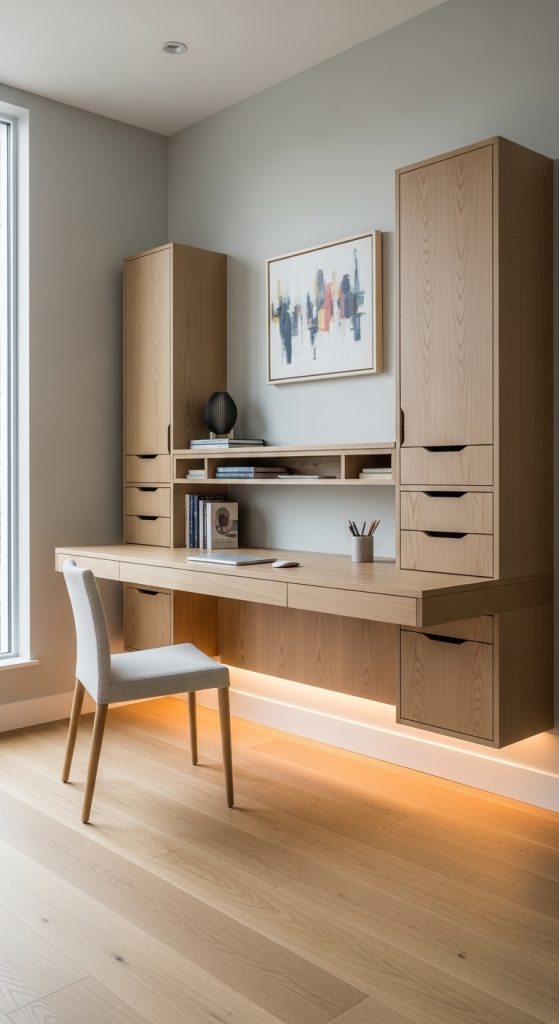
8. Minimal Floating Desk Wall System (Space-Saving Luxury Design)
This is one of the cleanest and most modern home office setups. It removes heavy furniture visuals and replaces them with a light, architectural feel. Floating designs make even small rooms feel larger and more open.
What it is
A wall-mounted floating desk system with hidden supports and integrated storage, creating a “weightless” workspace. The desk appears to be attached directly to the wall without visible legs or bulky structure.
It creates a sleek, uncluttered visual effect.
How to implement it (practical steps)
This requires proper wall installation for stability.
- Install a sturdy wall-mounted desk panel at ergonomic height
- Hide support brackets inside the wall or beneath the surface
- Add minimal drawers underneath if needed
- Keep desk surface clean and limited to essentials only
- Pair with vertical wall storage instead of floor furniture
- Use matching wall tones for seamless blending effect
If your room is small, this setup visually expands space.
If your room is large, it creates a modern architectural focal point.
Best for
- Small home offices
- Minimalist interiors
- Modern apartment setups
- Clean aesthetic-focused users
This works best when you want maximum visual space with minimal furniture presence.
Pro tip
Add a thin LED strip under the floating desk for a subtle luxury glow effect.
Mistake to avoid
Don’t overload floating desks with heavy objects—it breaks both structure and visual balance.
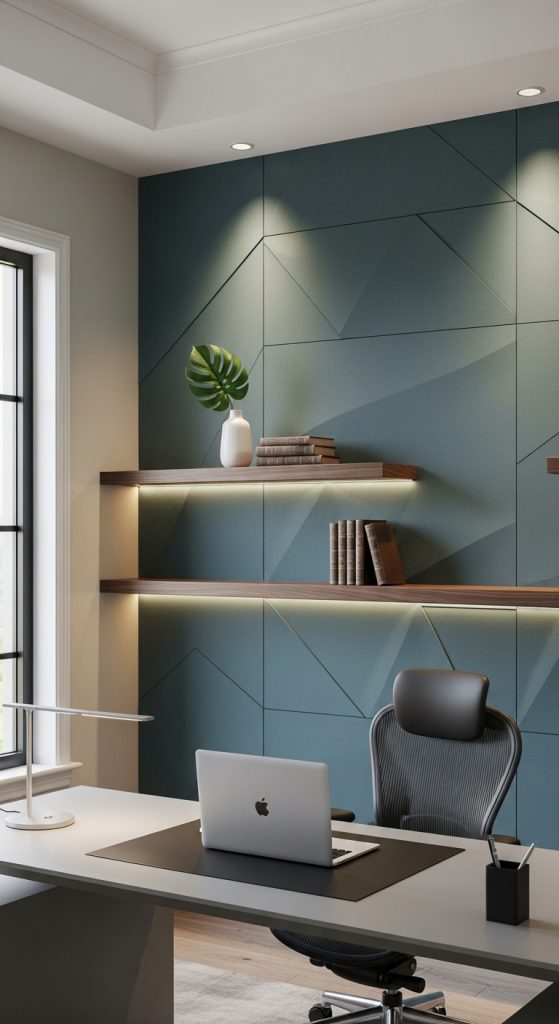
9. Statement Accent Wall Office Backdrop (Focus Anchor Design)
A home office feels incomplete when there is no visual anchor behind the desk. Blank walls create a flat, uninspired background, especially during long work hours or video calls. Luxury design fixes this by creating a controlled focal wall.
What it is
A single accent wall behind or near the desk designed with texture, color contrast, shelving, or subtle patterns. It frames the workspace and adds depth without overwhelming the room.
It turns the office into a designed composition instead of random furniture placement.
How to implement it (practical steps)
The key is controlled contrast.
- Choose one wall behind the desk as the focal point
- Use textured paint, wood panels, or soft wallpaper
- Add minimal floating shelves or framed art (not cluttered)
- Keep color slightly darker or richer than surrounding walls
- Integrate soft lighting to highlight texture
- Avoid mixing multiple accent styles on one wall
If your office is small, use subtle texture instead of bold patterns.
If your office is large, you can use stronger contrast or shelving systems.
Best for
- Video call setups
- Creative workspaces
- Design-focused offices
- Rooms needing visual structure
This works best when you want your workspace to look intentional and professional.
Pro tip
Keep decor on accent walls minimal—one strong visual idea is better than many weak ones.
Mistake to avoid
Don’t turn the accent wall into clutter (too many frames or shelves ruin the luxury feel).
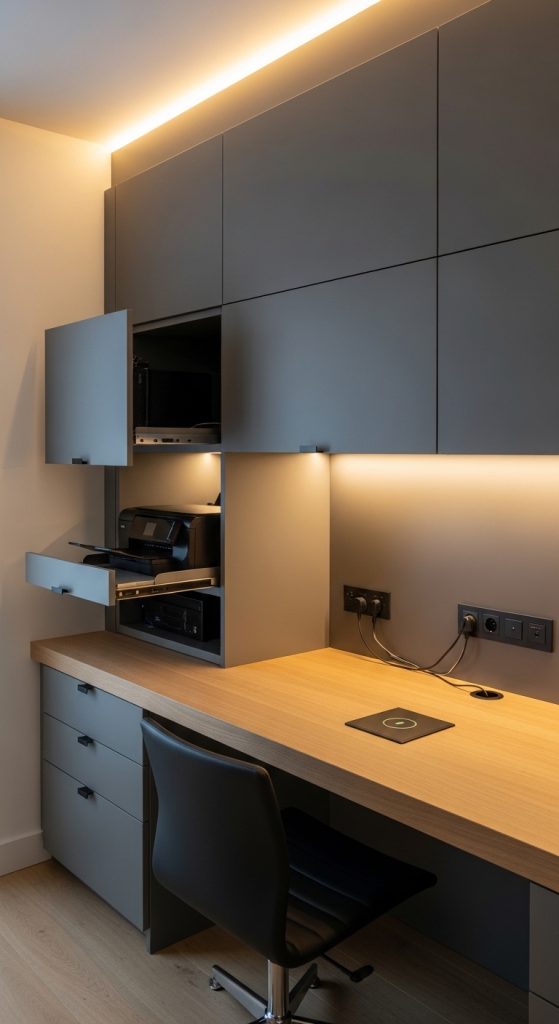
10. Built-In Tech Station Office System (Hidden Workflow Luxury Setup)
Most home offices look messy not because of furniture, but because of technology exposure. Printers, chargers, routers, speakers, and cables create constant visual noise. Luxury workspace design solves this by fully integrating tech into hidden systems so it supports work without being seen.
What it is
A built-in office tech station where all devices are stored inside cabinets, drawers, or concealed compartments. Only the essential working surface remains visible, while everything else is hidden but fully functional.
It creates a clean, uninterrupted workspace that feels high-end and controlled.
How to implement it (practical steps)
This is about hiding function, not removing it.
- Install a dedicated cabinet or side unit for tech equipment
- Store printer, router, and chargers inside closed compartments
- Use ventilation gaps so devices don’t overheat
- Add internal power strips inside drawers or cabinets
- Route cables through hidden channels behind the wall or desk
- Keep only essential daily-use tech on the desk surface
If your space is small, combine storage with your desk unit.
If your space is large, create a separate tech wall section.
Best for
- Remote workers with multiple devices
- Productivity-focused home offices
- Minimalist luxury interiors
- Clean aesthetic setups
This works best when you want your workspace to look like a calm environment, not a tech cluster.
Pro tip
Use soft-close cabinets so opening/closing doesn’t disrupt focus or sound balance.
Mistake to avoid
Don’t leave “temporary” devices outside storage—it breaks the entire clean system quickly.
11. Personal Inspiration Wall + Vision Board Office Zone (Focus Psychology Design)
A luxury home office is not only about physical organization—it also shapes mindset. If a workspace feels emotionally empty, motivation drops over time. High-end office design includes intentional psychological elements that keep focus and direction strong.
What it is
A dedicated wall or section in the office used for inspiration, goals, vision boards, or minimal framed visuals. It is not cluttered decoration—it is a curated mental focus zone that reinforces purpose.
It keeps the mind aligned with long-term goals while working.

How to implement it (practical steps)
This must stay controlled and intentional.
- Choose one small wall or section near your desk
- Add a clean corkboard, pinboard, or framed grid system
- Display only meaningful visuals (goals, quotes, concepts)
- Keep layout structured and evenly spaced
- Use neutral frames or boards for consistency
- Update content periodically instead of overcrowding
If your office is small, keep the inspiration wall minimal.
If your office is larger, expand it into a structured gallery grid.
Best for
- Creative professionals
- Students and planners
- Long-term goal-focused workers
- Motivation-driven environments
This works best when you want your space to support mindset, not just tasks.
Pro tip
Limit visuals—too many images reduce focus instead of improving it.
Mistake to avoid
Don’t turn it into random decoration. A luxury inspiration wall is curated, not chaotic.