
Bathroom decor is often treated like an afterthought. People focus on bedrooms, living rooms, kitchens—and the bathroom gets whatever is left. A plain mirror, basic tiles, standard lighting, and functional storage. It works, but it doesn’t inspire anything. It doesn’t feel like a space you enjoy being in. And that’s the problem most homes quietly carry without realizing it.
In 2026, bathroom design is shifting away from purely functional thinking. The modern approach is no longer “just keep it clean and usable.” It is about creating a space that feels intentional, calming, and visually engaging—even if the room is small. This is where whimsy bathroom decor enters the picture.

“Whimsy” doesn’t mean childish or overly decorative. It means adding subtle creativity, softness, and personality into a space that is usually rigid and predictable. It’s about breaking the cold, flat feeling of standard bathrooms and replacing it with warmth, character, and gentle visual interest. Think curved shapes instead of sharp lines, soft lighting instead of harsh white bulbs, unexpected color accents instead of plain neutrals, and small artistic touches that make the space feel alive.
The biggest mistake people make is assuming bathroom decor has to stay minimal and boring because of moisture, cleaning, or practicality concerns. That mindset limits creativity more than reality does. Modern materials, waterproof decor options, and smart design choices now make it possible to style bathrooms beautifully without sacrificing function. The real issue is not limitations—it’s lack of imagination.
Another overlooked factor is emotional impact. A bathroom is not just a utility space; it’s where you start and end your day. If the environment feels cold, cluttered, or lifeless, it subtly affects your mood more than you notice. On the other hand, a thoughtfully styled bathroom can create a sense of calm in the morning and relaxation at night. Small visual details—like warm lighting, textured walls, or soft decorative elements—can shift the entire experience.
Whimsy decor is especially relevant in 2026 because interior design trends are moving toward “soft living.” This means homes are becoming less rigid and more expressive. People want spaces that feel personal, not just functional. Bathrooms are finally being included in that shift, with designers experimenting with playful yet elegant elements that make the space feel curated rather than purely practical.
But there is a fine line that must be understood clearly. Whimsy does not mean clutter. It does not mean filling the bathroom with random decorative items. In fact, over-decoration is one of the fastest ways to make a bathroom feel chaotic and smaller than it actually is. The goal is controlled creativity—choosing a few strong visual ideas and executing them cleanly.
Lighting, texture, color harmony, and spatial balance become far more important in this style. A soft curved mirror, a pastel accent wall, a sculptural soap dispenser, or a nature-inspired element can completely change the mood of the room when used correctly. Even small changes—like swapping harsh lighting for warm diffused light—can transform the perception of the entire space.
This guide is not about unrealistic luxury bathrooms or expensive renovations. It focuses on practical whimsy ideas that can be adapted to real homes, whether large or small. The goal is to show how subtle design decisions can shift a bathroom from purely functional to visually engaging without making it impractical or difficult to maintain.
You will see ideas that combine creativity with usability—design choices that still respect humidity, cleaning needs, and daily use, but also introduce personality and charm. Some ideas focus on color, some on lighting, some on decor objects, and some on layout adjustments that completely change how the space feels.
By the end, the idea of a bathroom will no longer feel like a forgotten corner of the house. Instead, you’ll see it as a small but powerful design opportunity—one where even minor changes can create a noticeable difference in atmosphere.
Now let’s move into the ideas that actually make a bathroom feel whimsical, modern, and thoughtfully designed for 2026.
1. Soft Curved Mirror with Ambient Glow Lighting
What it is
A soft curved mirror with ambient glow lighting is one of the most effective ways to instantly change the mood of a bathroom without touching the structure or tiles. Instead of the usual sharp-edged rectangular mirror with harsh overhead lighting, this idea focuses on rounded, organic shapes combined with warm indirect light around the edges. The result is a bathroom that feels softer, calmer, and more visually interesting.
In 2026, curved mirrors are becoming a core part of “whimsy minimalism”—a design direction where simple spaces are elevated through gentle, unexpected shapes and lighting effects. It removes the clinical feeling most bathrooms have and replaces it with a more spa-like atmosphere.

How to implement (practical steps)
Start by replacing a standard mirror with a round, oval, or asymmetrical curved mirror. The shape matters because it softens the hard geometry usually found in bathroom tiles and fixtures.
Next, install LED backlighting behind the mirror. This can be either built-in or added using adhesive LED strips. Choose warm white light instead of bright cool white, because warm tones create a relaxing glow rather than a hospital-like brightness.
Make sure the lighting is evenly distributed around the mirror so it produces a halo effect on the wall. Avoid placing lights only at the top or bottom, as that creates uneven shadows.
If possible, pair the mirror with a neutral wall color—soft beige, muted sage, or warm white—so the glow stands out more clearly. The goal is not to make the light harsh, but to let it gently float on the wall.
Best for (who should use it)
This works best in small to medium bathrooms where you want to create the illusion of more space and softness. It is especially effective for people who use their bathroom early in the morning or late at night because the lighting feels less aggressive on the eyes.
It also suits modern and minimalist interiors that need a small visual upgrade without clutter.
Pro tip
If your bathroom has no natural light, slightly increase the brightness of the LED strip but keep the color temperature warm. This maintains visibility while preserving the soft aesthetic.
Mistake to avoid
Do not use cold white or blue-toned lighting. It destroys the whimsical effect and brings back the harsh, sterile feeling you are trying to remove.
2. Nature-Inspired Corner Shelf with Organic Decor
What it is
A nature-inspired corner shelf is a simple but powerful way to introduce personality into a bathroom. Instead of leaving corners empty or using plain plastic storage, this idea uses wooden or stone-textured shelves combined with small natural decor elements like plants, pebbles, woven baskets, or ceramic jars.
The key concept is “controlled nature”—bringing organic textures into the bathroom in a structured, intentional way so it feels calming rather than messy.
In 2026, biophilic design (design inspired by nature) is becoming a strong trend in home interiors, and bathrooms are one of the easiest places to apply it.

How to implement (practical steps)
Start by choosing a corner that is not directly exposed to heavy water splashes. Install a small floating shelf made of moisture-resistant wood, bamboo, or sealed composite material.
Place a few carefully selected items instead of overloading the space. A small potted plant (like pothos or snake plant), a rolled towel stack, and a ceramic container are enough to build a balanced look.
If you want a more whimsical feel, add one decorative natural object like a smooth stone bowl or a textured candle holder.
Keep spacing intentional. Items should have breathing room instead of being tightly packed. This creates a calm, curated appearance rather than clutter.
Best for (who should use it)
This works best for people who want their bathroom to feel like a mini spa or relaxation corner. It is especially effective in bathrooms that feel too plain or overly tiled.
It suits both small and large bathrooms because corner shelves use unused space efficiently.
Pro tip
Choose plants that can survive humidity with low maintenance. Overcomplicated plant choices will fail quickly and ruin the aesthetic.
Mistake to avoid
Do not turn the shelf into storage clutter. If it starts looking like random bottles and mixed items, the whimsical effect is completely lost.
3. Textured Accent Wall with Soft Color Wash
What it is
A textured accent wall with a soft color wash is a design technique that adds depth and personality to a bathroom without overwhelming it. Instead of plain flat walls, one section of the bathroom is enhanced using texture—such as limewash paint, microcement, or subtle tile patterns—combined with soft, muted colors.
The idea is not bold contrast but gentle visual movement. It creates a “handcrafted” feel that makes the bathroom look more artistic and less mass-produced.
In 2026, this approach is widely used in modern interiors because it adds character without requiring heavy decoration.

How to implement (practical steps)
Start by selecting one wall—usually behind the sink or opposite the entrance—as your accent wall. Avoid covering all walls, as that would make the space feel heavy.
Choose a soft color palette like warm beige, dusty pink, muted olive, or soft clay tones. These colors work best because they reflect light gently instead of overpowering the space.
Apply a textured finish such as limewash paint or matte plaster effect. These materials create natural variations in tone, which is what gives the “whimsy” feel.
If painting is not possible, you can use textured tiles with subtle patterns—avoid glossy or overly geometric designs.
Pair the wall with minimal fixtures so the texture remains the main focus.
Best for (who should use it)
This works best in bathrooms that feel too plain, flat, or industrial. It is especially useful for people who want a design upgrade without adding physical decor items.
It suits medium to large bathrooms where one wall can become a visual feature without making the space feel cramped.
Pro tip
Use warm lighting to enhance the texture. Light grazing across the wall surface makes the subtle patterns more visible and adds depth to the entire space.
Mistake to avoid
Do not combine multiple bold textures or colors in the same bathroom. One accent wall is enough—anything more will destroy the calm, whimsical balance and make the space visually chaotic.
4. Floating Vanity with Hidden Storage Glow
What it is
A floating vanity with hidden storage glow is a modern bathroom concept that removes bulky floor-standing cabinets and replaces them with a wall-mounted vanity that appears to “float.” The whimsical upgrade comes from subtle under-glow lighting beneath the unit, creating a soft levitation effect. Instead of heavy, grounded furniture, the bathroom feels lighter, more open, and slightly futuristic.
In 2026, this design is popular because it solves two problems at once: visual clutter and lack of space. It creates a clean floor line while adding a gentle ambient glow that makes even small bathrooms feel more designed and intentional.
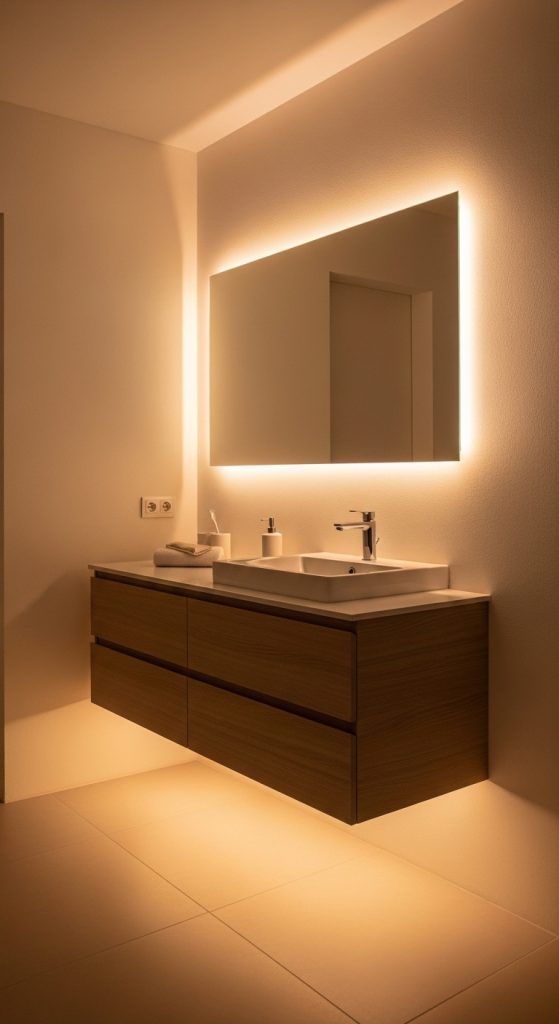
How to implement (practical steps)
Start by replacing a traditional vanity with a wall-mounted floating unit. Choose a simple design with smooth finishes like matte wood, soft white, or light stone textures.
Install the vanity at a comfortable height, making sure plumbing is properly concealed inside the wall or within a slim panel design. This step is important because visible pipes will ruin the clean aesthetic.
Next, add LED strip lighting underneath the vanity. The lighting should be hidden completely so only the glow is visible. Choose warm white light to maintain a calm atmosphere rather than a harsh, clinical feel.
If possible, integrate hidden drawers or push-to-open cabinets. This keeps toiletries out of sight, maintaining the clean, whimsical look.
Pair the vanity with a simple mirror and minimal countertop decor—just one or two items like a soap dispenser or small tray.
Best for (who should use it)
This works best in small bathrooms where floor space feels limited or cluttered. It is also ideal for modern homes where clean lines and minimal visual weight are preferred.
It suits people who want a hotel-like bathroom feel without overcomplicating the design.
Pro tip
If your bathroom has darker tiles, increase the softness of the under-glow slightly so the floating effect becomes more visible and dramatic.
Mistake to avoid
Do not overload the vanity top with items. The floating illusion only works when the surface looks light and intentional—not crowded or messy.
5. Whimsical Patterned Floor Tiles with Subtle Contrast
What it is
Whimsical patterned floor tiles introduce personality into the bathroom through the floor instead of walls or decor items. Unlike loud, overly colorful patterns, this idea focuses on subtle geometric or floral-inspired tiles with soft contrast tones. The result is a floor that feels artistic but still calm enough for everyday use.
In 2026, this trend is growing because people are moving away from plain white or gray floors and toward more expressive but controlled designs. The floor becomes a quiet focal point that adds depth without overwhelming the space.

How to implement (practical steps)
Start by choosing a tile design that has soft contrast rather than sharp color differences. Think muted black-and-white patterns, soft beige mosaics, or gentle botanical prints.
Avoid overly complex or high-contrast designs because they can make small bathrooms feel busy and visually heavy.
Install the tiles evenly across the floor, ensuring alignment is precise. The charm of this idea depends heavily on clean installation—crooked or uneven placement will break the aesthetic.
Pair patterned floors with neutral walls. This balance is important; the floor should be the only decorative element, while everything else stays minimal.
If you want a softer whimsical feel, combine patterned tiles with plain tiles in a balanced layout rather than covering the entire floor.
Best for (who should use it)
This works best in bathrooms that feel too plain or lack personality. It is also a strong choice for medium-sized bathrooms where the floor can be appreciated visually.
It suits people who want subtle creativity without adding extra decor objects.
Pro tip
Choose matte-finish tiles instead of glossy ones. Matte surfaces feel softer and more grounded, which enhances the whimsical aesthetic.
Mistake to avoid
Do not mix multiple tile patterns in the same space. Too many patterns create visual noise and remove the calm, intentional feeling.
6. Soft Fabric Touch Bathroom Styling (Curtains, Mats, and Textures)
What it is
Soft fabric touch bathroom styling introduces warmth into a space that is usually dominated by hard surfaces like tiles, glass, and metal. This idea uses carefully chosen fabrics—such as textured bath mats, linen-style shower curtains, and soft towels—to soften the overall atmosphere and create a cozy, whimsical feeling.
In 2026, interior design is shifting toward tactile comfort, and bathrooms are no longer just visual spaces—they are becoming sensory environments. Fabric plays a major role in that shift by adding softness and warmth.

How to implement (practical steps)
Start with a high-quality bath mat. Instead of thin, basic mats, choose thick, textured ones in soft neutral or pastel shades. This immediately changes how the bathroom feels underfoot and visually.
Next, replace plastic or plain shower curtains with linen-style or fabric-textured curtains. Choose soft colors like off-white, dusty rose, or muted green for a calming effect.
Coordinate towels so they match or complement the color palette. Avoid mixing too many bold colors; consistency is what creates a curated look.
If space allows, add a small fabric stool cover or woven laundry basket to extend the soft texture theme across the room.
Keep fabrics clean and well-maintained, because worn or damp textiles will quickly ruin the aesthetic.
Best for (who should use it)
This works best for bathrooms that feel cold, echoey, or overly tiled. It is especially effective in rental spaces where structural changes are not possible.
It suits people who want an instant visual upgrade without renovation work.
Pro tip
Stick to a maximum of two or three fabric tones in the entire bathroom. Too many colors will break the calm, cohesive look.
Mistake to avoid
Do not use low-quality, thin fabrics. Cheap textures absorb water poorly and make the bathroom look messy instead of soft and intentional.
7. Vintage Whimsy Wall Hooks & Statement Fixtures
What it is
Vintage whimsy wall hooks and statement fixtures are small design upgrades that completely change the personality of a bathroom without touching major structures. Instead of plain chrome hooks and standard fittings, this idea uses sculptural, antique-inspired, or playful shapes—like brass hooks, floral knobs, ceramic handles, or softly curved metal fixtures.
In 2026, this style is trending because people are realizing that “small hardware = big visual impact.” Bathrooms are often visually simple, so even minor details become noticeable. These fixtures add character, warmth, and a slightly nostalgic charm that fits perfectly into whimsical design.
How to implement (practical steps)
Start by replacing standard towel hooks, robe hooks, and cabinet handles with decorative alternatives. Choose finishes like brushed brass, matte gold, antique bronze, or soft white ceramic instead of shiny industrial chrome.
Focus on consistency. If you choose a vintage theme, don’t mix modern industrial hooks randomly—it will break the aesthetic balance.
Install hooks at intentional points: near the sink for towels, behind the door for robes, and near the shower for convenience. Avoid overcrowding the walls; each piece should feel purposeful.
If you want a stronger whimsical effect, choose shapes that feel slightly artistic—leaf-inspired hooks, rounded knobs, or soft asymmetrical designs.
Pair these fixtures with neutral walls so they stand out without overwhelming the space.

Best for (who should use it)
This works best for people who want a low-cost bathroom upgrade without renovation. It is ideal for small bathrooms, rental spaces, or anyone who wants to add personality without changing tiles or furniture.
It also suits vintage, soft luxury, or cottage-style interiors.
Pro tip
Mix one “statement piece” (like a decorative mirror frame or unique hook design) with simpler supporting fixtures. This keeps the design balanced instead of overly themed.
Mistake to avoid
Do not mix too many different metal finishes. Combining silver, gold, and black randomly creates visual confusion and destroys the cohesive whimsical look.
8. Soft Pastel Color Blocking with Minimal Accents
What it is
Soft pastel color blocking is a design technique where gentle pastel shades are used in structured sections of the bathroom to create visual interest without heaviness. Instead of painting everything one flat color, different zones—like one wall, cabinet front, or shelf area—are styled in complementary pastel tones.
Unlike bold color blocking, this version is subtle and calming. It adds personality while still maintaining a clean, airy bathroom feel. In 2026, this is popular because it brings softness and creativity into modern minimal interiors without making them overwhelming.

How to implement (practical steps)
Start by selecting two or three soft pastel colors. Good combinations include sage green with cream, dusty pink with warm beige, or light lavender with off-white.
Choose where each color will appear. For example, one wall can carry the main pastel tone, while cabinetry or small accents carry secondary tones. Avoid spreading colors randomly; structure is what makes it feel intentional.
Keep larger surfaces soft and muted, and use stronger pastel tones only in smaller sections so the space doesn’t feel visually heavy.
Pair color blocking with minimal decor. Use simple mirrors, plain towels, and neutral flooring so the colors remain the focus.
If painting is not possible, you can introduce color blocking through accessories like storage boxes, shower curtains, or vanity decor instead.
Best for (who should use it)
This works best for bathrooms that feel dull, plain, or overly monochrome. It is especially good for small bathrooms because soft colors can make the space feel brighter and more open.
It suits people who want a playful but still elegant aesthetic.
Pro tip
Stick to muted pastels instead of bright tones. The softer the color, the more “whimsy calm” the bathroom feels instead of childish or loud.
Mistake to avoid
Do not use more than three colors. Too many pastel shades create visual confusion and remove the clean, soothing effect.
9. Curated “Art Corner” Bathroom Styling
What it is
Curated art corner styling turns one small section of the bathroom into a mini design moment. Instead of decorating the entire space, a single wall, shelf, or counter corner is styled with artistic objects—like framed prints, sculptural decor, candles, ceramic pieces, or soft aesthetic accessories.
In 2026, this approach is becoming popular because it avoids clutter while still adding personality. It follows a simple design rule: one strong visual focal point is more powerful than scattered decoration everywhere.

How to implement (practical steps)
Choose one corner or wall area that naturally draws attention, such as above the toilet, next to the vanity, or a small empty shelf space.
Start with a base element like a floating shelf or small ledge. Then add layered decor pieces in different heights: a framed minimalist print, a ceramic object, and a small candle or diffuser.
Stick to a consistent color palette—neutral, earthy, or soft pastel tones work best. Avoid mixing too many styles, as the goal is a curated look, not randomness.
Leave negative space intentionally. Do not fill every inch; empty space is part of the design and makes the arrangement feel more thoughtful.
If humidity is a concern, choose waterproof frames and moisture-safe materials.
Best for (who should use it)
This works best in bathrooms that feel empty or lack personality but don’t need structural changes. It is ideal for small spaces where full decor might feel overwhelming.
It also suits people who enjoy aesthetic, Instagram-style interiors without clutter.
Pro tip
Rotate one small item seasonally (like a candle scent or mini artwork) to keep the corner feeling fresh without redesigning the whole space.
Mistake to avoid
Do not overcrowd the corner with too many objects. Once it starts looking like storage instead of design, the whimsical effect is completely lost.
10. Soft Glow Candle Nook with Aromatic Whimsy Styling
What it is
A soft glow candle nook is a small, intentionally styled bathroom corner designed to create atmosphere rather than function. Instead of treating candles as random decor items, this idea turns them into a structured “whimsy zone” that combines warm lighting, calming scents, and minimal aesthetic objects.
In 2026, bathroom design is shifting toward sensory comfort. People don’t just want bathrooms that look clean—they want spaces that feel calming. A candle nook adds that emotional layer instantly. It introduces softness into a space dominated by hard materials like tiles, mirrors, and metal fixtures.
The key is restraint. This is not about filling the bathroom with candles everywhere. It is about one controlled, visually balanced corner that changes the entire mood of the room.

How to implement (practical steps)
Start by choosing a safe, dry corner away from direct water splashes. This could be a vanity edge, a small floating shelf, or a flat countertop section.
Place a stable base first, such as a ceramic tray, stone plate, or wooden platform. This anchors the design and prevents it from looking scattered.
Add two to three candles in different heights. Use soft, neutral tones like ivory, beige, blush, or muted green. Avoid overly bright or neon-colored candles because they break the calm aesthetic.
Layer in one or two supporting elements. This could include a small glass jar, a mini plant, or a textured diffuser bottle. Keep everything minimal and intentional.
If possible, pair candles with warm ambient lighting from the mirror or ceiling. The combination of real flame (or LED candle alternatives) and soft lighting creates depth and a layered glow effect.
Best for (who should use it)
This works best for people who want their bathroom to feel like a relaxation space rather than just a utility room. It is especially effective in evening routines, self-care spaces, or homes where calming atmosphere is a priority.
It suits small bathrooms too because it doesn’t require structural changes—only a small styled corner.
Pro tip
Use scented candles with light, clean fragrances like vanilla, cotton, lavender, or sandalwood. Strong or overly sweet scents can overwhelm a small bathroom space quickly.
Mistake to avoid
Do not overcrowd the nook with too many items or mixed decor styles. Once it starts looking like a storage shelf instead of a curated moment, the entire whimsical effect disappears.