
The kitchen is often called the heart of the home, but it is also one of the easiest places to become cluttered, messy, and visually overwhelming. Between cooking tools, food storage, appliances, and daily-use items, kitchens naturally accumulate chaos if there is no proper organization system in place. This is why modern kitchen organization has become such a powerful trend, especially in Pinterest-inspired home design and minimalist living spaces.
A clean, well-organized kitchen does more than just look beautiful—it changes how you feel while cooking and moving through the space. When everything has a proper place, cooking becomes faster, easier, and more enjoyable. You are not constantly searching for utensils, ingredients, or storage containers. Instead, the space flows naturally and supports your daily routine.
Modern kitchen organization focuses on one key idea: functionality with aesthetics. It is not just about hiding clutter, but about designing a system where everything is visible, accessible, and visually pleasing at the same time. This balance is what creates that “clean aesthetic” look seen in luxury homes, Pinterest kitchens, and high-end interior design magazines.
One of the biggest problems in most kitchens is visual overload. Too many items placed on countertops, mismatched containers, open packaging, and random utensils can instantly make a kitchen feel chaotic. Even if the kitchen is clean, it may still look messy due to lack of structure. This is why organization is not just physical—it is also visual design.
Another important aspect is efficiency. A well-organized kitchen saves time during cooking and cleaning. When spices, cookware, and ingredients are arranged logically, you naturally follow a smooth workflow. For example, keeping cooking tools near the stove, prep items near the counter, and cleaning supplies under the sink creates a natural cooking system that reduces unnecessary movement.
Modern kitchen organization also heavily focuses on minimalism. This does not mean removing everything, but instead keeping only what you actually use and presenting it in a clean, structured way. Many luxury kitchens appear simple not because they lack items, but because every item is carefully stored or intentionally displayed.
Storage solutions also play a major role in achieving a clean aesthetic. Clear containers, labeled jars, drawer dividers, and hidden storage systems help eliminate visual clutter. When packaging is removed and replaced with uniform containers, the kitchen instantly looks more expensive and cohesive.
Lighting and surface clarity are also important. Clean countertops, empty corners, and open space give the illusion of a larger, more breathable kitchen. Even small kitchens can feel high-end if surfaces are kept clear and organized properly.
Another reason kitchen organization is trending so strongly is because of lifestyle changes. More people are cooking at home, creating meal-prep routines, and focusing on healthier eating habits. A disorganized kitchen can make these routines stressful, while a well-organized kitchen encourages consistency and discipline.
Social media platforms like Pinterest and Instagram have also influenced how people view kitchen spaces. Clean aesthetic kitchens with neutral tones, glass jars, wooden textures, and neatly arranged shelves have become a global design trend. These kitchens are not only functional but also visually satisfying, which is why they are highly saved and shared online.
A well-organized kitchen also improves mental clarity. Studies and lifestyle patterns show that cluttered environments can increase stress and reduce productivity. In contrast, a clean and structured kitchen creates a sense of calm and control, making everyday cooking feel less like a task and more like a creative experience.
The goal of modern kitchen organization is not perfection—it is consistency. Even small changes like organizing drawers, grouping similar items, or clearing countertops can dramatically improve the overall look and feel of the space.
In this guide, “11 Modern Kitchen Organization Hacks for Clean Aesthetic,” you will learn practical, realistic, and visually effective strategies to transform your kitchen into a clean, functional, and aesthetically pleasing space. Each hack will focus on:
- What the organization method is
- Why it improves kitchen aesthetics
- Step-by-step implementation
- Best use cases
- Expert tips for maintaining cleanliness
- Common mistakes to avoid
These hacks are designed not just for large luxury kitchens, but also for small apartments, rental spaces, and budget-friendly setups. The goal is to help you create a kitchen that looks organized, feels spacious, and works efficiently in everyday life.
By the end of this guide, you will understand how small organizational changes can completely transform your kitchen into a modern, clean aesthetic space that feels calm, stylish, and easy to maintain every day.
Now let’s explore the 11 modern kitchen organization hacks that can instantly upgrade your kitchen into a clean, functional, and visually beautiful space.
1. Clear Container Pantry System for a Clean Visual Aesthetic
Explanation (What it is)
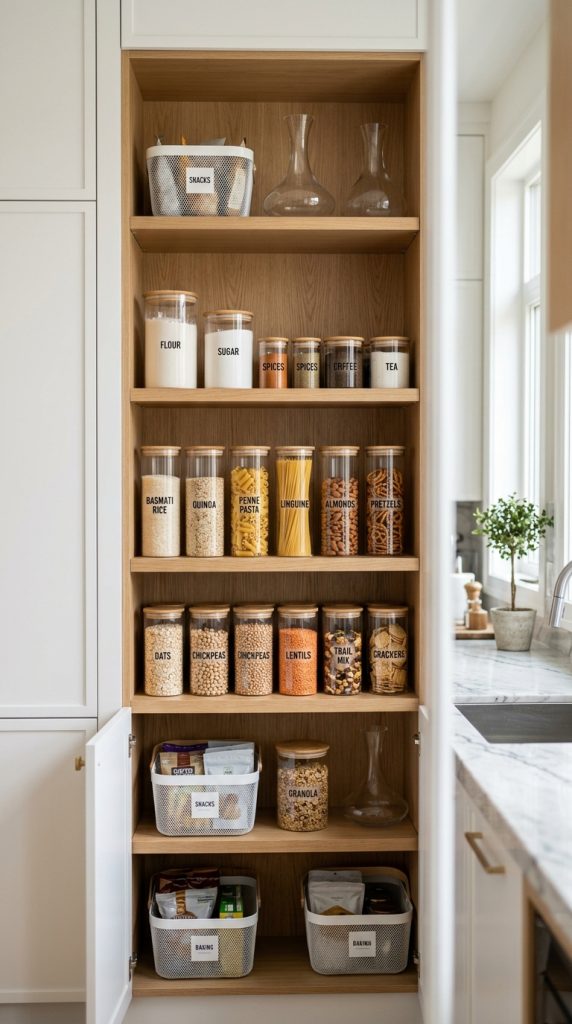
The clear container pantry system is one of the most effective modern kitchen organization hacks for achieving a clean, aesthetic look. Instead of keeping food in original packaging—chips bags, pasta boxes, cereal cartons—you transfer everything into uniform transparent containers. This instantly removes visual clutter and creates a calm, organized pantry space.
What makes this system powerful is not just storage, but visual harmony. When all containers are the same style and aligned properly, the pantry stops looking messy and starts looking like a luxury kitchen display. The brain naturally perceives uniformity as cleanliness, which is why this hack is so popular in Pinterest and modern home design.
Clear containers also make cooking easier because you can immediately see what you have and how much is left. This reduces food waste and saves time during meal preparation.
How to implement (Step-by-step)
Start by emptying your pantry:
- Remove all items and check expiry dates
Sort everything into categories:
- Grains (rice, pasta)
- Snacks
- Baking items
- Breakfast foods
Choose uniform containers:
- Glass or BPA-free plastic
- Same shape for consistency
Transfer items:
- Pour food into containers
- Label each one clearly
Arrange aesthetically:
- Place taller containers at the back
- Keep frequently used items at eye level
Best for (Who should use it)
- Small kitchens needing visual order
- Minimalist aesthetic lovers
- Meal-prep households
- Pinterest-style home setups
Pro tip (Expert advice)
Stick to one container style only—mixing shapes breaks the clean aesthetic effect.
Mistake to avoid
Avoid overfilling shelves with too many containers; spacing is what creates a luxury feel.
2. Drawer Dividers for Instant Kitchen Organization Control
Explanation (What it is)
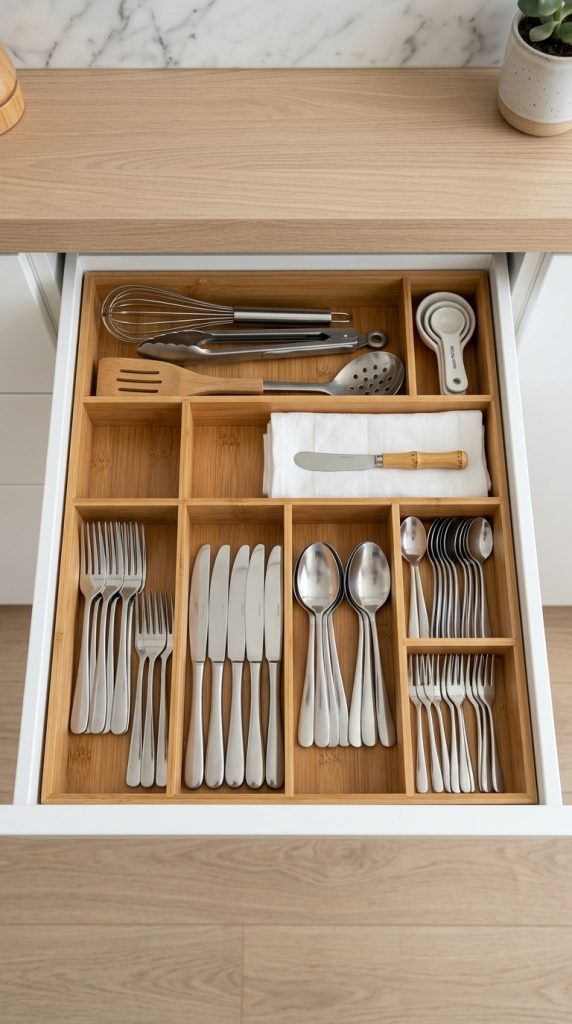
Drawer dividers are a simple but highly effective organization tool that separates kitchen drawers into structured sections. Instead of having utensils, cutlery, and tools mixed together, each category gets its own dedicated space. This eliminates chaos and makes every item easy to find.
What makes drawer dividers so important in modern kitchens is that they transform “hidden clutter” into structured storage. Even if the kitchen looks clean from outside, messy drawers can still create frustration during daily use. Dividers solve this problem instantly.
They also create a sense of order that improves cooking speed and efficiency. When everything has a fixed place, you don’t waste time searching for tools.
How to implement (Step-by-step)
Empty all drawers:
- Remove utensils and clean surfaces
Sort items:
- Cutlery (spoons, forks, knives)
- Cooking tools (spatulas, ladles)
- Small gadgets
Choose divider type:
- Adjustable bamboo dividers
- Plastic grid inserts
- Expandable organizers
Place items logically:
- Everyday items in front
- Rare-use items at the back
Maintain structure:
- Always return items to same section
Best for (Who should use it)
- Busy kitchens with daily cooking
- Small apartment kitchens
- Families with multiple utensils
- People wanting quick access systems
Pro tip (Expert advice)
Group items based on usage frequency, not just category—this makes cooking flow smoother.
Mistake to avoid
Avoid overstuffing drawers; even dividers need breathing space for a clean aesthetic look.
3. Countertop Minimalism for a Luxury Clean Kitchen Look
Explanation (What it is)
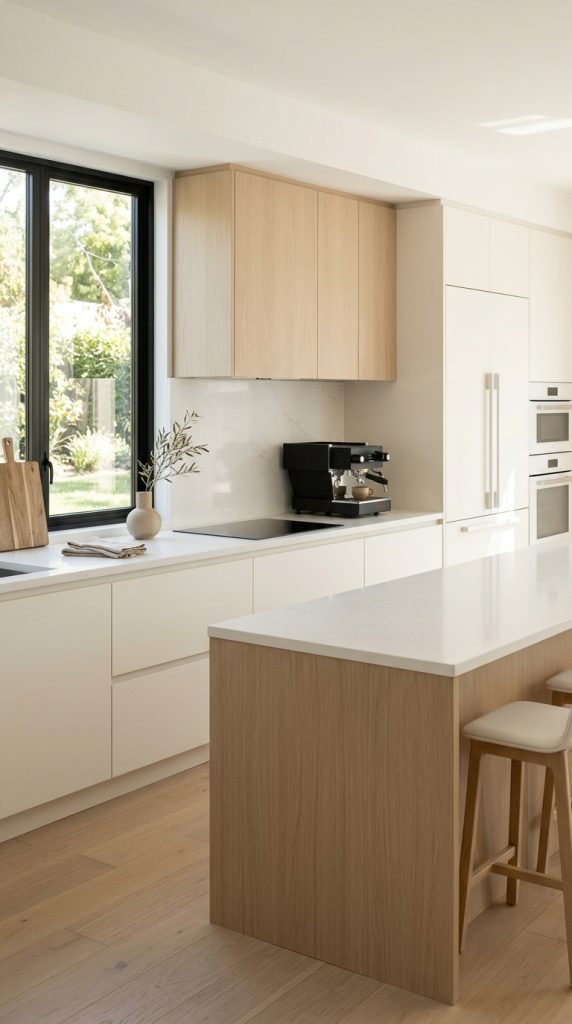
Countertop minimalism is the practice of keeping kitchen surfaces as clear and uncluttered as possible. In modern kitchen design, countertops are treated like visual space rather than storage space. The fewer items you have on display, the cleaner and more high-end your kitchen looks.
What makes this hack powerful is its immediate visual impact. Even if the rest of the kitchen is not perfectly organized, clearing countertops instantly creates a sense of cleanliness, openness, and luxury. This is a core principle in high-end interior design and Pinterest aesthetic kitchens.
Countertop clutter often includes appliances, random jars, utensils, and unused decor. Removing or organizing these items completely transforms the atmosphere of the kitchen.
How to implement (Step-by-step)
Clear everything first:
- Remove all unnecessary items from counters
Identify essentials only:
- Coffee machine or kettle
- One decorative element (optional)
- Frequently used item
Store excess items:
- Move appliances into cabinets if possible
- Use appliance garages or shelves
Create zones:
- Cooking zone (near stove)
- Prep zone (clean empty space)
Maintain daily:
- Wipe counters after every use
- Avoid stacking items again
Best for (Who should use it)
- Small kitchens needing open space illusion
- Luxury aesthetic lovers
- Minimalist lifestyle users
- Busy households wanting easy cleaning
Pro tip (Expert advice)
If you want a “high-end kitchen look,” keep at least 70% of your countertop empty at all times.
Mistake to avoid
Avoid turning counters into storage zones—it immediately destroys the clean aesthetic effect.
4. Pull-Out Cabinet Organizers for Hidden Efficiency
Explanation (What it is)
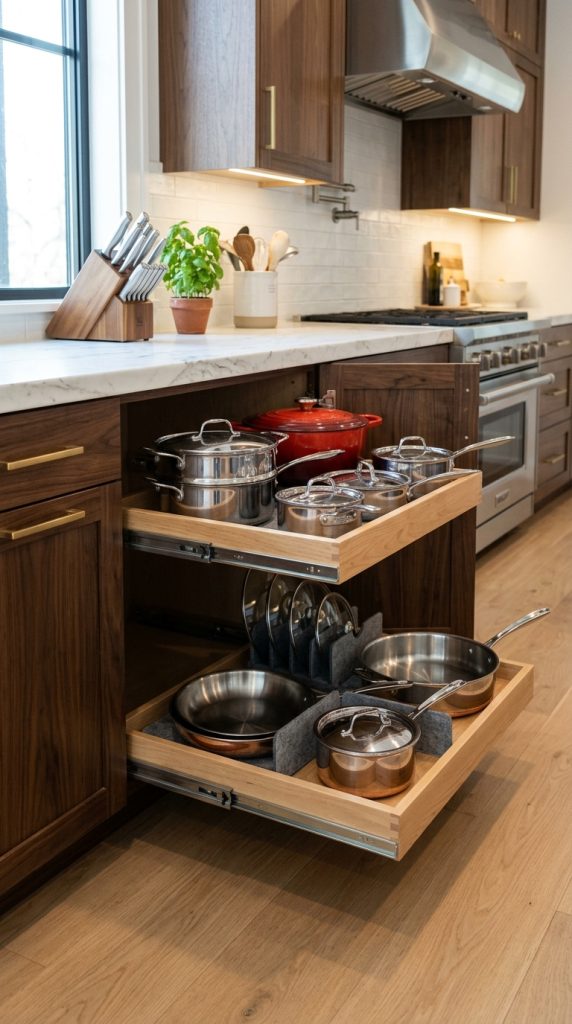
Pull-out cabinet organizers are sliding storage systems installed inside kitchen cabinets that allow you to fully extend shelves outward. Instead of digging into deep, dark cabinets where items get lost or stacked randomly, pull-out systems bring everything directly in front of you.
What makes this hack powerful is that it solves one of the biggest kitchen problems—wasted space in deep cabinets. In many kitchens, the back of cabinets becomes a “dead zone” where items are forgotten or hard to reach. Pull-out organizers turn that wasted space into highly functional storage.
From a visual perspective, they also support a clean aesthetic because everything stays hidden behind cabinet doors, yet remains perfectly structured inside. This is a key principle of modern kitchen design: hidden chaos, visible calm.
How to implement (Step-by-step)
Assess cabinet space:
- Identify deep or hard-to-reach cabinets
Choose organizer type:
- Sliding shelves
- Wire baskets
- Pull-out racks
Install system:
- Use screws or professional installation if needed
- Ensure smooth sliding motion
Sort items:
- Cooking pots and pans
- Dry goods or jars
- Cleaning supplies (under sink cabinet)
Organize by weight:
- Heavy items at bottom
- Light items on top shelves
Best for (Who should use it)
- Small or medium kitchens
- Deep cabinet storage spaces
- People who cook frequently
- Anyone wanting efficient hidden storage
Pro tip (Expert advice)
Use clear bins inside pull-out shelves to keep categories even more structured.
Mistake to avoid
Avoid overcrowding drawers—pull-out systems work best when items slide freely without blockage.
5. Open Shelf Styling with Minimal Aesthetic Balance
Explanation (What it is)
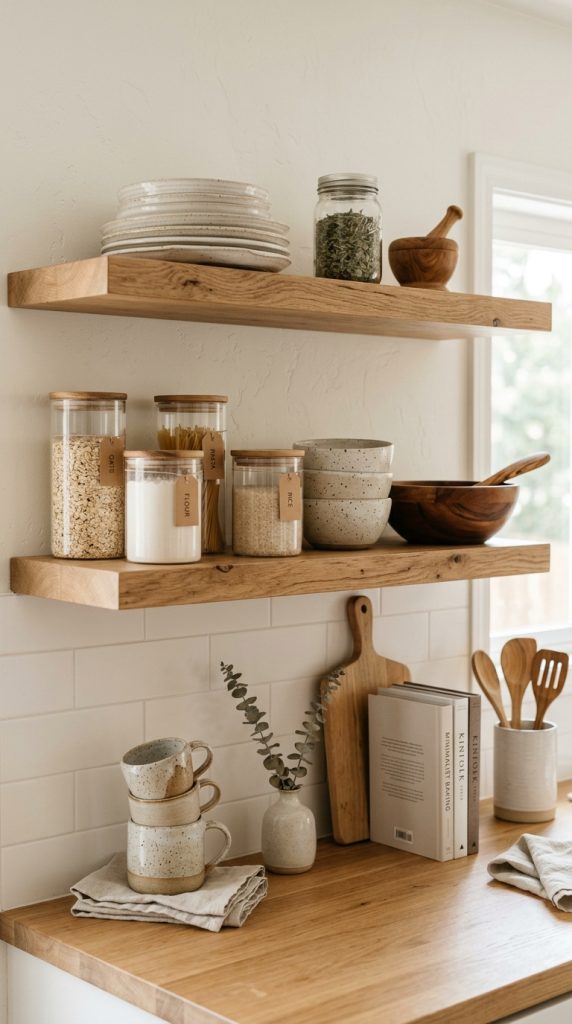
Open shelf styling is a modern kitchen trend where shelves are left visible instead of fully enclosed cabinets. However, the key to achieving a clean aesthetic is not filling them randomly—it is styling them with intention, balance, and minimalism.
What makes open shelving so popular is its ability to blend functionality with design. It allows you to display beautiful kitchen items like glass jars, ceramic plates, or neutral-toned cookware while still keeping everything practical and accessible.
When done correctly, open shelves create a light, airy feel that makes the kitchen look larger and more stylish. But when overfilled, they can quickly become visually chaotic.
How to implement (Step-by-step)
Choose shelf location:
- Above countertops or kitchen workspace
Select aesthetic items:
- Matching jars
- Neutral plates and bowls
- Wooden or glass elements
Follow styling rule:
- Group items in threes or pairs
- Mix textures (glass, wood, ceramic)
Leave negative space:
- Do not fill every inch
Maintain color harmony:
- Stick to 2–3 main tones
Best for (Who should use it)
- Modern and Pinterest-style kitchens
- People with aesthetic focus
- Medium to large kitchens
- Those who enjoy display organization
Pro tip (Expert advice)
Less is more—empty space is what creates the luxury “high-end kitchen” look.
Mistake to avoid
Avoid mixing too many colors or random items; it destroys the clean, curated effect.
6. Under-Sink Cleaning Station Organization System
Explanation (What it is)
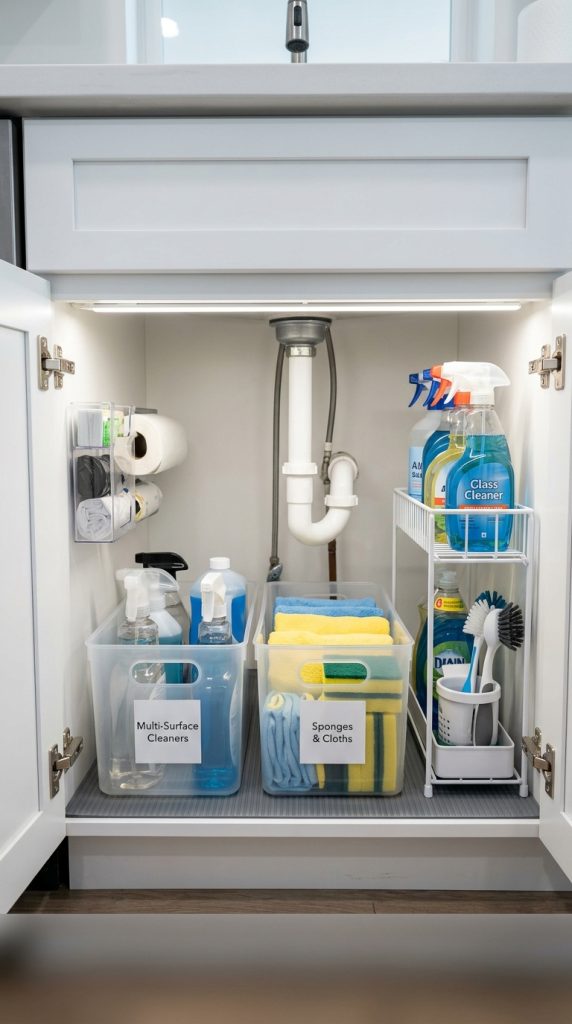
The under-sink area is often the most chaotic part of a kitchen, filled with random cleaning products, sponges, trash bags, and clutter. The under-sink organization system turns this hidden space into a structured cleaning station where everything has a clear purpose and place.
What makes this hack essential is that it organizes the most frequently used cleaning zone in the kitchen. Instead of digging through clutter, you have a streamlined system where everything is easy to access and neatly arranged.
Even though this area is hidden, its organization directly impacts how clean and efficient your kitchen feels on a daily basis.
How to implement (Step-by-step)
Empty everything first:
- Remove all cleaning products
Install organizers:
- Small pull-out baskets
- Stackable bins
- Hanging hooks for sprays
Sort items:
- Dishwashing supplies
- Surface cleaners
- Trash bags and sponges
Use labeled containers:
- Keep categories separate
Add mat or liner:
- Protect cabinet base from leaks
Best for (Who should use it)
- Busy households
- Small kitchens with limited storage
- Cleaning-focused organization lovers
- People wanting functional efficiency
Pro tip (Expert advice)
Use vertical space inside the cabinet door for hanging spray bottles or small tools.
Mistake to avoid
Avoid mixing unrelated items—under-sink space should only be for cleaning-related storage.
7. Spice Jar Uniform Label System for Clean Visual Order
Explanation (What it is)
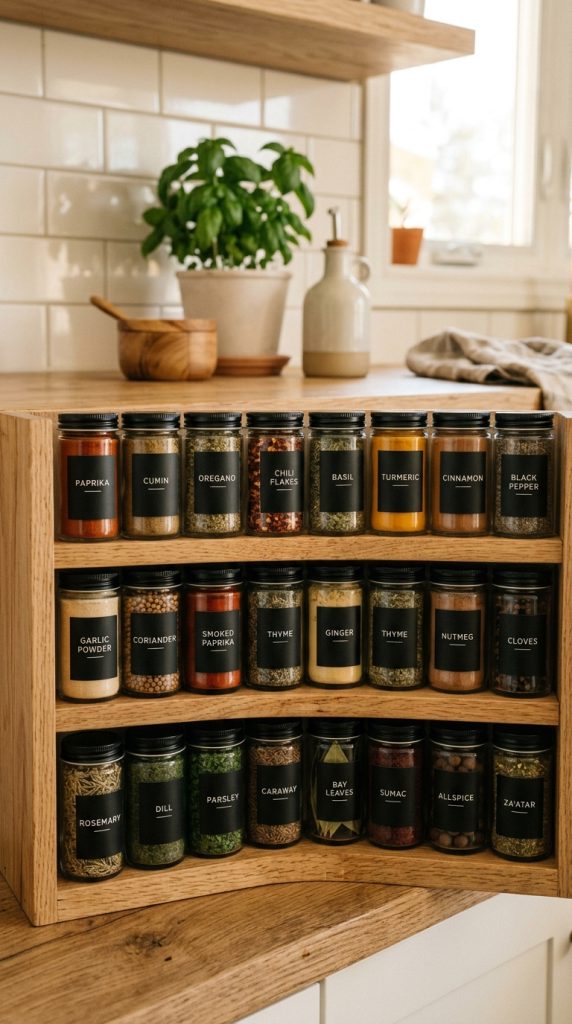
The spice jar uniform label system is a modern kitchen organization hack where all spices are transferred into matching containers with consistent labels. Instead of keeping different branded packets and bottles, everything is standardized into one visual system.
What makes this hack so powerful is the instant visual transformation. Even a small spice rack can look chaotic when every bottle is different in size, color, and branding. Once replaced with uniform jars, the entire area looks clean, expensive, and professionally organized.
This system is not just aesthetic—it also improves cooking efficiency. You can quickly find spices, track usage, and avoid buying duplicates because everything is clearly visible.
How to implement (Step-by-step)
Empty spice collection:
- Gather all spices in one place
- Discard expired items
Choose uniform jars:
- Glass spice jars with same shape
- Airtight lids for freshness
Transfer spices:
- Pour each spice into separate jar
- Avoid mixing labels or containers
Label clearly:
- Use minimal black/white labels
- Include spice name only
Arrange neatly:
- Group by usage (daily vs occasional)
- Place frequently used spices in front
Best for (Who should use it)
- Home cooks and meal-prep kitchens
- Small kitchens with limited space
- Pinterest aesthetic lovers
- Anyone wanting visual kitchen upgrade
Pro tip (Expert advice)
Arrange spices alphabetically or by cooking style (baking, savory, etc.) for faster access.
Mistake to avoid
Avoid mixing different jar styles—it breaks the clean, uniform aesthetic instantly.
8. Vertical Storage Maximization for Small Kitchen Efficiency
Explanation (What it is)
Vertical storage maximization is the practice of using upward space in the kitchen instead of relying only on countertops and lower cabinets. This includes wall shelves, hanging racks, stackable organizers, and tall storage units.
What makes this hack extremely effective is that most kitchens—especially small ones—have unused vertical space that can dramatically increase storage capacity. Instead of cluttering counters, items are lifted upward, creating more breathing space below.
This method is also essential for maintaining a clean aesthetic because it reduces surface clutter while keeping everything organized and accessible.
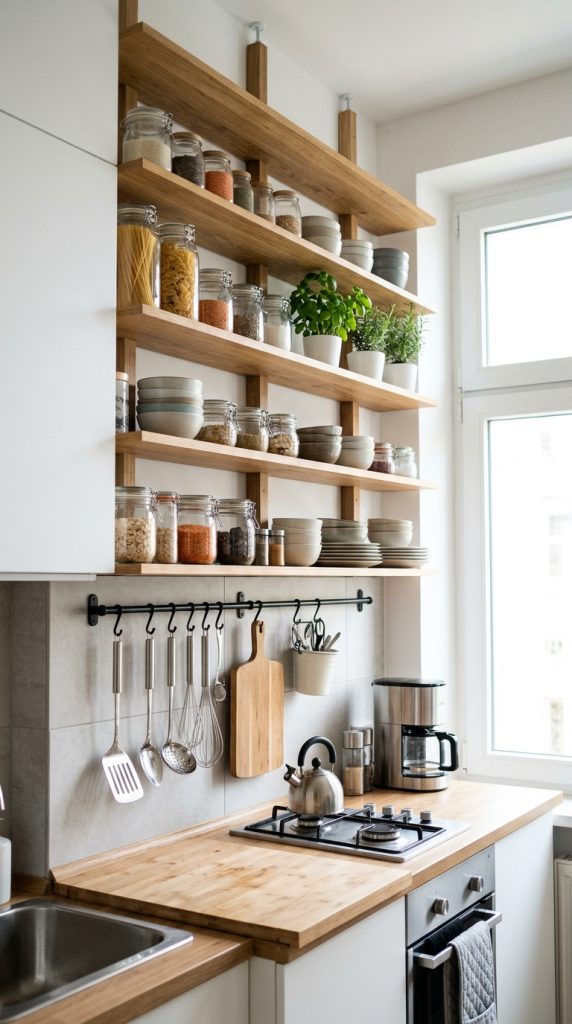
How to implement (Step-by-step)
Identify empty wall space:
- Above counters
- Beside fridge or stove
Install storage solutions:
- Floating shelves
- Hanging racks for utensils
- Wall-mounted spice holders
Use stackable containers:
- Stack plates, bowls, or pantry items vertically
Organize logically:
- Heavy items lower
- Light items higher
Keep visual balance:
- Do not overcrowd walls
Best for (Who should use it)
- Small kitchens or apartments
- Minimal countertop space
- People needing extra storage
- Modern aesthetic kitchen setups
Pro tip (Expert advice)
Use matching storage materials (wood, metal, or glass) for a cohesive, luxury look.
Mistake to avoid
Avoid overloading walls with too many items—it can make the kitchen feel cluttered instead of organized.
9. Appliance Garage for Hidden Countertop Cleanliness
Explanation (What it is)
An appliance garage is a dedicated hidden storage space designed to keep small kitchen appliances out of sight while still keeping them easily accessible. Instead of leaving toasters, coffee machines, or blenders on the countertop, they are stored inside a closed cabinet or pull-down compartment.
What makes this hack powerful is its direct impact on countertop cleanliness. Appliances are necessary in any kitchen, but they often create visual clutter. By hiding them in a designated space, the kitchen instantly looks more modern, minimal, and high-end.
This concept is widely used in luxury kitchens because it maintains functionality without sacrificing aesthetics.
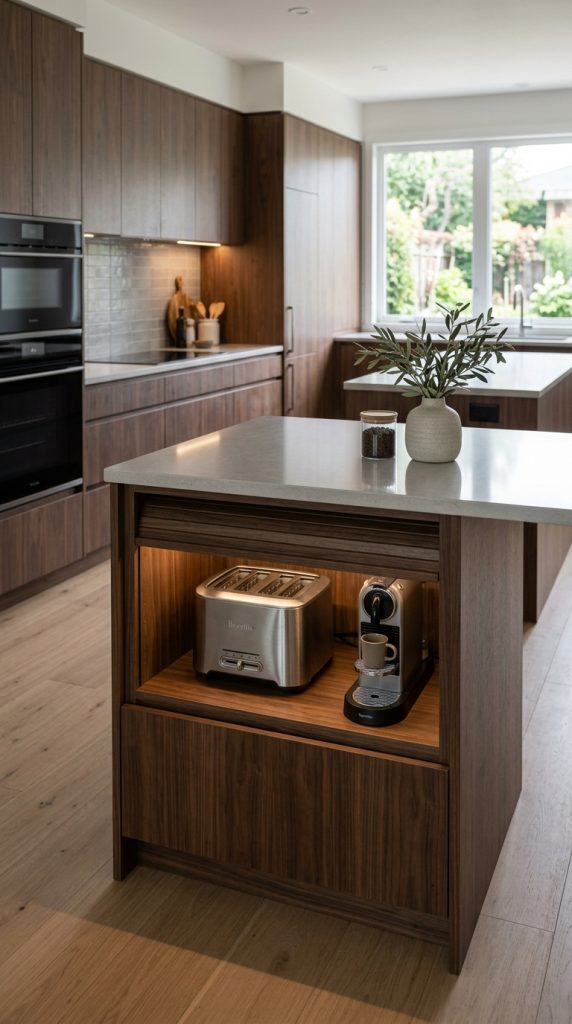
How to implement (Step-by-step)
Identify appliances:
- Coffee maker
- Toaster
- Blender or mixer
Design storage space:
- Cabinet with door or roll-up cover
- Easy plug access inside
Organize inside garage:
- Keep appliances plugged if possible
- Arrange in order of use frequency
Maintain accessibility:
- Ensure easy opening and closing
Keep countertop clear:
- Only bring out appliances when in use
Best for (Who should use it)
- Minimalist kitchen lovers
- Small kitchens with limited counter space
- Coffee or baking-focused households
- High-end aesthetic kitchens
Pro tip (Expert advice)
Place most-used appliance at the front for quick daily access without disrupting organization.
Mistake to avoid
Avoid creating an “appliance pile” inside the garage—each item should still have a defined spot.
10. Pantry Zone System for Smart Category Organization
Explanation (What it is)
The pantry zone system is a modern kitchen organization method where food and items are grouped into specific “zones” based on usage instead of random placement. Instead of mixing snacks, cooking ingredients, and breakfast items together, each category gets its own dedicated section.
What makes this system powerful is that it follows natural kitchen behavior. You don’t think in terms of storage—you think in terms of actions like cooking, snacking, baking, or breakfast prep. When your pantry matches your habits, everything becomes faster, cleaner, and more intuitive.
This also creates a clean aesthetic because each shelf looks structured and purposeful. It reduces visual chaos and makes even a fully stocked pantry look organized and intentional.
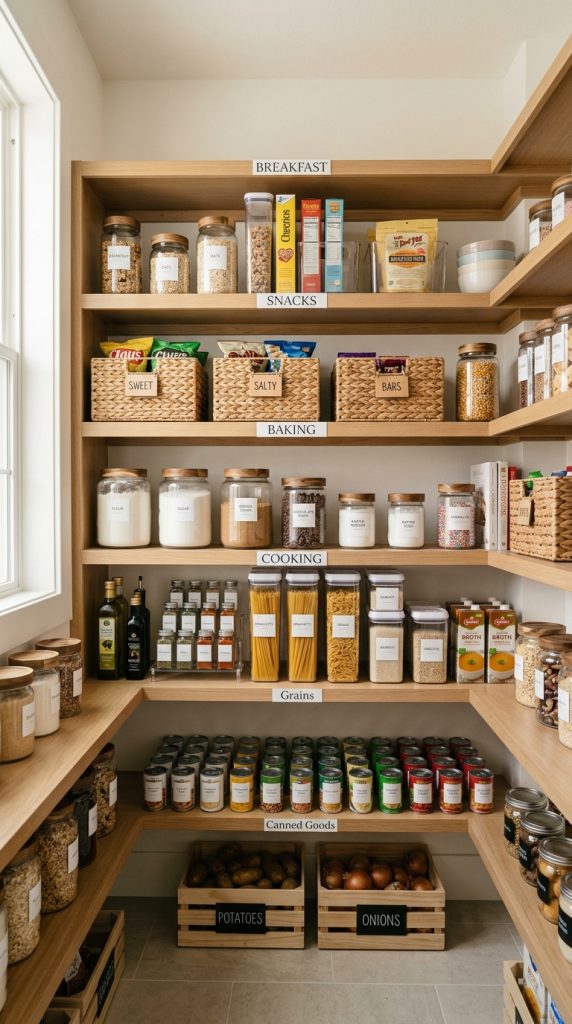
How to implement (Step-by-step)
Empty and sort:
- Remove all pantry items
- Group into categories
Create zones:
- Breakfast zone (cereal, oats, spreads)
- Cooking zone (pasta, rice, spices)
- Snack zone (chips, bars, treats)
- Baking zone (flour, sugar, chocolate)
Assign shelf areas:
- Top shelves for light items
- Eye-level for daily use
- Lower shelves for heavy items
Use containers:
- Clear bins or baskets per zone
- Label each category
Best for (Who should use it)
- Busy family kitchens
- Meal-prep households
- Large or small pantry spaces
- People wanting structured organization
Pro tip (Expert advice)
Place the most frequently used zone at eye level to reduce daily effort and clutter.
Mistake to avoid
Avoid mixing categories on one shelf—it breaks the system and creates hidden mess.
11. Minimalist Sink & Counter Cleaning Reset System
Explanation (What it is)
The minimalist sink and counter cleaning reset system is a daily habit-based organization hack that keeps the kitchen visually clean at all times. Instead of letting dishes, sponges, bottles, and clutter accumulate around the sink and counters, this system ensures everything is reset to a clean baseline after every use.
What makes this hack so effective is that it doesn’t just focus on storage—it focuses on maintenance. Even a perfectly organized kitchen can look messy if the sink area is cluttered. The sink zone is the “visual focal point” of most kitchens, so keeping it clean instantly improves the entire kitchen aesthetic.
This system is especially powerful for maintaining a Pinterest-style clean kitchen because it prioritizes consistency over deep cleaning.
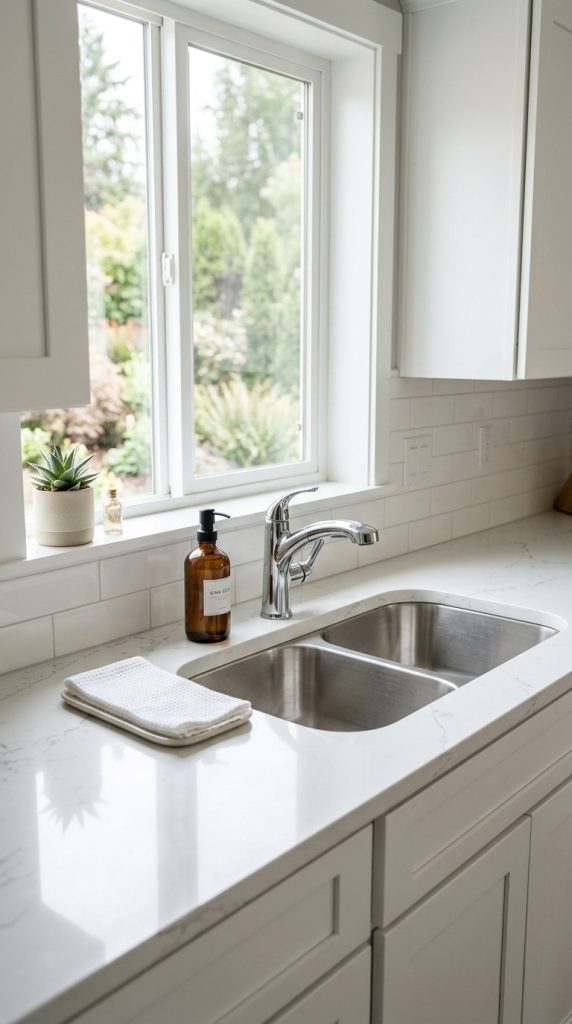
How to implement (Step-by-step)
Create a reset routine:
- Wash dishes immediately after use
- Wipe sink after every cooking session
Organize sink area:
- Keep only essential items (soap, brush)
- Use matching containers for soap
Clear counters daily:
- Remove unused items after cooking
- Return items to pantry or drawers
End-of-day reset:
- Empty sink completely
- Wipe all surfaces
- Re-align items neatly
Best for (Who should use it)
- Busy households
- Small kitchens where clutter shows quickly
- People wanting aesthetic daily cleanliness
- Minimalist lifestyle users
Pro tip (Expert advice)
A 5-minute nightly reset can completely transform how your kitchen looks every morning.
Mistake to avoid
Avoid leaving “just one dish” or “temporary items”—they quickly turn into clutter.