
A bedroom is more than just a place to sleep—it is your personal retreat, your comfort zone, and the space where your day begins and ends. In modern interior design, bedrooms are no longer treated as purely functional rooms. Instead, they are becoming emotional spaces that reflect calmness, luxury, and personal style. This is why “hotel-style bedrooms” have become one of the most searched and saved aesthetics on Pinterest and home decor platforms.
The appeal of a hotel suite bedroom is simple: it feels clean, elevated, peaceful, and effortlessly luxurious. When you walk into a well-designed hotel room, everything feels intentional. The lighting is soft, the bedding is perfectly arranged, the colors are calm, and there is no visual clutter. That exact feeling is what people now want to recreate in their own homes.

The problem, however, is that many bedrooms feel the opposite of this ideal. They often become storage spaces rather than relaxation spaces. Clothes pile up, decor becomes inconsistent, lighting feels too harsh, and the room loses its sense of calm. Even when a bedroom is clean, it may still lack that “luxury hotel vibe” because it is missing design balance and visual harmony.
Creating a dreamy hotel-style bedroom is not about expensive furniture or large renovations. Instead, it is about understanding design psychology—how colors, textures, lighting, and layout work together to create a feeling of comfort and luxury. Small changes can dramatically shift the entire atmosphere of a room.
One of the key elements of hotel-style bedrooms is minimal visual noise. High-end hotel rooms are designed to feel open and breathable. This means fewer unnecessary items on surfaces, coordinated decor, and hidden storage solutions. The goal is not emptiness, but intentional simplicity.
Another important factor is layering. Luxury bedrooms often use layered bedding, soft fabrics, and textured materials to create depth. Instead of flat, plain beds, you see plush pillows, soft duvets, throws, and coordinated color palettes that make the bed feel like a centerpiece.
Lighting also plays a major role in creating a hotel-like atmosphere. Most luxury hotel rooms avoid harsh overhead lighting and instead use warm, indirect lighting sources such as bedside lamps, wall sconces, and soft ambient glow. This instantly creates a cozy and relaxing mood.
Color psychology is another major influence. Hotel-style bedrooms often use neutral and calming tones like beige, white, cream, soft grey, and muted earth tones. These colors reduce visual stress and help the brain relax, making the room feel more peaceful and balanced.
Texture mixing is another secret used in luxury interior design. Combining materials like linen, cotton, velvet, wood, and soft metals creates a rich but subtle visual experience. This layering of textures makes the room feel expensive without being overwhelming.
Space organization is equally important. Even a small bedroom can feel like a luxury suite if everything has a place. Hidden storage, clean surfaces, and structured layouts create the illusion of a larger, more refined space.
The hotel-style aesthetic also focuses heavily on symmetry. Matching bedside tables, balanced lighting on both sides of the bed, and aligned decor elements create a sense of order and calm. This symmetry is one of the key reasons hotel rooms feel so visually satisfying.
Another growing trend is “soft luxury bedrooms,” which combine minimalism with comfort. Instead of overly decorated rooms, the focus is on soft textures, cozy bedding, and subtle decor accents that feel warm and inviting.
Ultimately, a dreamy bedroom is not just about appearance—it is about feeling. It should feel like a place where you can relax, disconnect from stress, and recharge your mind. A well-designed bedroom improves sleep quality, reduces stress, and enhances overall well-being.
In this guide, “12 Dreamy Bedroom Ideas That Feel Like Hotel Suites,” you will discover practical, realistic, and aesthetic design ideas that can transform any bedroom into a luxury-inspired space. Each idea will focus on:
- What the design concept is
- Why it creates a hotel-like feel
- How to apply it step by step
- Best styling combinations
- Expert interior design tips
- Common mistakes to avoid
These ideas are designed for real homes—whether you live in a small apartment, a shared room, or a full house. You don’t need a large budget to achieve a luxury aesthetic; you only need the right design approach.
By the end of this guide, you will understand how to turn an ordinary bedroom into a calming, elegant, and hotel-inspired retreat that feels peaceful, stylish, and deeply comfortable every single day.
Now let’s explore the 12 dreamy bedroom ideas that can completely transform your space into a luxury hotel-style sanctuary.
1. Neutral Color Palette for Instant Hotel-Luxury Feel
Explanation (What it is)
A neutral color palette is the foundation of any hotel-style bedroom. It focuses on soft, calming shades like beige, white, cream, warm grey, and muted earth tones. These colors are used across walls, bedding, curtains, and decor to create a cohesive and peaceful environment.
What makes neutral tones so powerful is their psychological effect. They instantly reduce visual stress and make the room feel more open, clean, and expensive. Hotel suites almost always rely on neutral palettes because they create a timeless, elegant atmosphere that never feels overwhelming.
Unlike bold colors, neutrals don’t compete for attention. Instead, they allow textures, lighting, and layout to stand out—this is exactly what gives hotel rooms their “effortless luxury” look.

How to implement (Step-by-step)
Start with the base:
- Choose 1 main neutral tone (white, beige, or soft grey)
Build layers:
- Add 1–2 supporting shades (cream, taupe, sand)
Apply to key areas:
- Bedding (duvet, sheets, pillows)
- Curtains and rugs
- Wall paint or wallpaper
Balance tones:
- Keep dark accents minimal (only small decor items)
Maintain consistency:
- Avoid mixing too many contrasting colors
Best for (Who should use it)
- Small bedrooms needing a larger visual feel
- Minimalist or luxury aesthetic lovers
- People wanting calm and relaxing spaces
- Rental or budget-friendly room upgrades
Pro tip (Expert advice)
Stick to warm neutrals instead of cool tones if you want a cozy hotel-suite atmosphere.
Mistake to avoid
Avoid using too many different colors—cluttered palettes instantly destroy the luxury effect.
2. Layered Bedding Setup for Hotel-Style Comfort
Explanation (What it is)
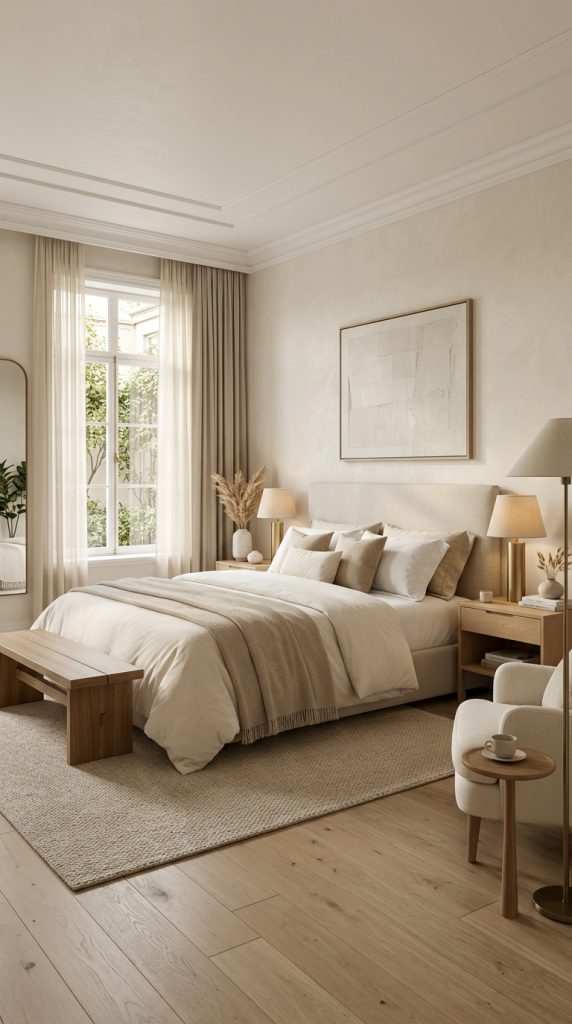
Layered bedding is one of the most recognizable features of luxury hotel rooms. It involves combining multiple bedding elements—such as fitted sheets, duvet covers, blankets, throws, and decorative pillows—to create a plush, inviting bed that feels soft and high-end.
What makes layered bedding so important is its visual depth. Instead of a flat, basic bed, layering adds volume, texture, and structure. This instantly makes the entire bedroom feel more expensive and well-designed.
Hotels use layering not only for comfort but also for presentation. A well-layered bed becomes the centerpiece of the room, setting the tone for the entire space.
How to implement (Step-by-step)
Start with basics:
- High-quality fitted sheet in neutral tone
- Soft duvet or comforter
Add layers:
- Lightweight blanket or quilt folded at the end
- Decorative throw blanket for texture
Add pillows:
- 2–4 sleeping pillows
- 2 decorative cushions in matching tones
Arrange neatly:
- Fold layers cleanly, avoid messy stacking
- Keep symmetry on both sides
Best for (Who should use it)
- Anyone wanting luxury hotel aesthetics
- Cold or cozy bedroom styles
- Large or small beds
- Pinterest-inspired bedroom setups
Pro tip (Expert advice)
Mix textures (linen + cotton + knit) instead of mixing colors for a richer hotel feel.
Mistake to avoid
Avoid overloading the bed with too many pillows—it should look full but still clean and structured.
3. Soft Ambient Lighting for Cozy Luxury Atmosphere
Explanation (What it is)
Soft ambient lighting is the secret behind the warm, relaxing glow you see in luxury hotel rooms. Instead of relying on harsh overhead lighting, this style uses multiple soft light sources to create depth, warmth, and mood.
Lighting completely changes how a bedroom feels. Even a beautifully decorated room can feel flat or cold with poor lighting. In contrast, warm ambient lighting instantly makes a space feel cozy, expensive, and inviting.
Hotels use layered lighting to control mood—soft bedside lamps for relaxation, warm wall lights for ambiance, and subtle accent lighting for depth.

How to implement (Step-by-step)
Replace harsh lighting:
- Avoid strong white ceiling lights
Add layered lighting:
- Bedside lamps with warm bulbs
- Floor lamps in corners
- LED warm strip lights behind headboard
Control brightness:
- Use dimmable bulbs if possible
Position strategically:
- Place lights at different heights
- Avoid single light source
Best for (Who should use it)
- Bedrooms needing cozy atmosphere
- Nighttime relaxation spaces
- Luxury aesthetic lovers
- Small rooms needing depth
Pro tip (Expert advice)
Use warm white light (2700K–3000K) for the most hotel-like glow.
Mistake to avoid
Avoid bright blue-toned lighting—it destroys the soft luxury hotel effect instantly.
4. Minimal Nightstand Styling for a Clean Hotel Look
Explanation (What it is)
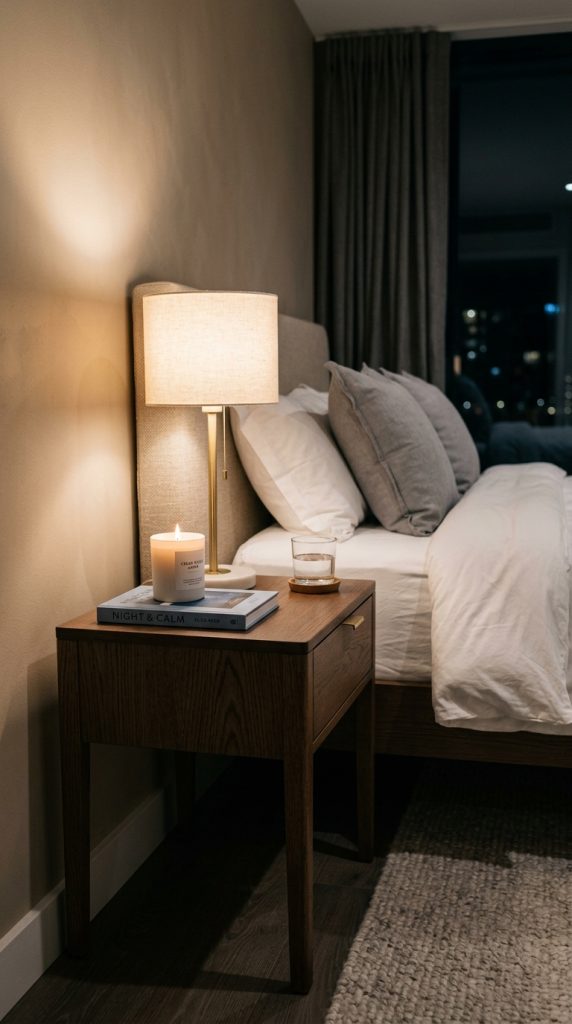
Minimal nightstand styling is about keeping your bedside table clean, intentional, and visually balanced—just like a luxury hotel suite. Instead of filling the nightstand with random items, chargers, clutter, and decorations, you only keep a few carefully selected essentials.
What makes this so important is that nightstands are one of the first things you notice in a bedroom. If they are cluttered, the whole room instantly feels messy, even if everything else is clean. In hotel rooms, nightstands are always styled with purpose: a lamp, a book, maybe a small vase or tray, and nothing unnecessary.
This creates a calm, structured look that feels peaceful and high-end. The idea is not emptiness, but controlled simplicity.
How to implement (Step-by-step)
Clear everything first:
- Remove all unnecessary items
- Wipe surface completely
Choose essentials only:
- One bedside lamp
- One small decor item (vase, candle, or plant)
- One functional item (book or tray)
Organize small items:
- Use a tray for remotes, glasses, or chargers
Keep symmetry:
- If you have two nightstands, match both sides
Maintain daily:
- Reset surface every night before bed
Best for (Who should use it)
- Small bedrooms needing visual clarity
- Minimalist or luxury aesthetic lovers
- Hotel-style bedroom setups
- People wanting less clutter and more calm
Pro tip (Expert advice)
Stick to the “rule of three” — no more than three visible items on a nightstand.
Mistake to avoid
Avoid turning the nightstand into storage—it should feel styled, not crowded.
5. Statement Headboard for Luxury Focal Point Design
Explanation (What it is)
A statement headboard is a bold or visually strong bed headboard that becomes the main focal point of the bedroom. In hotel-style rooms, the bed is always the centerpiece, and the headboard plays a major role in creating that luxury, structured look.
What makes a headboard powerful is how it frames the bed and anchors the entire room design. It adds height, structure, and personality while keeping the space elegant. Hotel suites often use tall upholstered headboards or soft textured panels to create a rich, layered visual effect.
Even in simple bedrooms, upgrading the headboard can instantly make the room feel more expensive and professionally designed.

How to implement (Step-by-step)
Choose headboard style:
- Upholstered fabric (linen, velvet)
- Wooden slatted design
- Tall padded headboard
Match room theme:
- Neutral tones for calm luxury
- Dark tones for dramatic elegance
Position correctly:
- Center perfectly aligned with bed
Enhance styling:
- Add wall lighting or sconces above
- Keep bedding simple to highlight headboard
Best for (Who should use it)
- Bedrooms needing a focal point
- Luxury or hotel-inspired interiors
- Large or small bed spaces
- Pinterest aesthetic lovers
Pro tip (Expert advice)
A tall headboard automatically makes a room feel more “hotel suite” without adding extra decor.
Mistake to avoid
Avoid overly busy patterns—it can break the calm, luxury atmosphere.
6. Floor-to-Ceiling Curtains for Elegant Room Height
Explanation (What it is)
Floor-to-ceiling curtains are a classic hotel design trick used to make bedrooms feel taller, more elegant, and more luxurious. Instead of short curtains that only cover the window, long curtains extend from near the ceiling all the way down to the floor.
What makes this so effective is the illusion of height. The human eye naturally follows vertical lines upward, so long curtains make the ceiling appear higher and the room feel more spacious. This is one of the simplest ways to instantly upgrade a bedroom without changing furniture.
Hotels use this technique to create a dramatic, flowing, and soft visual effect that enhances the overall calmness of the room.

How to implement (Step-by-step)
Install curtain rods high:
- Place rods close to ceiling, not window frame
Choose fabric:
- Linen for soft natural look
- Velvet for luxury feel
- Sheer curtains for light elegance
Select length:
- Curtains should lightly touch the floor
Layer if needed:
- Combine sheer + blackout curtains
Maintain flow:
- Keep curtains neatly aligned and wrinkle-free
Best for (Who should use it)
- Small bedrooms needing height illusion
- Luxury or hotel-inspired spaces
- Minimalist aesthetic lovers
- Rooms with natural light focus
Pro tip (Expert advice)
Always hang curtains higher than the window frame—it is the fastest visual upgrade in any bedroom.
Mistake to avoid
Avoid short or floating curtains—they make the room feel smaller and unfinished.
7. Soft Textured Layers for a Cozy Hotel Feel
Explanation (What it is)
Soft textured layering is the use of different fabrics and materials in a bedroom to create depth, warmth, and a luxurious hotel-like atmosphere. Instead of relying only on color, hotel-style bedrooms use textures like linen, velvet, cotton, wool, and boucle to make the space feel rich and inviting.
What makes texture so powerful is that it adds visual comfort without clutter. Even if a room is neutral and simple, layering textures makes it feel expensive and thoughtfully designed. Hotels rely heavily on this technique because it creates a “soft luxury” feeling that instantly relaxes the mind.
This includes bedding, cushions, rugs, curtains, and even furniture finishes. When combined correctly, textures make a bedroom feel like a high-end suite instead of a basic sleeping space.

How to implement (Step-by-step)
Start with bedding base:
- Use cotton or linen sheets
Add layered textures:
- Velvet cushions for richness
- Knitted throw blanket at the foot of bed
- Wool or shag rug under bed
Mix materials carefully:
- Combine 2–3 textures only
- Keep colors neutral
Balance softness:
- Avoid overly heavy or overly smooth combinations
Best for (Who should use it)
- Cozy bedroom lovers
- Luxury hotel aesthetic setups
- Cold climate bedrooms
- Minimal but rich interior styles
Pro tip (Expert advice)
Always mix one “soft” texture (cotton) with one “luxury” texture (velvet or boucle) for balance.
Mistake to avoid
Avoid mixing too many patterns—focus on texture, not print overload.
8. Symmetry Bed Placement for Balanced Hotel Design
Explanation (What it is)
Symmetry bed placement is a design technique where both sides of the bed are visually balanced using matching furniture and decor. In hotel-style bedrooms, symmetry creates a sense of order, calm, and structure that feels instantly relaxing and luxurious.
When a bedroom is symmetrical, the brain naturally perceives it as organized and peaceful. This is why most hotel suites place identical nightstands, matching lamps, and balanced decor on both sides of the bed.
Symmetry doesn’t mean everything must be identical in a strict way, but rather visually balanced so one side does not feel heavier than the other.

How to implement (Step-by-step)
Center the bed:
- Place bed in the middle of the wall
Add matching nightstands:
- One on each side of bed
Balance lighting:
- Matching lamps or wall sconces
Decor symmetry:
- Similar decor items (vase, books, candles)
Keep spacing equal:
- Ensure both sides feel evenly weighted
Best for (Who should use it)
- Hotel-inspired bedrooms
- Master bedrooms
- Minimalist interior lovers
- People wanting visual calmness
Pro tip (Expert advice)
Even if items are not identical, matching height and shape creates visual symmetry.
Mistake to avoid
Avoid uneven decor placement—it creates visual imbalance and breaks the luxury feel.
9. Hidden Storage Solutions for Clutter-Free Luxury Look
Explanation (What it is)
Hidden storage solutions are smart organization methods that keep clutter out of sight while maintaining a clean, hotel-like bedroom appearance. Instead of leaving items visible, everything is stored inside beds, cabinets, benches, or concealed organizers.
What makes hidden storage essential is that luxury bedrooms always look clean because clutter is never visible. The space feels open, calm, and breathable because everything has a dedicated hidden place.
This is especially important in modern homes where bedrooms often serve multiple functions like storage, dressing, or even workspace areas.

How to implement (Step-by-step)
Use storage furniture:
- Beds with drawers underneath
- Storage ottomans or benches
- Built-in wardrobes
Organize categories:
- Clothes
- Extra bedding
- Personal items
Use storage bins:
- Label hidden containers clearly
Keep surfaces clean:
- Remove items from visible areas
Maintain system:
- Return items to hidden storage daily
Best for (Who should use it)
- Small bedrooms
- Minimalist lifestyle users
- Rental spaces with limited storage
- Anyone wanting clean aesthetic rooms
Pro tip (Expert advice)
If you can’t see it, it doesn’t clutter your room—hidden storage is the real secret of hotel bedrooms.
Mistake to avoid
Avoid overstuffing hidden storage—it defeats the purpose and creates disorganization over time.
10. Statement Lighting for a Luxury Hotel Ambience
Explanation (What it is)
Statement lighting is the use of visually striking yet elegant light fixtures that instantly elevate the bedroom’s atmosphere. In hotel-style interiors, lighting is never just functional—it is a design feature. Whether it’s a sculptural pendant light, elegant wall sconces, or a modern chandelier, the goal is to create mood, depth, and a sense of luxury.
What makes statement lighting so powerful is that it becomes part of the room’s identity. Even a simple bedroom can look high-end when the lighting is carefully chosen. Hotels often use layered lighting with one standout piece that draws attention while still keeping the overall feel soft and relaxing.
Unlike harsh ceiling lights, statement lighting creates warmth and dimension, making the room feel cozy yet refined.

How to implement (Step-by-step)
Choose focal lighting:
- Pendant light above bed or center of room
- Elegant bedside sconces
- Small chandelier for luxury effect
Use warm lighting tone:
- Soft white (2700K–3000K)
Layer lighting sources:
- Combine ceiling + bedside + ambient lights
Position carefully:
- Ensure lighting highlights bed area
Keep design cohesive:
- Match metal finish with room theme (gold, black, chrome)
Best for (Who should use it)
- Luxury bedroom setups
- Hotel-inspired interiors
- Medium to large bedrooms
- Pinterest aesthetic lovers
Pro tip (Expert advice)
Choose one “hero light” and keep everything else subtle—too many statement pieces can overwhelm the room.
Mistake to avoid
Avoid cold white lighting—it instantly destroys the cozy hotel atmosphere.
11. Minimal Decor Styling for Calm, Expensive Look
Explanation (What it is)
Minimal decor styling is the practice of decorating a bedroom with intention, restraint, and simplicity. Instead of filling the space with many decorative objects, hotel-style bedrooms use only a few carefully chosen pieces that enhance the atmosphere without creating visual clutter.
What makes this approach so important is that luxury spaces are not defined by how much they contain, but by how thoughtfully they are arranged. A single vase, a framed artwork, or a sculptural object can have more impact than a room full of decorations.
Minimal decor also allows other design elements—like bedding, lighting, and textures—to stand out, which is exactly how hotel suites achieve their clean and expensive look.

How to implement (Step-by-step)
Start with a clean base:
- Remove unnecessary decor items
Choose focal pieces:
- One wall art piece
- One vase or sculpture
- One decorative tray
Follow spacing rule:
- Leave empty space between items
Stick to color palette:
- Neutral or soft tones only
Balance placement:
- Distribute decor evenly, not crowded in one area
Best for (Who should use it)
- Minimalist bedroom lovers
- Small bedrooms needing openness
- Hotel-style aesthetic seekers
- People who prefer clean spaces
Pro tip (Expert advice)
Think “one statement per surface”—not multiple competing items.
Mistake to avoid
Avoid over-decorating surfaces like dressers or shelves—it removes the luxury feel instantly.
12. Hotel-Style Scent & Sensory Experience Setup
Explanation (What it is)
Hotel-style scent and sensory experience setup focuses on creating a luxurious bedroom atmosphere through smell, softness, and subtle sensory details. High-end hotels don’t rely only on visuals—they also use signature scents, soft fabrics, and calming ambiance to create a complete emotional experience.
What makes this step powerful is that scent is directly connected to memory and emotion. A pleasant, consistent fragrance can instantly make a bedroom feel more relaxing, expensive, and inviting. Combined with soft lighting and clean design, it completes the hotel-suite illusion.
This final layer transforms the bedroom from just a visually nice space into a fully immersive comfort environment.

How to implement (Step-by-step)
Choose signature scent:
- Lavender for relaxation
- Vanilla or musk for luxury feel
- Fresh cotton or linen scent for cleanliness
Use scent tools:
- Reed diffusers
- Scented candles
- Linen sprays
Enhance fabric softness:
- Soft bedding materials (cotton, linen, satin)
Maintain freshness:
- Air room daily
- Keep bedding clean and fresh
Create calm atmosphere:
- Combine scent with soft lighting at night
Best for (Who should use it)
- Luxury hotel-style bedroom lovers
- People wanting relaxation-focused spaces
- Stress-relief bedroom setups
- Pinterest aesthetic interiors
Pro tip (Expert advice)
Stick to one signature scent only—mixing too many fragrances can feel overwhelming instead of luxurious.
Mistake to avoid
Avoid strong artificial scents—they ruin the calm, hotel-like experience.