
Building a kingdom in Minecraft is one of the most creative and rewarding projects players can take on. Unlike simple survival houses or small starter bases, a kingdom allows you to create an entire world filled with castles, villages, farms, roads, defenses, marketplaces, and hidden areas that tell a story. Even a small kingdom layout can feel grand and immersive when every section is planned carefully.
One of the biggest challenges Minecraft players face is knowing where to start. A blank piece of land can feel overwhelming, especially when you imagine creating a complete medieval kingdom with realistic details. Many builders begin by placing random structures and later realize that the village feels messy, disconnected, or too empty. This is why having a proper kingdom layout before building can completely change the final result.
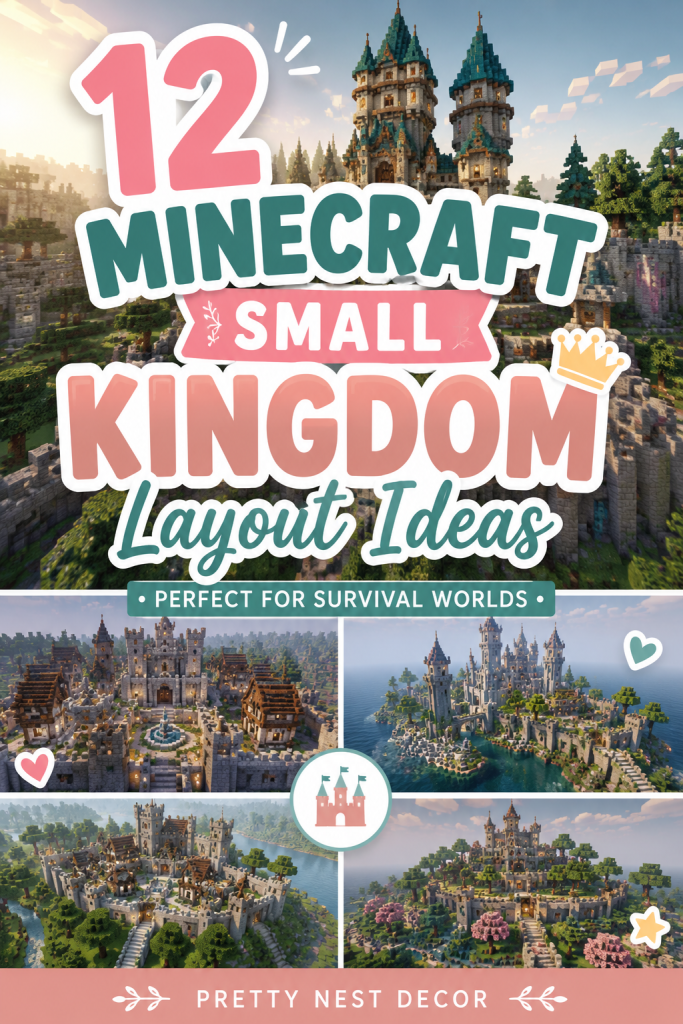
A great Minecraft kingdom is not only about making the biggest castle possible. The best builds focus on organization, atmosphere, and storytelling. A small kingdom can often feel more alive than a huge empty city if the layout includes thoughtful details such as winding roads, small homes, guard towers, farms, marketplaces, and natural landscapes.
Small kingdoms are especially popular because they are achievable. Large Minecraft cities can take hundreds of hours to complete, while a smaller kingdom allows players to finish a beautiful project without becoming overwhelmed. With smart planning, even a limited area can include everything a fantasy kingdom needs.
Another important part of kingdom building is choosing the right environment. The biome you select influences the entire feeling of your creation. A mountain kingdom creates a powerful fortress atmosphere, while a forest kingdom feels magical and hidden. A plains kingdom can look like a classic medieval village, and a snowy kingdom can create a dramatic fantasy scene.
The layout is the foundation of the entire build. Where you place your castle, houses, farms, walls, and roads determines how natural and realistic the kingdom feels. Professional Minecraft builders often think like city planners before placing blocks. They consider movement, defense, resources, and visual balance.
A good small kingdom usually has a central feature that attracts attention. This is often a castle, palace, or main tower. Around this central structure, other areas can be organized based on importance. Residential areas, shops, farms, and defensive structures should support the main building rather than compete with it.
Another reason kingdom layouts are so popular is the opportunity for creativity. Minecraft gives players endless building possibilities. You can create a peaceful farming kingdom, a dangerous warrior fortress, a magical fantasy village, or a royal empire inspired by historical architecture.
Details make the biggest difference in kingdom builds. A simple stone path becomes more interesting when mixed with gravel, mossy blocks, lanterns, and plants. A small house becomes realistic when it includes a chimney, storage area, garden, and small outdoor details. These small touches create the feeling of a living world.
For players who enjoy survival mode, layout planning is even more important. A kingdom needs to be functional, not just beautiful. Storage areas, farms, animal pens, villager trading spaces, and defensive walls all need to fit naturally into the design. A well-planned survival kingdom can become both a home and an adventure area.
Pinterest-style Minecraft inspiration has also changed the way players approach building. Instead of copying single structures, many builders now search for complete layouts that show how different areas connect together. A good layout provides a roadmap that makes building easier and more enjoyable.
In this guide, you will discover 12 Minecraft Small Kingdom Layout Ideas designed to help you create an impressive fantasy world without needing unlimited space. These ideas focus on practical designs that combine beauty, creativity, and functionality.
Each layout concept will help you understand how to organize your kingdom, what structures to include, how to create atmosphere, and which details make the build feel complete. Whether you are a beginner creating your first kingdom or an experienced builder looking for fresh inspiration, these ideas will help you transform an empty Minecraft landscape into a detailed and memorable kingdom.
A small kingdom does not need hundreds of buildings to feel powerful. With the right planning, even a compact area can become a place full of adventure, history, and imagination. The secret is not building bigger—it is building smarter.
1. Classic Medieval Castle Village Kingdom Layout
What it is
The classic medieval castle village layout is one of the most popular Minecraft kingdom designs because it captures the traditional fantasy kingdom feeling that many players imagine. This layout is built around a central castle or fortress that acts as the heart of the kingdom, with smaller houses, farms, shops, and pathways spreading outward around it.

The main idea behind this design is creating a realistic medieval society. The castle is not just a building—it represents the ruler’s home, protection center, and the main landmark of the entire area. Around it, villagers, farmers, blacksmiths, and traders have their own spaces, making the kingdom feel alive rather than like a collection of random structures.
This layout works especially well because it naturally creates a sense of importance. The tallest and strongest structures are placed in the center, while simpler buildings surround them. This gives the kingdom depth and makes the player feel like they are walking through a real fantasy settlement.
How to implement (step-by-step)
Start by choosing a central location for your castle. A hill or slightly elevated area works perfectly because it creates a powerful view over the kingdom.
Build the castle first with strong materials such as stone bricks, cobblestone, deepslate, or andesite.
Create outer castle walls with towers at important corners for defense.
Add a main gate connected to a large pathway leading into the village.
Place small medieval houses around the castle, leaving enough space between buildings.
Create farms on the outer edges of the kingdom with wheat fields, animal pens, and storage barns.
Add a marketplace near the center where villagers can gather.
Finish with details like lanterns, banners, fountains, wells, and gardens.
Best for
This layout is perfect for players who want a traditional fantasy kingdom that feels like something from a medieval story.
It works best for survival worlds, roleplay servers, and players who enjoy creating detailed villages.
Pro tip
Avoid making every building the same size. A realistic kingdom should have variety—large castle structures, medium homes, and small worker houses create a more natural appearance.
Mistake to avoid
Do not build the castle first and then randomly place everything else around it. Plan roads and districts early so the kingdom feels connected.
2. Mountain Fortress Kingdom Layout
What it is
The mountain fortress kingdom layout is designed for players who want a dramatic and powerful build. Instead of creating a kingdom on flat land, this design uses mountains, cliffs, and natural height differences to create a defensive fantasy empire.
Mountain kingdoms feel impressive because they naturally create vertical levels. The castle or main fortress can sit high above the land, while villages, bridges, mines, and farms exist lower down. This creates a layered environment that looks much more realistic than a flat build.

This type of kingdom is inspired by fantasy worlds where rulers build strongholds in difficult-to-reach locations for protection. The height creates a feeling of strength and mystery, making the kingdom look like it has existed for hundreds of years.
How to implement (step-by-step)
Find a mountain area or create your own raised terrain.
Build the main fortress directly into the mountain instead of placing it separately.
Carve tunnels and pathways through the rock to connect different areas.
Create stone bridges between cliffs or elevated sections.
Place watchtowers on mountain peaks for defense.
Build smaller houses on lower levels using stone and wood combinations.
Add mining areas, caves, and hidden storage rooms inside the mountain.
Use waterfalls, hanging gardens, and stairways to make the environment feel connected.
Best for
This layout is ideal for players who love dramatic landscapes, survival challenges, and fantasy-style worlds.
It works especially well in mountain biomes, snowy regions, or worlds with large terrain features.
Pro tip
Use the natural shape of the mountain instead of completely flattening it. Working with the terrain creates a more realistic and impressive kingdom.
Mistake to avoid
Avoid placing everything on one flat level. The main advantage of a mountain kingdom is the height difference, so use multiple layers.
3. Small Island Kingdom Layout
What it is
The small island kingdom layout creates a unique fantasy environment by building an entire kingdom surrounded by water. This design gives the feeling of a hidden royal territory, ancient empire, or peaceful coastal civilization.

Island kingdoms are especially interesting because the limited space forces better planning. Every building needs a purpose, and every area must connect efficiently. Instead of spreading endlessly across land, the builder focuses on creating a compact but detailed world.
Water also adds many creative opportunities. Players can include docks, ships, bridges, fishing areas, lighthouses, and coastal defenses. The result feels like a kingdom that depends on the sea for trade and protection.
How to implement (step-by-step)
Choose a small island or create one using terrain tools and blocks.
Build the royal castle or main tower in the highest central area.
Create a harbor section near the water with docks and boats.
Add small houses around the coastline.
Build a lighthouse or watchtower to guide ships.
Connect areas using stone paths, bridges, and wooden walkways.
Add farms using terraces or small sections of land.
Decorate with palm trees, gardens, lanterns, and coastal details.
Best for
This layout is perfect for players who enjoy ocean builds, peaceful fantasy worlds, and unique survival bases.
It works well for creative mode projects and multiplayer worlds where exploration matters.
Pro tip
Use the coastline as part of your design. Curved beaches, docks, and water pathways make the kingdom feel naturally connected to the environment.
Mistake to avoid
Avoid overcrowding the island. Leave open areas for gardens, paths, and natural scenery so the kingdom does not feel cramped.
4. Cozy Forest Kingdom Layout
What it is
The cozy forest kingdom layout is perfect for players who want a magical, peaceful, and nature-inspired Minecraft world. Instead of focusing on huge stone castles and defensive walls, this design blends buildings with the surrounding environment. The kingdom feels like it grew naturally inside the forest rather than replacing it.

This style creates a fantasy atmosphere similar to a hidden woodland village. Tall trees, winding paths, wooden houses, bridges, gardens, and small towers become part of the landscape. The goal is not to make everything perfectly organized but to create a warm and living environment.
A forest kingdom is often easier to build because it works with natural terrain. Trees, rivers, hills, and uneven ground become design features instead of obstacles. This makes the final result feel more organic and realistic.
How to implement (step-by-step)
Choose a dense forest biome with plenty of trees and natural variation.
Start by creating a central royal area, such as a wooden castle, treehouse palace, or large hall.
Build smaller houses around the center using materials like oak, spruce, mossy stone, and dark wood.
Create curved paths instead of straight roads to match the natural environment.
Add small bridges over rivers or streams.
Place farms and gardens between trees rather than clearing the entire area.
Add lanterns hanging from trees to create a magical nighttime atmosphere.
Decorate with flowers, mushrooms, fences, and small outdoor seating areas.
Best for
This layout is ideal for players who enjoy fantasy, cozy builds, and peaceful survival worlds.
It works especially well for builders who prefer natural designs over large structured cities.
Pro tip
Keep some trees untouched around the kingdom. A mixture of buildings and untouched nature makes the area feel older and more realistic.
Mistake to avoid
Avoid removing too many trees to create space. A forest kingdom loses its charm when it becomes an empty village surrounded by a few trees.
5. Desert Kingdom Layout
What it is
The desert kingdom layout creates a warm, ancient, and mysterious Minecraft world inspired by desert civilizations. This design uses the natural colors of the desert biome to create a kingdom filled with sandstone buildings, temples, marketplaces, and hidden areas.

Unlike forest or medieval kingdoms, desert kingdoms rely heavily on architecture and decoration because there are fewer natural elements. The challenge is creating a beautiful environment while working with a dry landscape.
A well-designed desert kingdom can feel like an ancient empire with royal palaces, trading routes, towers, and secret underground chambers. The limited color palette actually makes the build look more consistent and intentional.
How to implement (step-by-step)
Choose a desert biome with open space and interesting terrain.
Create a central palace using sandstone, smooth sandstone, and terracotta.
Build tall towers or watch structures around the kingdom.
Create a marketplace with small stalls and colorful decorations.
Add narrow streets between buildings to create an ancient city feel.
Build farms using irrigation channels and water systems.
Create hidden underground rooms beneath buildings.
Add palm trees, wells, carpets, lanterns, and decorative patterns.
Use walls around the kingdom to create a protected city feeling.
Best for
This layout is perfect for players who enjoy unique themes, ancient architecture, and creative building challenges.
It works well for adventure maps, roleplay worlds, and fantasy kingdoms.
Pro tip
Use different sandstone textures instead of only one block. Mixing smooth sandstone, cut sandstone, stairs, and slabs creates much more depth.
Mistake to avoid
Avoid making every building a simple sandstone box. Add height, curves, towers, and details to make the kingdom feel alive.
6. Coastal Trading Kingdom Layout
What it is
The coastal trading kingdom layout focuses on creating a kingdom built around the ocean and trade. Instead of being centered only around a castle, this design combines royal areas, ports, markets, and transportation routes.
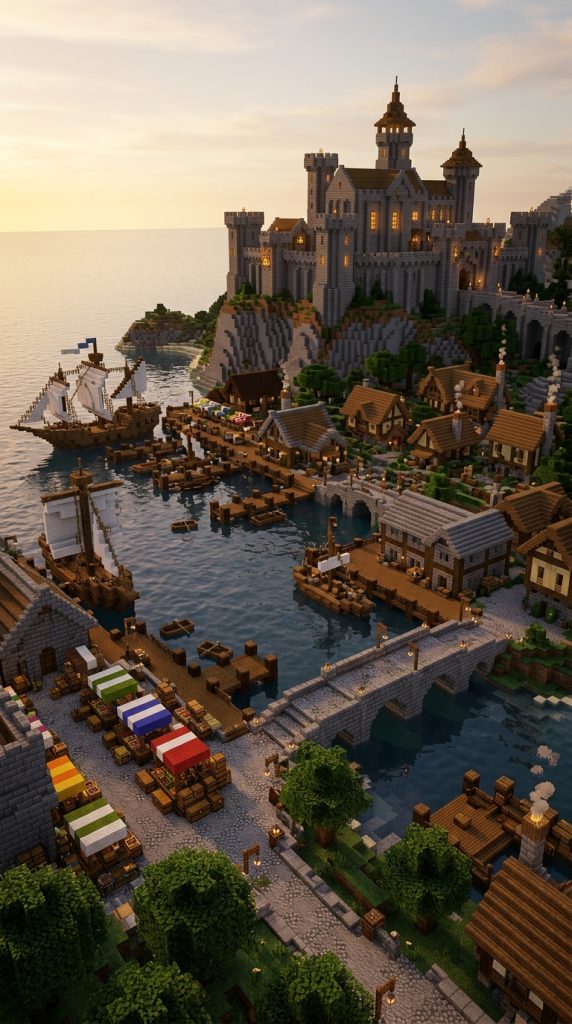
This type of kingdom feels like a place where ships arrive from distant lands, merchants sell goods, and travelers pass through. The ocean becomes an important part of the story rather than just empty space around the build.
Coastal kingdoms are especially fun because they combine multiple building styles. You can include a royal castle on a cliff, a busy harbor below, fisherman houses near the water, and marketplaces connecting everything together.
How to implement (step-by-step)
Choose a coastline with enough space for buildings and docks.
Build the castle or royal area overlooking the ocean.
Create a harbor with wooden docks extending into the water.
Add ships, fishing boats, and storage buildings near the shore.
Build a marketplace close to the harbor for trading.
Create roads connecting the port, village, and castle.
Add warehouses for supplies and trading goods.
Decorate with lanterns, barrels, ropes, cranes, and coastal plants.
Build defensive towers facing the ocean.
Best for
This layout is ideal for players who enjoy adventure, exploration, and realistic world-building.
It works especially well in multiplayer survival servers where trade and community areas matter.
Pro tip
Make the harbor slightly messy and crowded. Real trading towns are not perfectly organized, and small details make them feel more realistic.
Mistake to avoid
Avoid building only the shoreline and forgetting the inland area. A great coastal kingdom needs a connection between the sea, village, and royal center.
7. Fantasy Wizard Kingdom Layout
What it is
The fantasy wizard kingdom layout is designed for players who want a magical, mysterious, and imaginative Minecraft world. Instead of focusing on realistic medieval structures, this style combines castles, magical towers, enchanted forests, hidden libraries, and mystical areas to create the feeling of a fantasy universe.
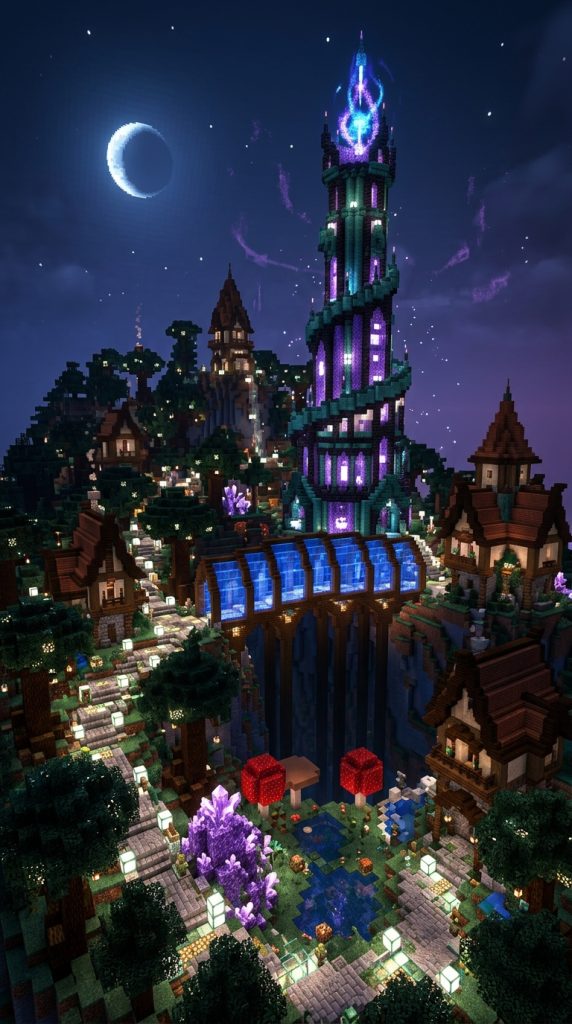
The main feature of this kingdom is usually a powerful wizard tower or magical castle placed at the center. Around it, the rest of the kingdom develops with unusual structures like potion rooms, crystal gardens, magical farms, and secret underground chambers.
What makes this layout special is the storytelling aspect. Every area can have a purpose. A glowing tower might belong to a powerful mage, a hidden cave might contain ancient secrets, and a floating island might hold rare treasures.
This type of build allows players to experiment with colors, unusual shapes, and creative block combinations that may not fit traditional kingdoms.
How to implement (step-by-step)
Choose an area with interesting terrain such as mountains, forests, or cliffs.
Build a large central wizard tower using blocks like amethyst, dark stone, quartz, or colored glass.
Create smaller magical houses around the tower for villagers or fantasy characters.
Add a magical library with bookshelves, enchanting tables, and hidden rooms.
Build potion areas with brewing stations and decorative storage.
Create mystical gardens using flowers, glowing blocks, and custom trees.
Add bridges, floating platforms, and secret pathways.
Decorate the kingdom with lanterns, crystals, banners, and magical effects.
Best for
This layout is perfect for players who enjoy fantasy stories, creative mode, and unique builds.
It works especially well for adventure maps, roleplay worlds, and players who want something different from traditional castles.
Pro tip
Create a story behind each building. A kingdom feels much more interesting when every tower, house, and hidden room has a purpose.
Mistake to avoid
Avoid adding too many random magical elements without planning. A fantasy kingdom still needs structure and organization to feel complete.
8. Small Kingdom With Giant Castle Layout
What it is
The giant castle small kingdom layout focuses on creating a powerful royal centerpiece surrounded by a smaller settlement. Instead of spreading buildings across a large area, this design puts most of the attention on one impressive castle while keeping the surrounding village compact.
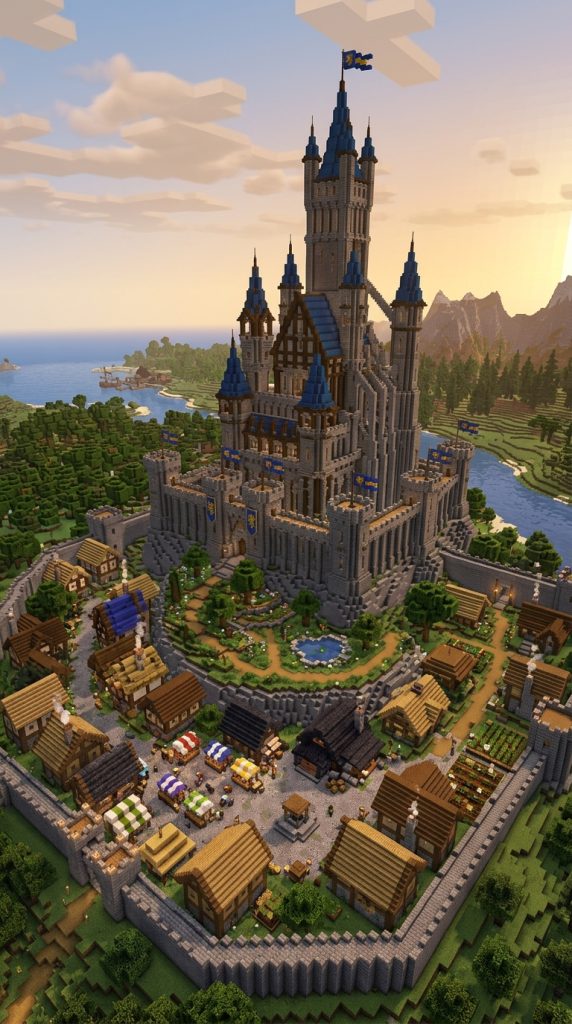
This layout is popular because it creates a dramatic visual impact. When players enter the kingdom, the castle immediately becomes the main attraction. The smaller houses, roads, and farms support the castle and make it feel like a real royal territory.
This style is especially useful for players who want a beautiful kingdom but do not have enough time to build a huge city. A detailed castle combined with a carefully designed village can create the feeling of a much larger world.
How to implement (step-by-step)
Start by selecting a central elevated area for your castle.
Build strong castle walls with towers, gates, and defensive sections.
Create a throne room, royal bedrooms, storage rooms, and hidden passages inside.
Add a small village outside the castle walls.
Build houses for villagers, guards, blacksmiths, and farmers.
Create a main road leading from the castle entrance through the village.
Add a marketplace, fountain, gardens, and gathering areas.
Finish with banners, flags, statues, and decorative landscaping.
Best for
This layout is ideal for players who want a powerful fantasy build without creating an enormous city.
It works well for survival bases, creative projects, and multiplayer kingdoms.
Pro tip
Spend more time detailing the castle exterior. The outside shape and landscaping create the biggest visual impact from a distance.
Mistake to avoid
Avoid making the surrounding village too empty. A huge castle surrounded by a few random houses can make the kingdom feel unfinished.
9. Hidden Valley Kingdom Layout
What it is
The hidden valley kingdom layout creates the feeling of a secret civilization protected by nature. Instead of building in an open area, this design uses valleys, mountains, and natural barriers to create a kingdom that feels isolated and mysterious.
This layout works beautifully because the environment itself becomes part of the defense system. Tall mountains protect the kingdom, forests hide buildings, and rivers create natural borders.
A hidden valley kingdom often feels like a forgotten fantasy world discovered by explorers. It is perfect for players who enjoy adventure-style builds where the location feels just as important as the structures.
The kingdom can include a central castle, small villages, farms, bridges, and secret entrances hidden within the landscape.
How to implement (step-by-step)
Find a valley surrounded by mountains or create your own terrain.
Build the main castle or village center in the lowest protected area.
Use hills and cliffs as natural kingdom walls.
Create winding paths that guide players through the valley.
Build small houses along rivers or hillsides.
Add farms using available flat areas.
Create hidden entrances through caves or waterfalls.
Place lookout towers on mountain edges.
Decorate with trees, flowers, bridges, and natural details.
Best for
This layout is perfect for players who enjoy exploration, survival challenges, and immersive fantasy worlds.
It works especially well for adventure maps and long-term survival kingdoms.
Pro tip
Do not completely flatten the valley. The natural terrain is the biggest feature and should remain visible throughout the build.
Mistake to avoid
Avoid placing every structure in the center. Spread buildings naturally across the valley to make the kingdom feel like a real settlement.
10. Circular Walled Kingdom Layout
What it is
The circular walled kingdom layout is one of the most organized and visually satisfying kingdom designs in Minecraft. Instead of expanding randomly in different directions, the entire kingdom is built around a circular plan. A large wall surrounds the settlement, with the castle or royal keep positioned in the center.

This layout feels realistic because many historical settlements were designed around defensive walls. The circular design also creates a natural flow, allowing roads to connect every district efficiently. From above, the kingdom looks impressive and highly structured, making it a favorite among builders who enjoy symmetry and planning.
One of the biggest advantages of this layout is space management. Every section of the kingdom has a purpose, and it becomes easier to add new buildings without making the area feel cluttered.
How to implement (step-by-step)
Choose a relatively flat area for easier planning.
Mark a large circle using blocks or temporary markers.
Build an outer defensive wall with gates facing major directions.
Place the castle, palace, or royal hall directly in the center.
Create circular roads around the castle.
Divide the kingdom into districts such as housing, farming, trading, and storage.
Build watchtowers evenly around the outer wall.
Add gardens, fountains, and statues in open spaces.
Connect everything with lantern-lit pathways.
Best for
This layout is ideal for players who enjoy organized cities, symmetrical designs, and realistic medieval planning.
It works especially well in plains biomes and survival worlds.
Pro tip
Use concentric circles for roads and districts. This creates a professional-looking kingdom that feels carefully planned.
Mistake to avoid
Avoid making the center too crowded. Leave space around the castle so it remains the kingdom’s focal point.
11. Riverside Kingdom Layout
What it is
The riverside kingdom layout uses a river as the heart of the settlement. Instead of treating water as an obstacle, the river becomes a major feature that shapes the entire kingdom. Buildings, roads, farms, and bridges are arranged around the waterway, creating a beautiful and realistic environment.

This layout feels alive because rivers naturally attract activity. Historically, kingdoms often developed around water sources for transportation, farming, and trade. In Minecraft, a river adds movement and visual interest while helping organize the kingdom naturally.
The river can separate districts, connect important locations, or act as a scenic centerpiece running through the middle of the settlement.
How to implement (step-by-step)
Find a river biome or create an artificial river.
Build the castle or royal manor overlooking the water.
Create bridges connecting both sides of the kingdom.
Place homes and shops along the riverbanks.
Add docks, fishing areas, and small boats.
Build farms near the water for a realistic agricultural district.
Use paths that follow the river’s natural curves.
Decorate with trees, lanterns, flowers, and riverside seating areas.
Create watermills or small industrial buildings for extra detail.
Best for
This layout is perfect for players who enjoy realistic settlements and scenic landscapes.
It works especially well for survival worlds and medieval-themed builds.
Pro tip
Use multiple bridge styles throughout the kingdom. Different bridge designs make the settlement feel older and more naturally developed.
Mistake to avoid
Avoid building everything directly next to the river. Leave open green spaces so the water remains visible and attractive.
12. Compact Survival Kingdom Layout
What it is
The compact survival kingdom layout is designed for players who want a fully functional kingdom without requiring massive amounts of time or resources. Every structure serves a purpose, making this one of the most practical kingdom designs for long-term survival worlds.

Instead of focusing purely on appearance, this layout combines efficiency with aesthetics. The kingdom includes everything needed for survival: storage areas, farms, villager trading halls, animal pens, workshops, and a central castle or manor.
What makes this design special is how it maximizes limited space. Even a relatively small area can feel like a complete kingdom when every building is thoughtfully placed.
How to implement (step-by-step)
Start with a central base structure such as a manor, keep, or small castle.
Build storage buildings close to the center for easy access.
Create compact crop farms around the outer edges.
Add animal pens, stables, and villager houses nearby.
Build a marketplace that doubles as a trading area.
Create defensive walls around the entire kingdom.
Use efficient pathways to connect all important locations.
Add decorative details such as banners, lanterns, and gardens to improve the appearance.
Expand gradually while maintaining the original layout plan.
Best for
This layout is ideal for survival players who want functionality without sacrificing style.
It works especially well for solo worlds and small multiplayer servers.
Pro tip
Plan future expansion before building. Even a compact kingdom should have room for new farms, buildings, and projects later.
Mistake to avoid
Avoid placing functional structures randomly. Organization is what makes a small survival kingdom feel like a true kingdom rather than a collection of separate builds.