
Most children don’t naturally “have routines.” What they usually have is a loose flow of habits that changes depending on mood, energy, distractions, and how the day starts. One morning they wake up calmly, get ready on time, and cooperate. The next day, everything becomes a struggle—slow waking, refusal to get dressed, skipping breakfast, rushing to school, or emotional breakdowns over small things.
This inconsistency is what most parents deal with, and it’s also what slowly builds daily stress in the home.
The common mistake is assuming children are “not disciplined enough” or “not listening.” That’s not the real issue. The real issue is that most kids’ daily structure is not designed in a way their brain can easily follow.

Children don’t respond well to complex systems, long instructions, or constantly changing expectations. Their sense of time, sequence, and priority is still developing. So when a routine is too complicated or too strict, it doesn’t become a habit—it becomes resistance.
This is why many traditional routines fail. They are built from an adult perspective: structured, time-based, and packed with expectations. But children don’t operate like that. They need something simpler:
A routine that feels predictable, visual, and emotionally safe.
That’s where the idea of aesthetic morning and evening routines becomes powerful—but not in the superficial sense people online often show. This is not about “Pinterest-perfect kids rooms” or overly styled mornings with unrealistic setups.
In reality, “aesthetic” simply means:
- Calm environment
- Simple visual order
- Repeatable steps
- Low pressure transitions
- And emotionally smooth flow between activities
Children are highly sensitive to their surroundings. A cluttered room, rushed instructions, loud transitions, or inconsistent timing creates mental overload. They may not express it clearly, but it shows up in behavior—slow cooperation, irritability, distraction, or avoidance.
On the other hand, when their day is structured in a calm and predictable way, something very different happens. They move more easily from one activity to another. They require fewer reminders. They feel more secure because they know what comes next.
This is the real purpose of a good routine: not control, but clarity.
Another important truth is that routines are not built in the morning alone. Many parents focus heavily on morning habits—wake up, get dressed, eat breakfast—but ignore the evening completely. This is a major mistake.
A child’s morning behavior is often a direct reflection of their evening habits.
Late sleep, overstimulation from screens, lack of wind-down time, or an unstructured night routine all carry over into the next day. So if mornings feel chaotic, the solution usually does not start in the morning—it starts the night before.
A proper system connects both ends of the day:
- Evening routine prepares the body and mind for rest
- Morning routine prepares the child for focus and activity
When both are aligned, behavior naturally improves without constant correction or pressure.
Another issue is overload. Parents often try to fix everything at once: hygiene habits, study habits, screen time control, emotional regulation, independence skills—all in a single routine. This creates frustration for both parent and child.
Children do not need complex systems. They need small, repeatable actions that build consistency over time. The goal is not to make every moment productive. The goal is to reduce chaos and create flow.
Aesthetic routines help because they reduce friction. When a child sees the same sequence every day—wake, wash, dress, eat, prepare—they don’t need constant instructions. Their brain starts recognizing patterns, and patterns become habits.
Even the environment plays a role. A clean, simple space with minimal visual clutter makes it easier for children to focus and transition between tasks. It’s not about decoration—it’s about reducing unnecessary stimulation.
This guide is built around that principle.
You are not getting random ideas or aesthetic inspiration. You are getting structured morning and evening routine elements designed for real children, real homes, and real consistency.
Each idea will focus on:
- How the routine actually works in daily life
- How to implement it without stress or complexity
- Why it improves behavior and cooperation
- And what mistakes usually break it
Because the goal is not to create a perfect child schedule.
The goal is to build a system where mornings feel calmer, evenings feel smoother, and the entire day feels more predictable—for both the child and the parent.
Once that structure is in place, everything else becomes easier.
1. Calm Wake-Up Transition (No-Rush Morning Start)
What it is
A calm wake-up transition is a structured way of starting the morning without shock, noise, or urgency. Most children wake up suddenly because of alarms, shouting, or rushed instructions, and their nervous system stays “stuck in resistance mode” for the next 20–30 minutes.
This routine replaces that chaos with a soft, predictable waking sequence so the child’s body and mind slowly shift from sleep to alertness. The goal is not speed—it is smooth transition.
Children who wake up calmly are more cooperative, less emotional, and significantly easier to guide through the rest of the routine.

How to implement (practical steps)
Start by controlling the environment:
- Use soft light instead of harsh room brightness
- Avoid loud alarms; use gentle sounds or natural wake cues
- Wake the child at the same time every day
Step-by-step flow:
- Gently call the child by name instead of shaking or rushing
- Allow 2–3 minutes of sitting up in bed before standing
- Encourage slow stretching (arms, legs, neck)
- Offer water immediately after waking
- Give a calm, simple instruction for next step (no long talk)
Keep transitions slow:
- No rushing to bathroom immediately
- No multitasking instructions
- One step at a time only
Best for
- Children who wake up cranky or emotional
- Kids with slow morning energy
- Families struggling with morning chaos
This works best when mornings feel rushed or stressful.
Pro tip
The first 10 minutes after waking decide the entire morning tone. Keep them quiet, not productive.
Mistake to avoid
Don’t start the day with commands, criticism, or urgency. That immediately triggers resistance and emotional overload.
2. Simple Hygiene Flow Routine (Step-by-Step Independence Building)
What it is
A simple hygiene flow is a fixed sequence of basic morning self-care tasks designed so children don’t have to think or negotiate. Instead of repeatedly reminding them what to do, the routine becomes automatic and predictable.
Children struggle when instructions are random (“go brush your teeth… no, wash face first… now change clothes”). A flow system removes decision-making completely.
The goal is not perfection—it is independent habit formation through repetition.
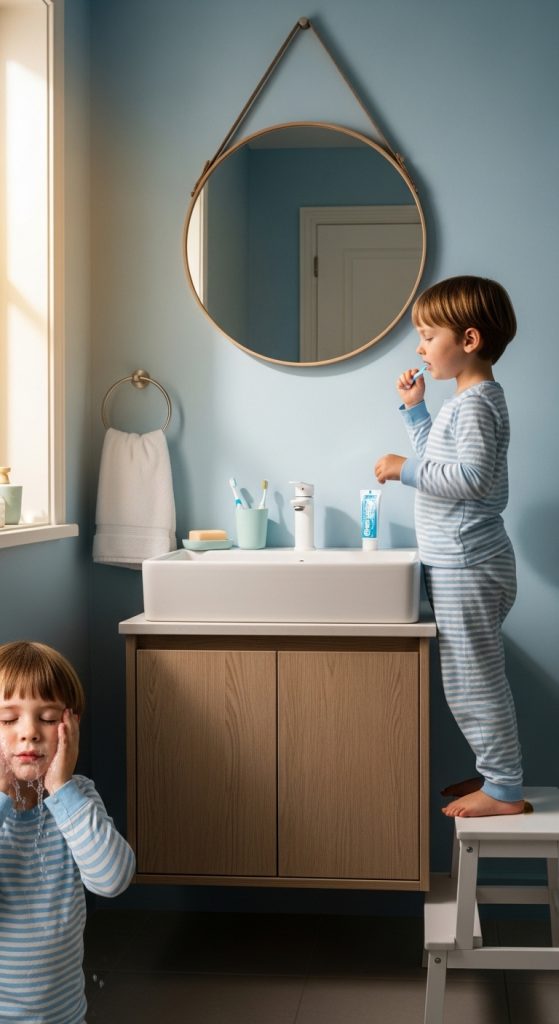
How to implement (practical steps)
Create a fixed order and never change it:
- Bathroom visit (toilet routine)
- Teeth brushing
- Face wash
- Hand wash and quick freshen-up
- Hair combing or simple grooming
- Change into day clothes
Keep it visual:
- Use a simple checklist or picture chart for younger kids
- Keep items in the same place every day
Keep instructions minimal:
- One instruction at a time only
- No rushing between steps
- No correcting constantly
Make it easy:
- Use child-friendly toothbrush and soap
- Keep towel and clothes accessible
Best for
- Kids who forget steps easily
- Families with morning delays
- Children learning independence skills
This works best when you want fewer reminders and more self-action.
Pro tip
Consistency matters more than speed. Even if it takes longer in the beginning, repetition will make it automatic.
Mistake to avoid
Don’t interrupt the sequence repeatedly. Constant correction breaks the habit-building process.
3. Structured Breakfast Routine (Calm Eating, Not Rushed Feeding)
What it is
A structured breakfast routine is not just about food—it is about creating a calm eating environment where children actually sit, eat, and finish their meal without chaos or distraction.
Most mornings fail here. Children eat while standing, watching screens, arguing, or rushing out the door. This leads to poor digestion, unfinished meals, and morning stress.
A proper routine teaches one key habit: mealtime is a calm pause, not a rushed task.
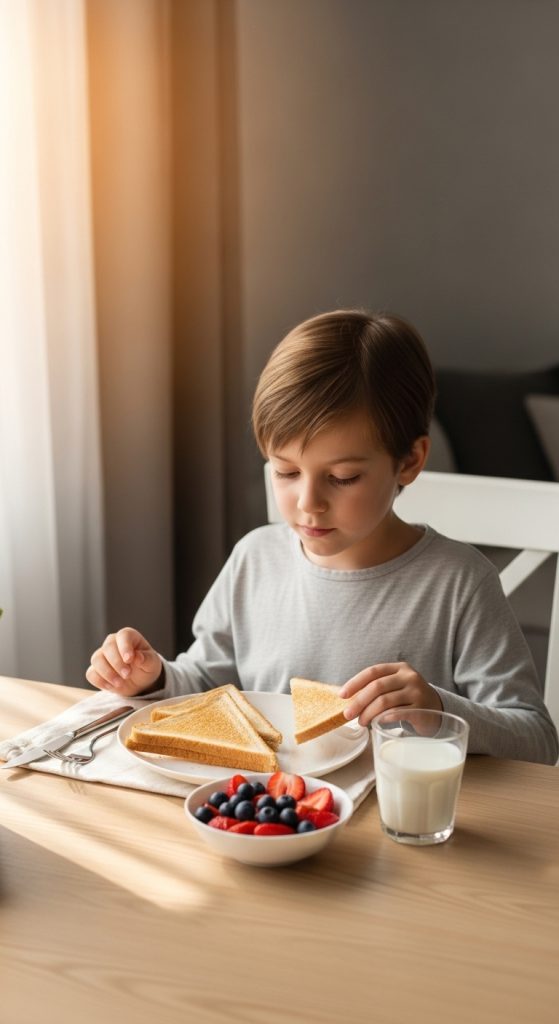
How to implement (practical steps)
Set a fixed breakfast space:
- Always same place (table or corner)
- Clean, minimal setup (no distractions)
Create a simple structure:
- Sit down before food is served or placed
- No screens during eating
- Start with a small calm moment (no rushing)
- Eat without multitasking
- Finish before leaving the table
Keep food simple:
- Avoid overly complicated meals in the morning
- Use repeatable breakfast options (same 2–3 meals rotating)
Set time boundaries gently:
- Not strict pressure, but consistent timing window
- Enough time to eat slowly, not rush
Best for
- Kids who eat slowly or distract easily
- Families with chaotic mornings
- Children who skip or half-eat breakfast
This works best when you want stable energy and fewer morning delays.
Pro tip
Repeat breakfasts reduce decision stress. Kids actually eat better when choices are limited and predictable.
Mistake to avoid
Don’t allow screens during breakfast. It disconnects attention from eating and creates dependency on distraction.
4. Calm School-Ready Dressing Routine (No Morning Confusion)
What it is
A calm dressing routine is a fixed, predictable system for getting dressed without arguments, delays, or repeated instructions. Most morning stress comes from clothing decisions, missing items, or children refusing outfits at the last minute.
This routine removes decision-making from the morning completely. The child already knows what comes next, and the parent is not negotiating under time pressure.
It turns dressing from a stressful moment into a smooth, automatic step in the morning flow.
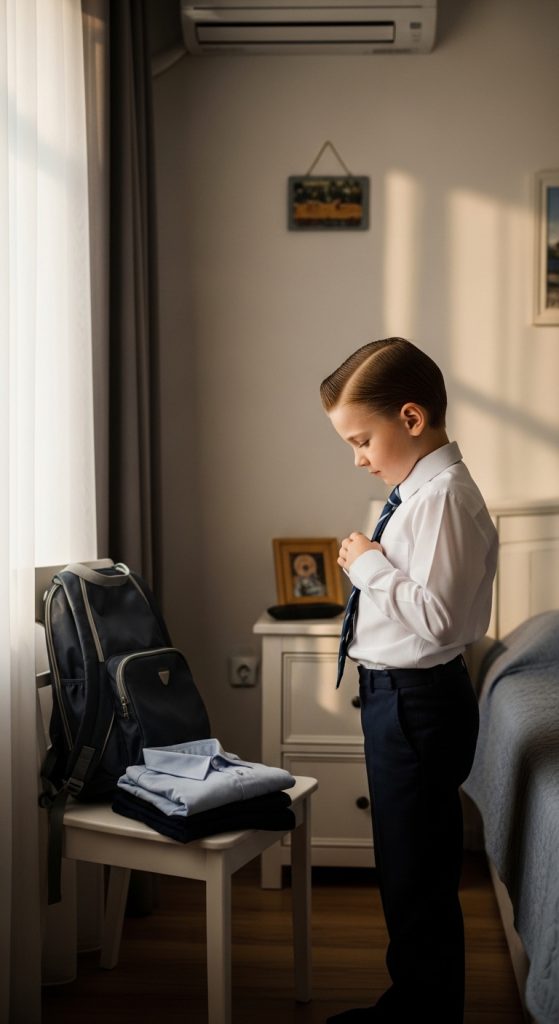
How to implement (practical steps)
Prepare the night before:
- Select full outfit (shirt, pants, socks, uniform if needed)
- Place clothes in one visible spot
- Ensure everything is clean and ready
Morning execution:
- After hygiene routine, move directly to dressing
- Child wears pre-selected outfit without debate
- Parent avoids changing options in the morning
- Quick check for comfort and neatness only
Make it easier for kids:
- Use simple clothing (easy buttons, elastic waist)
- Avoid complicated layers in school mornings
- Keep seasonal outfits organized separately
Optional structure:
- Label drawers or sections for outfits
- Create “school set” and “home set” clothing system
Best for
- Kids who resist choosing clothes
- Busy school mornings
- Families dealing with frequent delays
This works best when mornings feel slow due to clothing decisions.
Pro tip
Eliminate choices in the morning. Fewer decisions = faster routine + less resistance.
Mistake to avoid
Don’t present multiple outfit options in the morning. It creates unnecessary negotiation and delays the entire routine.
5. Focused Backpack & Day Prep Routine (Responsibility Building Step)
What it is
This routine is about teaching children to prepare their own school essentials in a structured, consistent way. Instead of parents rushing and packing everything at the last second, the child becomes part of a simple preparation system.
It builds independence, responsibility, and reduces forgotten items during the day.
The goal is not perfection—it is ownership of daily readiness.

How to implement (practical steps)
Create a fixed evening or morning checklist:
- Books and notebooks for the day
- Pencil case and essentials
- Water bottle
- Lunchbox (if applicable)
- Homework or completed tasks
Simple execution flow:
- Child checks checklist (visual or verbal)
- Packs bag in the same order daily
- Places bag in the same location every night or morning
- Parent only verifies, not fully doing it
Keep system consistent:
- Same bag location every day
- Same packing order
- Same routine timing
For younger kids:
- Use picture-based checklist
- Guide step-by-step instead of doing it for them
Best for
- School-going children
- Kids who forget items often
- Families with rushed mornings
This works best when you want fewer last-minute school problems.
Pro tip
Consistency is more important than speed. A slightly slower child who packs independently is better than a fast routine done entirely by parents.
Mistake to avoid
Don’t fully take over the packing. That removes responsibility and keeps the child dependent.
6. Evening Wind-Down Transition (Slow Down the Energy)
What it is
The evening wind-down transition is a structured shift from active daytime behavior to calm nighttime state. Most children struggle at night not because they are “naughty,” but because their energy is not guided down gradually.
Without a wind-down routine, children go from high activity (screens, play, noise) directly to sleep, which leads to restlessness, delay in sleeping, or emotional resistance.
This routine helps the body and mind slowly understand: the day is ending, now it’s time to relax.
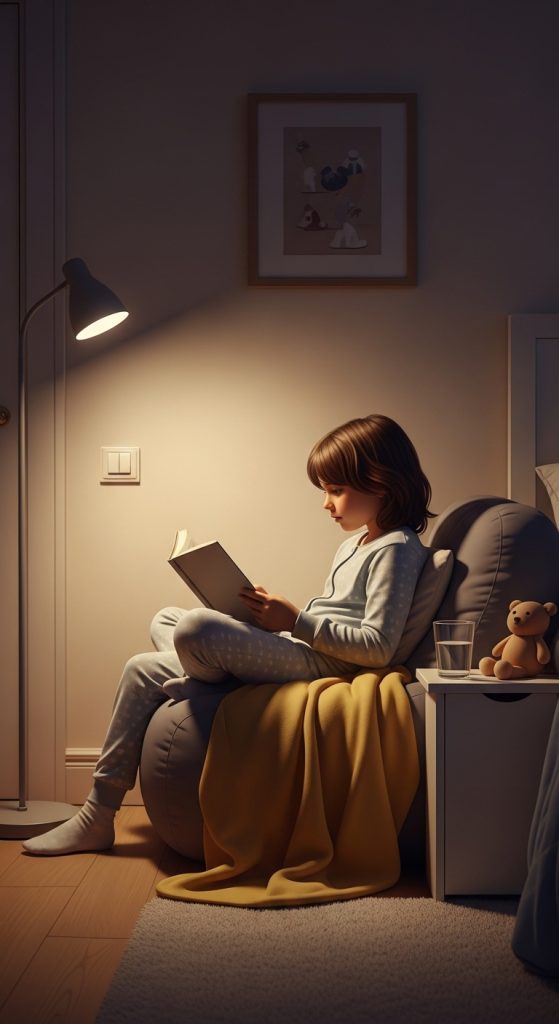
How to implement (practical steps)
Start 45–60 minutes before bedtime:
Step-down sequence:
- Reduce noise and active play gradually
- Turn off or limit screens
- Switch to calm activities (reading, coloring, quiet talk)
- Dim lights in the room
- Encourage slow, relaxed movement only
Environment control:
- Keep room quiet and soft-lit
- Avoid exciting games or videos
- Maintain calm tone in communication
Simple routine flow:
- Finish homework early
- Clean up toys or study space
- Transition into pajamas
- Sit or lie down for quiet time
Best for
- Kids who resist bedtime
- Overactive or energetic children at night
- Families with late sleeping patterns
This works best when bedtime feels stressful or delayed.
Pro tip
Energy doesn’t stop instantly—it needs gradual reduction. Think of it like slowing a car, not hitting brakes suddenly.
Mistake to avoid
Don’t switch from high-energy activities directly to bed. That creates resistance and restlessness instead of sleep readiness.
7. Calm Screen Shutdown Routine (Digital Boundary System)
What it is
A calm screen shutdown routine is a structured way to end all screen usage before sleep without conflict or emotional resistance. Most children don’t struggle with screens—they struggle with stopping screens suddenly.
When screens are cut off abruptly, the brain stays overstimulated, leading to tantrums, delays, or restless sleep. This routine doesn’t “snatch” screens away—it transitions the child out of them gradually.
The goal is not punishment—it is controlled reduction of stimulation so the nervous system can settle naturally.

How to implement (practical steps)
Set a fixed cutoff time:
- 30–60 minutes before bedtime
- Same timing every day
Step-down method:
- Give a clear warning (“10 minutes left”)
- Then “5 minutes left” reminder
- No sudden shutdown without warning
Transition replacement:
- After screen off → switch to calm activity immediately
- Reading, drawing, soft talk, or quiet play
Environment support:
- Reduce brightness of screens before ending
- Dim room lights after shutdown
- Keep devices out of sleeping area
Parent behavior:
- Calm tone, no arguments or lectures
- Consistent rule every night
Best for
- Kids addicted to cartoons, games, or videos
- Families with bedtime resistance
- Children who struggle to settle at night
This works best when sleep is delayed due to screen overstimulation.
Pro tip
Consistency matters more than strictness. A predictable shutdown reduces emotional pushback over time.
Mistake to avoid
Don’t remove screens suddenly without warning. That creates emotional spikes and more resistance next time.
8. Soft Hygiene Night Reset (Clean Ending Routine)
What it is
A soft hygiene night reset is a light, consistent nighttime cleaning and self-care routine that signals the body the day is over. It is not a full grooming process—it is a calming reset that helps children feel fresh and ready for sleep.
Many children go to bed still feeling “messy” or physically uncomfortable, which affects sleep quality. This routine ensures the body feels clean, calm, and settled before bed.
It also builds lifelong hygiene discipline in a very natural way.
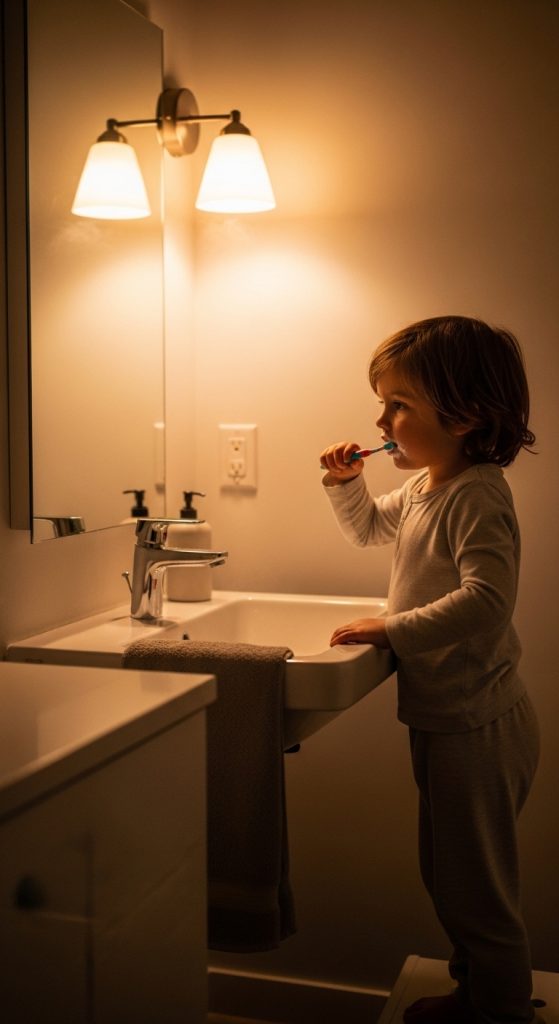
How to implement (practical steps)
Keep it simple and fixed:
- Brush teeth
- Wash face or light cleansing
- Wash hands and feet if needed
- Change into night clothes
Optional calming additions:
- Gentle hair brushing
- Light skincare (if needed for age/skin type)
- Small glass of water before bed
Environment:
- Quiet bathroom routine
- Soft lighting, not bright harsh lights
- No rushing or multitasking
Timing:
- Same order every night
- No skipping unless necessary
Best for
- Children who resist bedtime hygiene
- Families with inconsistent night routines
- Kids with sensitive skin or cleanliness habits
This works best when sleep feels inconsistent or restless.
Pro tip
Keep the routine identical every night. Predictability reduces resistance.
Mistake to avoid
Don’t turn hygiene into a rushed checklist. Speed creates stress, not calm.
9. Bedtime Calm Connection Routine (Emotional Wind-Down)
What it is
This is a short emotional bonding routine before sleep where the child transitions from active thinking to calm emotional safety. Most bedtime issues are not physical—they are emotional. Children struggle to sleep when their mind is still active, worried, or overstimulated.
This routine creates a feeling of closure for the day. It helps the child feel safe, heard, and emotionally settled before sleeping.
It is one of the most important parts of the entire system.

How to implement (practical steps)
Create a consistent 5–10 minute window:
Option 1: Talking time
- Ask simple questions about the day
- Keep tone calm and non-judgmental
Option 2: Story time
- Read a short story together
- Keep voice slow and soft
Option 3: Quiet connection
- Sit together in silence or soft conversation
- Light physical comfort (like sitting close)
Rules:
- No criticism during this time
- No correcting behavior or school performance
- Keep tone supportive and gentle
Environment:
- Dim lights
- No screens or distractions
- Quiet room setting
Best for
- Kids with anxiety or overthinking
- Children who resist bedtime separation
- Families wanting stronger emotional bonding
This works best when sleep issues are emotionally driven.
Pro tip
What you say at night stays longer in a child’s mind than what you say during the day.
Mistake to avoid
Don’t use this time for discipline or correction. It destroys the emotional safety needed for sleep.
10. Consistent Sleep Timing Routine (Body Clock Training)
What it is
A consistent sleep timing routine is about training the child’s internal body clock to recognize when it is time to sleep—without constant negotiation or delays. Most sleep problems in kids don’t come from “not wanting to sleep,” but from an irregular sleep rhythm.
When bedtime changes every day, the body never learns a stable pattern. That leads to resistance, late sleep, morning tiredness, and emotional imbalance the next day.
This routine focuses on one thing only: same sleep time, every single day.
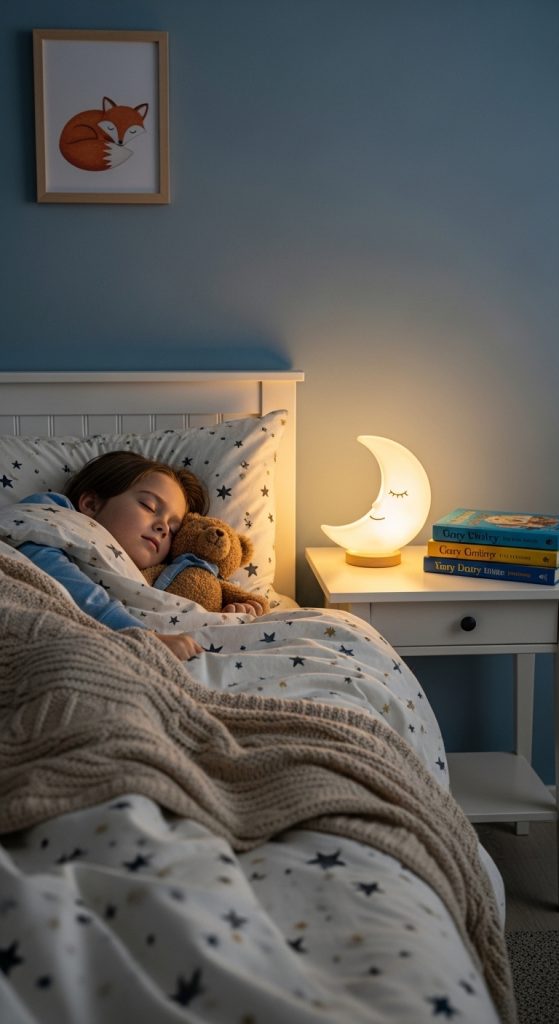
How to implement (practical steps)
Set a fixed bedtime:
- Choose a realistic time (not too early, not too late)
- Keep it consistent even on weekends as much as possible
Build a pre-sleep sequence:
- Screen shutdown (already completed earlier)
- Hygiene routine
- Calm wind-down activity
- Bedtime at fixed time
Reduce variability:
- No random late nights unless necessary
- No shifting bedtime daily
- Keep routine predictable
Support the transition:
- Dim lights 30–60 minutes before bed
- Reduce noise and activity level in the house
- Keep bedroom environment consistent
Best for
- Kids with irregular sleep schedules
- Families struggling with bedtime delays
- Children who feel tired in mornings
This works best when sleep timing is inconsistent and unpredictable.
Pro tip
The body learns rhythm faster than discipline. Repetition builds automatic sleepiness at the same time daily.
Mistake to avoid
Don’t change bedtime on weekends frequently. It resets the body clock and breaks consistency.
11. Clean Bedroom Reset Routine (Environment Reset Before Sleep)
What it is
A clean bedroom reset routine is a short, structured process to restore order in the child’s space before sleeping. It is not full cleaning—it is a visual and mental reset so the child wakes up in a calm environment the next morning.
Children often wake up stressed or distracted simply because their room is messy from the previous day. Visual clutter creates mental clutter.
This routine teaches responsibility and calm closure to the day.
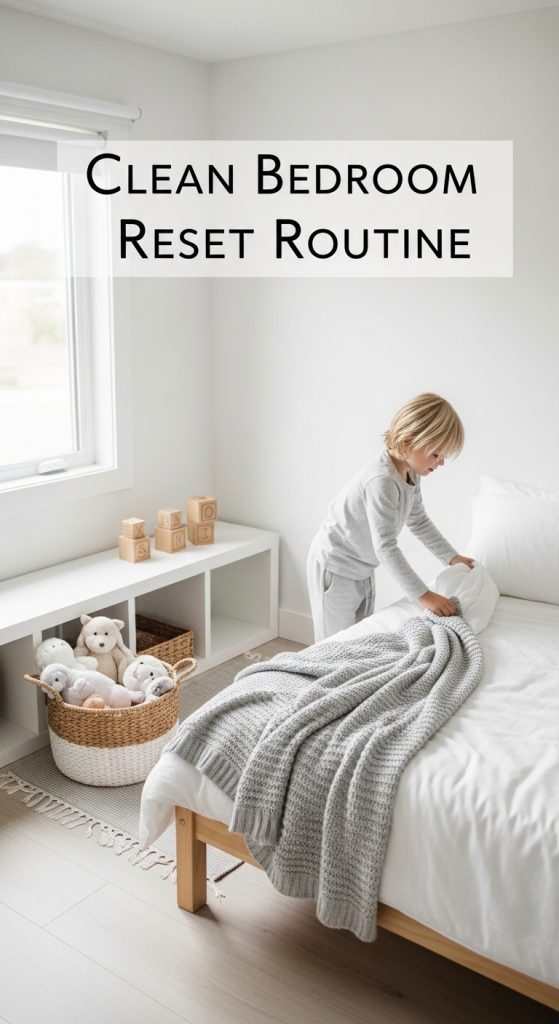
How to implement (practical steps)
Set a 5–10 minute reset window:
Simple steps:
- Put toys back in their place
- Fold or place clothes properly
- Clear desk or study area
- Arrange bed neatly
Keep it minimal:
- No deep cleaning
- Only visible clutter removal
- Focus on quick organization
Make it structured:
- Same order every night
- Same expectations daily
- Use simple checklist if needed
Optional support:
- Soft music or calm timer
- Parent supervision for younger kids
- Shared cleanup for teamwork
Best for
- Kids with messy rooms
- Families wanting morning calmness
- Children learning responsibility habits
This works best when mornings feel chaotic due to messy environments.
Pro tip
A 5-minute reset at night saves 20 minutes of morning stress.
Mistake to avoid
Don’t turn this into a long cleaning session. It should stay light and consistent.
12. Gratitude & Reflection Moment (Emotional Closure Habit)
What it is
A gratitude and reflection moment is a short emotional routine where the child pauses to think about their day in a positive and simple way. This helps the brain close the day with calmness instead of overstimulation or unfinished emotional thoughts.
Children often go to bed with scattered thoughts—what happened at school, what they didn’t finish, or what upset them. Without closure, these thoughts carry into sleep and affect rest quality.
This routine teaches emotional processing in a very gentle way.
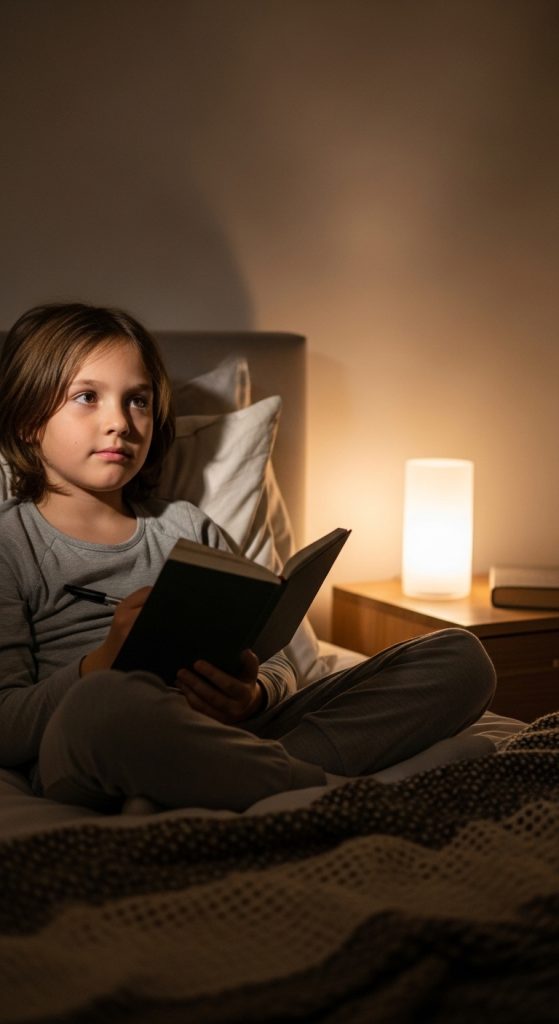
How to implement (practical steps)
Keep it extremely simple:
Ask one or two questions:
- “What was the best part of your day?”
- “What made you happy today?”
Or:
- “What is one thing you are thankful for?”
Let answers be natural:
- No pressure for perfect responses
- No correcting or judging answers
Optional:
- Child can say it out loud or think quietly
- Can be combined with bedtime talk routine
Keep timing short:
- 2–5 minutes only
Best for
- Emotional or sensitive children
- Kids who overthink at night
- Families wanting positive mindset habits
This works best when children carry stress or emotions into bedtime.
Pro tip
Focus on small moments, not big achievements. Children connect more with simple positive experiences.
Mistake to avoid
Don’t force answers or turn it into questioning. It should feel soft, not like an interview.
13. Gentle Lights-Off Transition (Final Sleep Cue)
What it is
A gentle lights-off transition is the final step that signals the body it is time to sleep by slowly reducing light and stimulation. Instead of suddenly turning everything off, the environment gradually shifts into darkness and silence.
Children’s brains respond strongly to light changes. A sudden switch to darkness can feel abrupt and unsettling, especially if the child is still mentally active.
This routine creates a soft ending to the day, helping sleep come naturally.
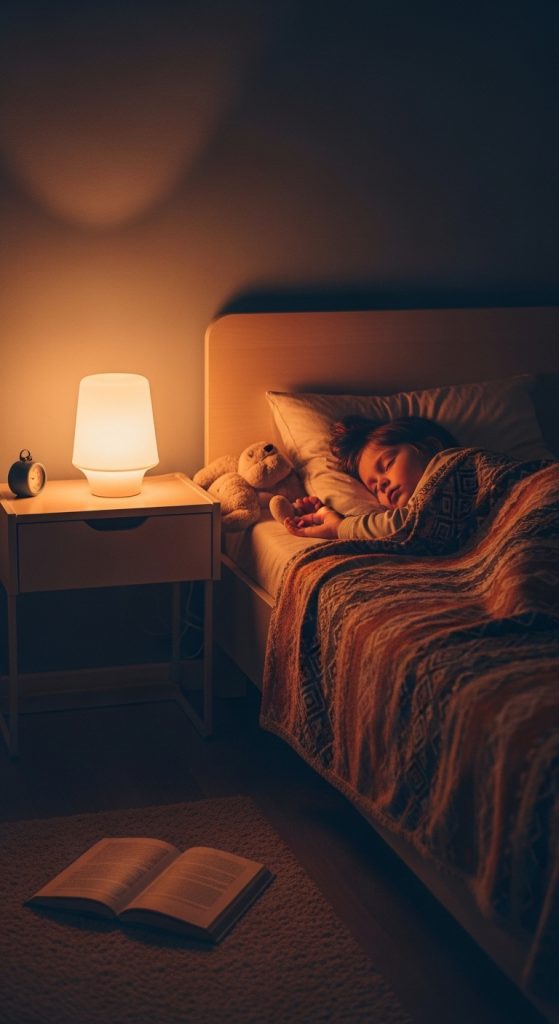
How to implement (practical steps)
Gradual light reduction:
- Dim room lights 10–15 minutes before sleep
- Use soft lamp or night light instead of bright lights
- Slowly reduce activity in the room
Final step:
- Turn off main lights once child is in bed
- Keep a soft night light if needed
Support calmness:
- No loud talking after lights are off
- No active play or stimulation
- Maintain quiet environment
Consistency:
- Same lighting pattern every night
- Same sequence leading to sleep
Best for
- Kids who struggle to fall asleep
- Sensitive sleepers
- Families with overstimulated evenings
This works best when children stay active or alert at bedtime.
Pro tip
Light is a signal to the brain. Train the brain by repeating the same lighting pattern daily.
Mistake to avoid
Don’t keep bright lights on until the last second. It delays sleep readiness and keeps the brain active longer.