
A well-structured morning routine is one of the most powerful foundations in a homeschool environment, especially when it comes to children. Unlike traditional school settings where structure is externally enforced by schedules, bells, and classrooms, homeschooling depends heavily on consistency created inside the home. That consistency starts in the morning. The way a child begins their day directly influences their focus, emotional balance, learning speed, and overall attitude toward education.

In many homes, mornings are chaotic. Children wake up at different times, some rush through breakfast, others move slowly without direction, and parents often find themselves repeating instructions multiple times just to get basic tasks done. When this pattern continues daily, it creates stress for both the child and the parent. Learning becomes reactive instead of intentional, and the home environment starts feeling disorganized rather than structured.
This is where intentional morning routines become essential. A homeschool morning routine is not about strict discipline or forcing children into rigid schedules. Instead, it is about creating predictable rhythms that guide children gently from rest into learning mode. When children know what to expect every morning, their brains feel safe. And when the brain feels safe, it becomes more receptive to learning, creativity, and problem-solving.
The idea behind “13 Unique Morning Routine Ideas For Kids Homeschool” is not to create a one-size-fits-all system. Every child is different. Some are energetic early in the morning, while others take time to fully wake up. Some prefer movement-based activities, while others respond better to calm, quiet routines. A strong homeschool morning routine respects these differences while still maintaining structure.
One of the most important truths about children is that they do not naturally resist structure—they resist confusion. When expectations are unclear, children become restless, distracted, or uncooperative. But when they understand a clear flow of events, they begin to cooperate more naturally. This is why routine-building is not just about organization; it is about emotional regulation and cognitive development.
A strong morning routine in homeschooling typically includes more than just academic preparation. It includes physical movement, emotional grounding, basic life skills, and mental focus exercises. These elements prepare a child not just for studying, but for thinking clearly and staying engaged. Something as simple as making the bed, drinking water, or doing a short stretch routine can signal to the brain that the day has officially started.
In homeschooling environments, parents often play multiple roles—teacher, planner, motivator, and caregiver. Without a structured morning system, this workload can become overwhelming. A well-designed routine reduces decision fatigue for parents. Instead of constantly instructing children on what to do next, the routine itself becomes the guide. This creates a smoother transition from home life to learning time.
Another critical factor is independence. One of the long-term goals of homeschooling is to raise self-sufficient learners who can manage their own time and responsibilities. Morning routines are one of the best ways to build this skill. When children repeatedly follow the same sequence of actions each morning, those actions eventually become habits. Over time, they require less supervision and more self-direction.
It is also important to understand that mornings set the emotional tone for the entire day. A rushed, unstructured morning often leads to irritability, lack of focus, and resistance toward lessons. On the other hand, a calm and predictable morning helps children feel grounded. This emotional stability directly improves their ability to absorb information, complete tasks, and participate in learning activities.
The most effective homeschool morning routines are not overly complicated. They are simple, repeatable, and flexible. They allow space for adjustment while maintaining a clear structure. The goal is not perfection but consistency. Even small improvements in morning structure can lead to noticeable changes in behavior, attention span, and overall learning outcomes.
Another overlooked aspect is creativity. Many parents assume routines must be rigid to be effective, but in homeschooling, flexibility is key. A good morning routine can include playful elements like storytelling, music, drawing, or movement games. These activities are not distractions; they are tools that prepare the brain for deeper learning. When children enjoy the start of their day, they are more likely to stay engaged throughout their lessons.
Hydration, nutrition, and physical activity also play a major role in morning routines. A child who drinks water, eats a balanced breakfast, and engages in light movement is naturally more alert than one who jumps directly into academic work. These small habits may seem simple, but they significantly impact cognitive performance and emotional balance.
For parents, the biggest challenge is often consistency. It is easy to start a routine, but difficult to maintain it daily. This is why the ideas in this guide are designed to be practical and adaptable rather than strict or overwhelming. Each routine idea focuses on real-life application rather than theory. The goal is to create systems that actually work in busy households, not idealized schedules that collapse after a few days.
Ultimately, a strong homeschool morning routine is not just about managing time—it is about shaping mindset. It teaches children how to transition from rest to responsibility, from play to focus, and from dependence to independence. These are life skills that extend far beyond academics.
In the following sections, you will discover 13 unique and practical morning routine ideas specifically designed for homeschool kids. Each one is structured to improve focus, reduce stress, and create a smoother learning environment at home. These are not generic suggestions. They are real, usable systems that can be adapted to different ages, personalities, and family lifestyles.
Idea 1: The “Structured Wake-Up Flow Routine” (Smooth Start Without Chaos)
What it is
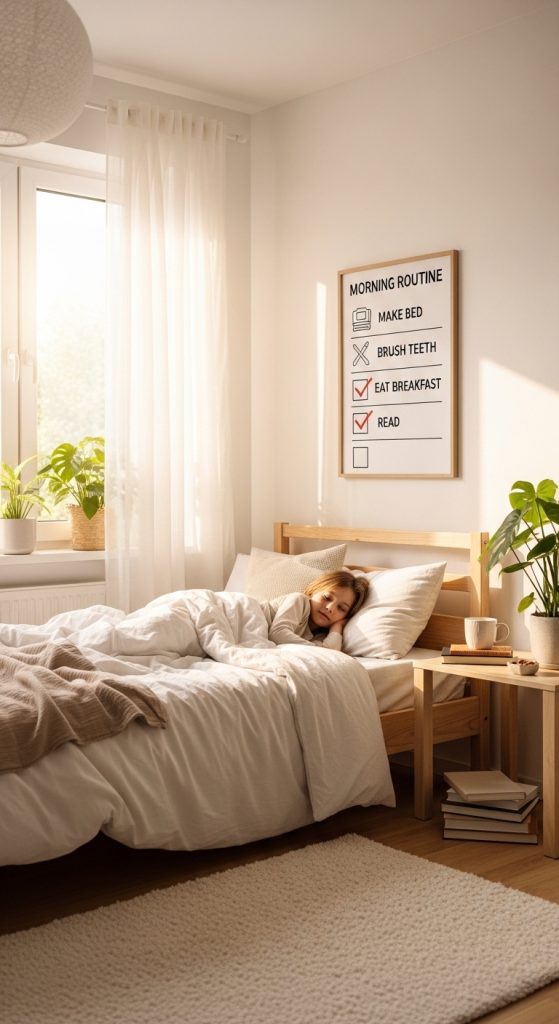
A structured wake-up flow is a step-by-step morning transition system that helps children move from sleep to learning mode without stress, shouting, or confusion. Instead of letting the morning begin randomly, everything follows a predictable sequence.
This routine is built around one simple principle: the brain performs better when it is gently activated, not forced into action.
Many homeschool homes struggle in the morning because children wake up in different emotional states—some tired, some hyper, some distracted. This routine eliminates that inconsistency by using a repeatable flow.
How to implement it (step-by-step)
Create a fixed 5-stage morning flow:
1. Gentle Wake Signal
Avoid loud alarms. Use soft music, natural light, or a calm voice cue. The goal is to wake the brain gradually.
2. Bed Reset Task (2–3 minutes)
Child straightens bed immediately after waking. This signals “day has started.”
3. Water Intake Habit
A glass of water within first 10 minutes. This improves alertness and reduces morning sluggishness.
4. Bathroom + Hygiene Reset
Brush teeth, wash face, basic grooming. Keep it consistent every day.
5. Movement Activation
2–5 minutes of stretching or light movement (jumping jacks, yoga poses, or walking).
Best for
- Young homeschool beginners
- Kids with low morning energy
- Families struggling with morning chaos
- Children who resist starting lessons
If your mornings feel unpredictable, this routine creates instant structure.
Pro tip
Use a visual checklist chart on the wall. Kids follow it independently instead of needing verbal reminders every morning.
Mistake to avoid
Do not combine multiple steps into one instruction like “get ready.” Children need clear, separated actions. Confusion destroys consistency.
Idea 2: The “Movement-Based Morning Activation Routine” (For High-Energy Kids)
What it is
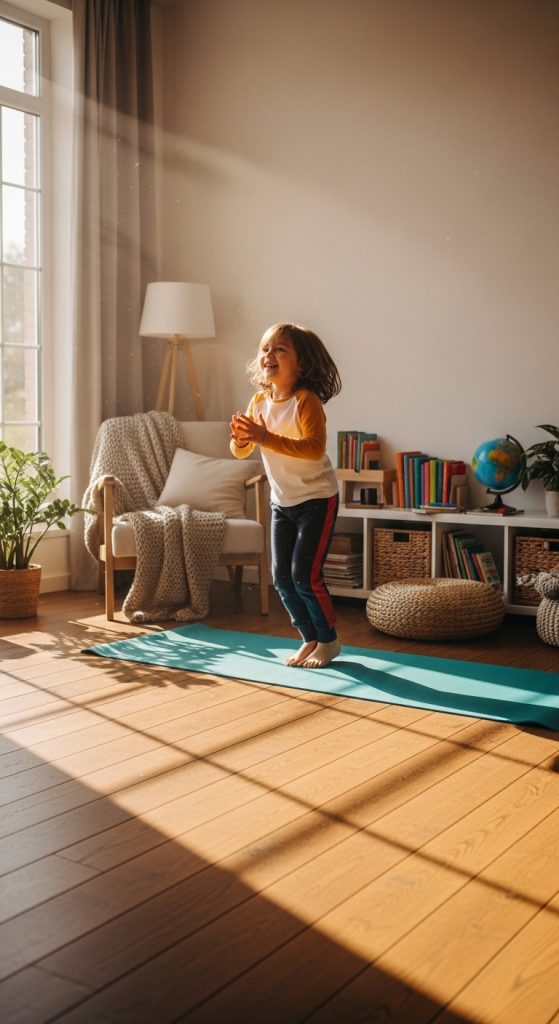
This routine is designed for children who wake up with excess energy and cannot sit still. Instead of suppressing movement, it uses physical activity to channel energy into focus.
The logic is simple: a moving body creates a focused mind.
In homeschool environments, this is extremely effective because it prevents restlessness during lessons.
How to implement it
Start the morning with structured physical activation:
1. 10–15 Minute Movement Block
Choose activities like:
- Jump rope
- Stretching routine
- Dance session
- Outdoor walking
- Light jogging
2. Breathing Reset (2 minutes)
After movement, guide slow breathing to calm the nervous system.
3. Cool Down Transition
Sit quietly for 3–5 minutes before starting lessons.
4. Hydration + Snack
Provide water or light breakfast after movement to stabilize energy.
Best for
- Hyperactive children
- Kids who struggle with focus
- Boys or girls with high physical energy
- Long homeschool study sessions
If your child cannot sit still for lessons, this solves that problem at the source.
Pro tip
Rotate activities weekly so children don’t get bored. Variety keeps engagement high.
Mistake to avoid
Do not skip the cool-down phase. Jumping directly from exercise to study causes scattered focus.
Idea 3: The “Independent Responsibility Routine” (Building Self-Discipline Early)
What it is
This routine focuses on teaching children independence by assigning them small but meaningful morning responsibilities. The goal is not speed—it is ownership.
Children learn to manage their own morning without constant parental instructions.
This is one of the most powerful homeschool routines because it builds long-term discipline.
How to implement it
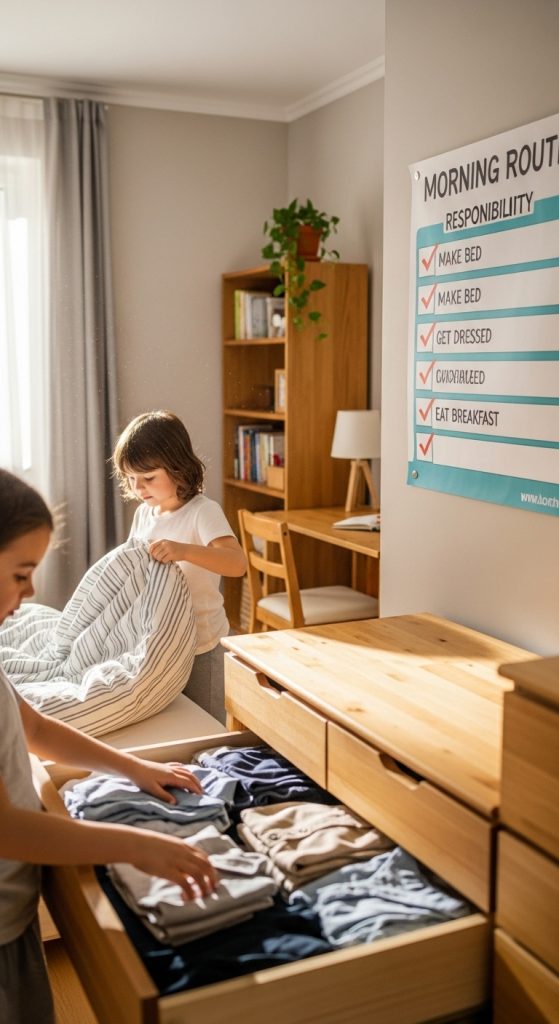
Create a responsibility checklist:
1. Personal Care Tasks
- Brush teeth
- Change clothes
- Wash face
2. Room Responsibility
- Make bed
- Put clothes in place
- Organize desk or study area
3. Mini Family Task
Assign one small job:
- Water plants
- Feed pet
- Set breakfast table
4. Self-Check Completion
Child reviews checklist before starting learning.
Best for
- Older homeschool kids (6+)
- Families wanting independence training
- Parents overwhelmed with daily reminders
- Children lacking responsibility habits
If you want your child to stop depending on constant instructions, this is essential.
Pro tip
Let children tick tasks themselves. Ownership increases consistency.
Mistake to avoid
Do not correct every small mistake. The goal is independence, not perfection.
Idea 4: The “Calm Mind Morning Routine (Focus Before Learning)”
What it is
This routine prepares the child mentally before academic work. Instead of jumping into lessons immediately, the child enters a calm, focused state first.
It improves attention span, emotional stability, and learning speed.
Think of it as “mental warm-up.”
How to implement it
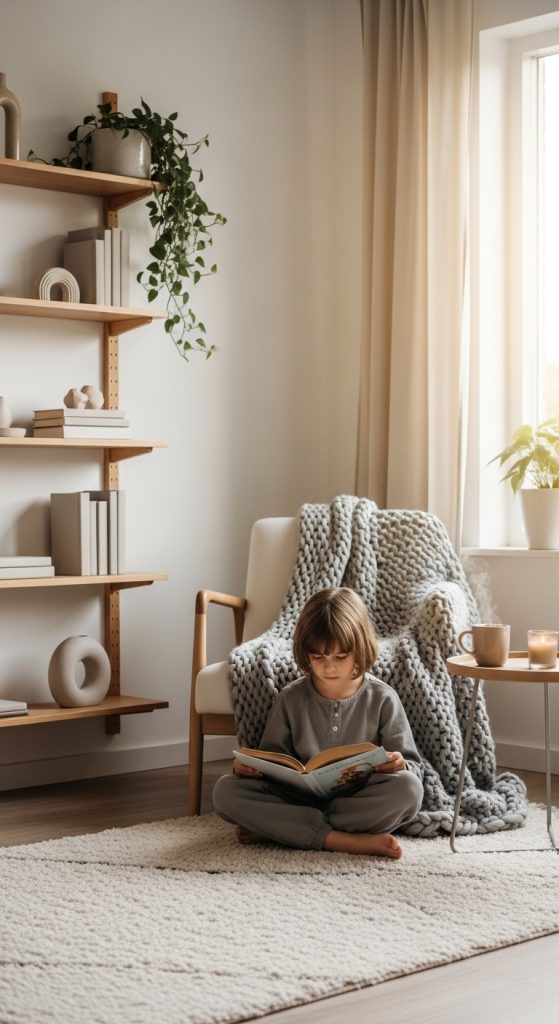
1. Quiet Start (5–10 minutes)
No screens, no noise, no stimulation.
2. Reading or Story Time
Simple books, short stories, or educational reading.
3. Reflection Talk
Ask simple questions:
- “How do you feel today?”
- “What do you want to learn today?”
4. Focus Breathing (2–3 minutes)
Slow breathing or mindfulness activity.
Best for
- Sensitive children
- Kids with anxiety or distractions
- Reading-focused homeschool programs
- Creative learners
If your child starts lessons distracted, this resets their mental state.
Pro tip
Use the same calm space every day. Environment consistency builds mental conditioning.
Mistake to avoid
Do not introduce screens in this phase. It destroys focus transition.
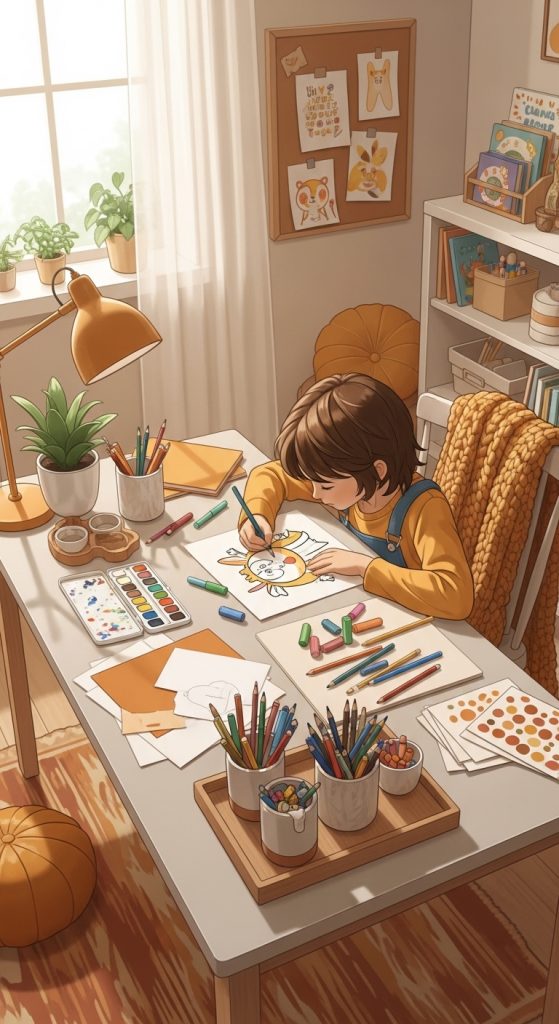
Idea 5: The “Creative Kickstart Morning Routine” (Learning Through Creativity)
What it is
This routine uses creativity as the first activity of the day instead of academic pressure. It activates imagination and makes learning feel enjoyable rather than forced.
It is especially effective for younger children.
How to implement it
1. Creative Warm-Up (10–20 minutes)
Choose one:
- Drawing
- Coloring
- Building blocks
- Story creation
- Craft activity
2. Verbal Sharing
Child explains what they created.
3. Light Academic Link
Connect creativity to learning:
- Counting colors
- Naming shapes
- Story sequencing
Best for
- Preschool and early learners
- Artistic children
- Kids resistant to traditional learning
- Homeschool families focusing on creativity
If your child hates structured lessons, this builds natural engagement.
Pro tip
Rotate creative activities daily to maintain excitement.
Mistake to avoid
Do not over-correct creativity. It should stay free-flowing.
Idea 6: The “Real-Life Skill Morning Routine” (Learning Through Daily Life Tasks)
What it is
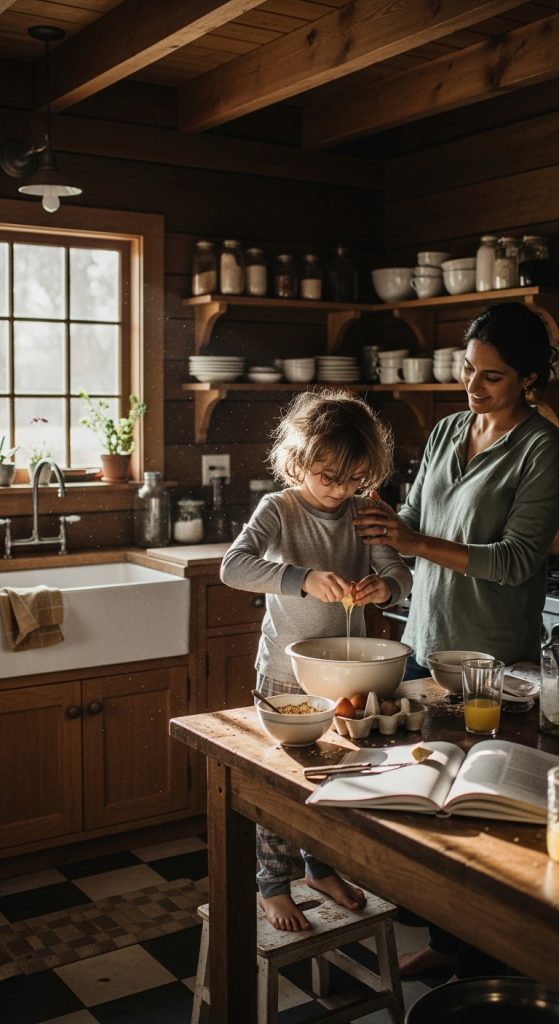
This routine integrates practical life skills into the morning instead of separating learning from real life. Children learn responsibility, logic, and independence through everyday tasks.
It turns mornings into functional learning experiences.
How to implement it
1. Breakfast Participation
Child helps prepare simple breakfast items.
2. Basic Household Tasks
- Setting table
- Organizing kitchen items
- Cleaning small areas
3. Time Awareness Task
Teach kids to follow simple morning timing structure.
4. Reflection
Ask:
- “What did you help with today?”
- “What did you learn?”
Best for
- Life-skill focused homeschooling
- Older children
- Families teaching independence
- Practical learning systems
If you want your child to be self-reliant, this is crucial.
Pro tip
Do not rush them. Skills matter more than speed.
Mistake to avoid
Do not treat this like unpaid labor. It must be framed as learning, not punishment.
Idea 7: The “Time-Block Visual Schedule Routine” (Eliminates Morning Confusion)
What it is
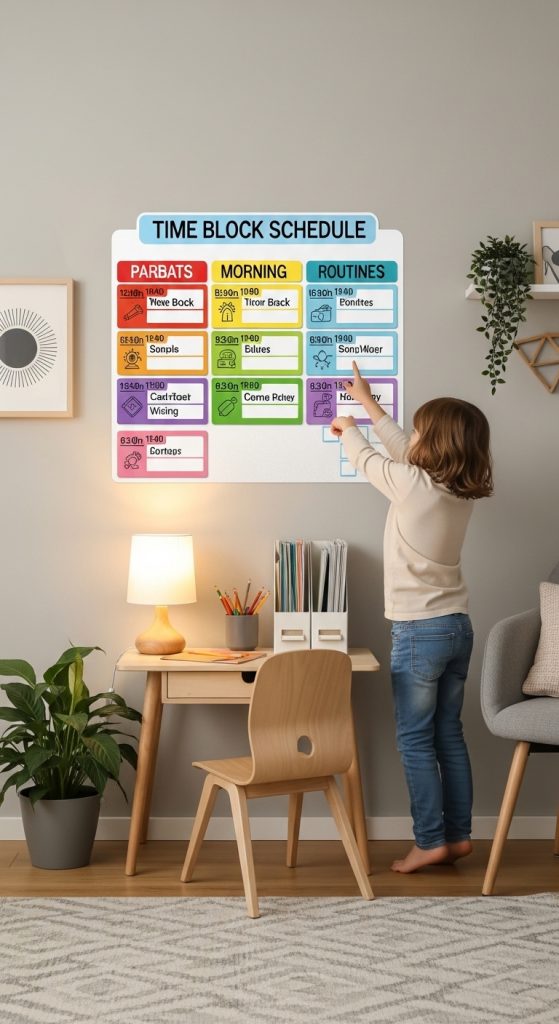
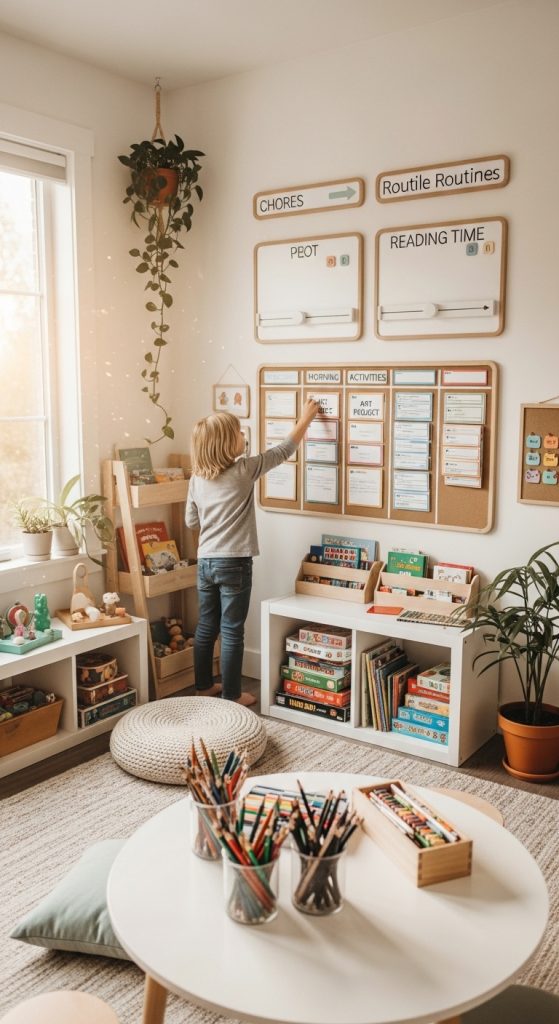
A time-block visual schedule is a structured morning system where children follow a clear visual chart instead of verbal instructions. Each part of the morning is divided into time blocks with pictures, colors, or simple labels.
This removes confusion, reduces repeated instructions, and builds self-management skills. Children do not need to ask “what next?” because the routine is already visible.
This is especially powerful in homeschool settings where the parent cannot constantly supervise every step.
How to implement it
Create a simple board or printed chart with morning blocks like:
- Wake up
- Hygiene
- Breakfast
- Movement
- Learning prep
- Study start
Each block should include:
- Time estimate
- Simple icon or picture
- One clear action
Place it where the child sees it immediately after waking up.
Teach them to move step-by-step without skipping.
Best for
- Visual learners
- Easily distracted children
- Busy homeschool parents
- Kids who struggle with transitions
If mornings feel chaotic or repeated instructions are exhausting, this fixes that.
Pro tip
Use magnetic cards or sticky notes so kids physically move each task when completed. This increases motivation.
Mistake to avoid
Do not overload the chart with too many steps. Keep it simple or it becomes ignored.
Idea 8: The “Quiet Focus Zone Morning Routine” (Deep Attention Building)
What it is
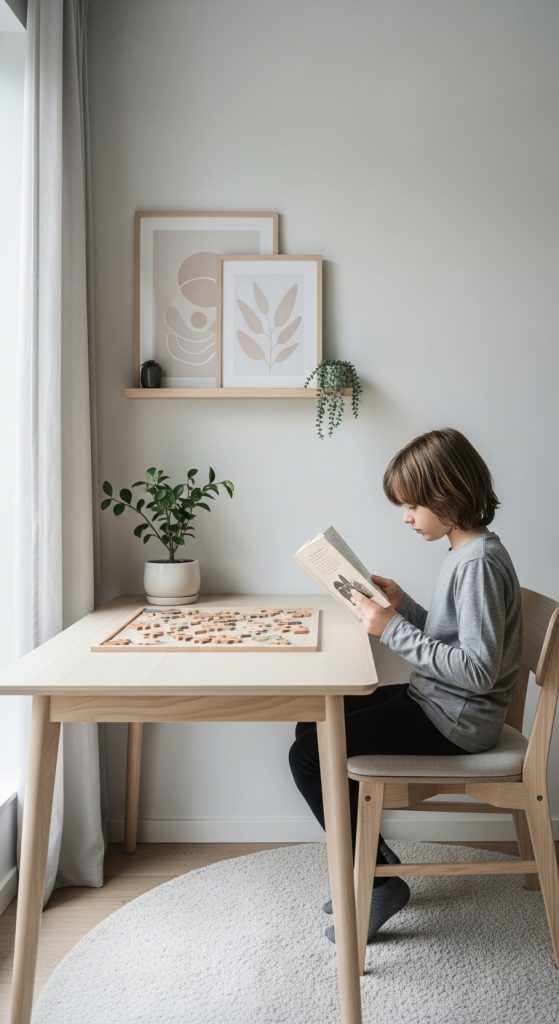
This routine creates a calm mental space before any learning begins. It trains children to sit in stillness, reduce noise stimulation, and prepare their brain for focus-heavy tasks.
In today’s digital environment, children are overstimulated. This routine helps reset their attention system.
How to implement it
Set a specific “quiet zone” in the house:
- No screens
- No loud talking
- Soft lighting
Activities include:
- Silent reading
- Puzzle solving
- Drawing quietly
- Mindful breathing
Start with 10–15 minutes and increase gradually.
Best for
- Children with attention issues
- Overactive or impulsive kids
- Reading-heavy homeschool programs
- Families wanting better discipline habits
If your child cannot sit still for lessons, this builds the foundation.
Pro tip
Play soft instrumental background music if complete silence feels difficult at first.
Mistake to avoid
Do not use this time for teaching or correcting. It is mental preparation, not instruction time.
Idea 9: The “Music & Rhythm Morning Routine” (Energy + Emotional Balance)
What it is
This routine uses music as a structured part of the morning to improve mood, focus, and energy regulation. Music naturally influences emotional state, making it powerful for homeschool mornings.
It combines movement, rhythm, and learning readiness.
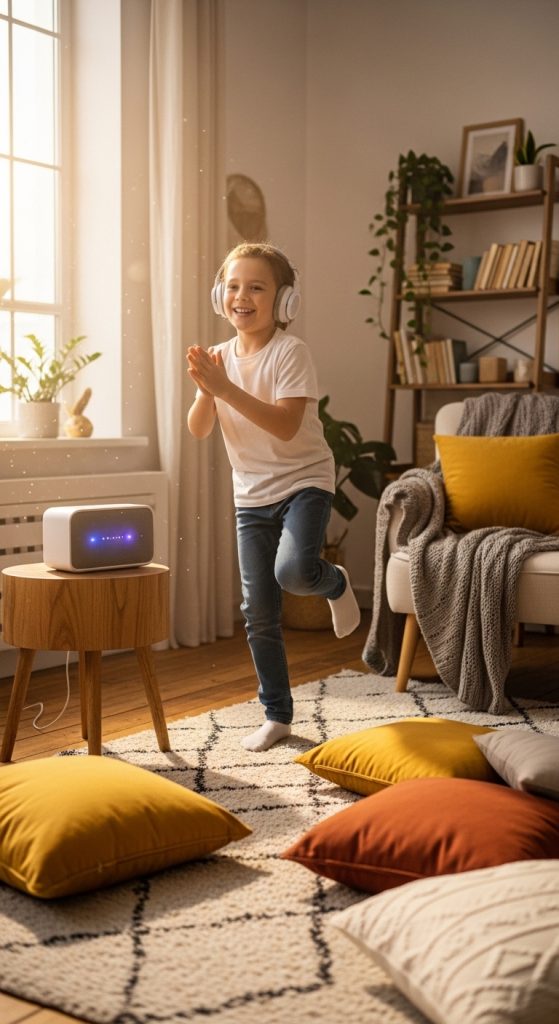
How to implement it
Start the morning with:
1. Calm Wake-Up Music
Soft, slow tunes to reduce sleep inertia.
2. Movement with Rhythm
Simple dancing, clapping, or stepping exercises.
3. Learning Transition Music
A specific song used daily before study time to signal “focus mode.”
Best for
- Emotional or sensitive children
- Kids who wake up in bad mood
- Creative learners
- Homes needing positive morning energy
If mornings feel emotionally heavy, this resets the atmosphere.
Pro tip
Use the same “study start song” every day. The brain starts associating it with focus.
Mistake to avoid
Do not use loud or chaotic music. It increases overstimulation.
Idea 10: The “Nature-Inspired Morning Routine” (Outdoor Learning Start)
What it is
A nature-inspired morning routine connects children with outdoor environment before academic learning begins. Fresh air, sunlight, and movement improve cognitive function and emotional stability.
This routine is especially effective for homeschool families who want healthier lifestyles.
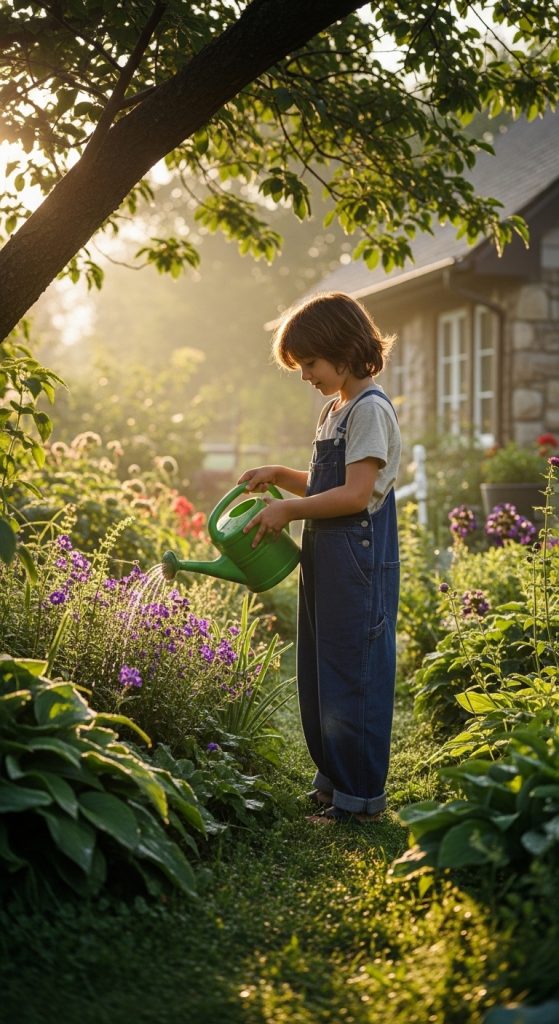
How to implement it
Start mornings with outdoor exposure:
1. 5–10 Minutes Sunlight Exposure
Let kids stand or walk outside.
2. Simple Nature Activity
- Watering plants
- Observing trees or sky
- Small garden tasks
3. Walking Warm-Up
Short walk around house or yard.
4. Transition Indoors
Move into learning space calmly.
Best for
- Active children
- Rural or suburban homes
- Kids with screen addiction
- Families focusing on health-based learning
If your child feels sleepy or unmotivated, this boosts alertness naturally.
Pro tip
Encourage children to describe what they see outside. This builds observation skills.
Mistake to avoid
Do not turn this into playtime chaos. It should stay calm and structured.
Idea 11: The “Reward-Based Morning Routine System” (Motivation Builder)
What it is
This routine uses a simple reward system to motivate children to complete their morning tasks independently. Instead of forcing discipline, it builds habit through positive reinforcement.
Over time, external rewards naturally turn into internal discipline.
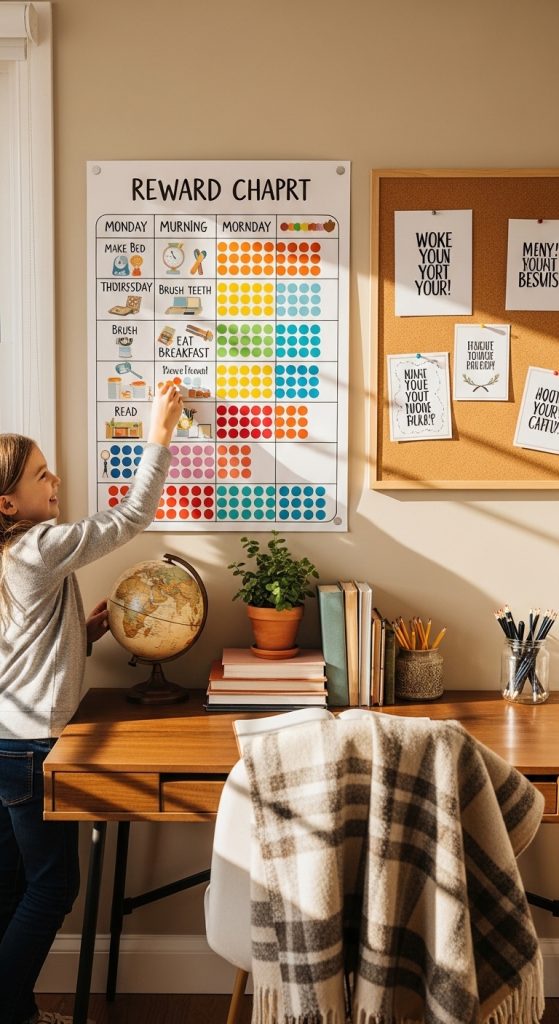
How to implement it
Create a point-based system:
- Completing morning tasks = points
- Full routine completion = bonus reward
Rewards can include:
- Extra playtime
- Choosing activity
- Small treats
- Sticker chart progress
Keep rewards small but consistent.
Best for
- Young children
- Beginners in homeschooling
- Kids lacking motivation
- Families struggling with consistency
If your child refuses morning routines, this creates engagement.
Pro tip
Gradually reduce rewards over time so discipline becomes internal.
Mistake to avoid
Do not over-reward every small action. That reduces long-term effectiveness.
Idea 12: The “Parent-Child Joint Morning Routine” (Bond + Structure System)
What it is
This routine involves parents actively participating in the morning structure with children. Instead of giving instructions from distance, parents and kids complete morning tasks together.
It builds emotional connection and improves consistency.
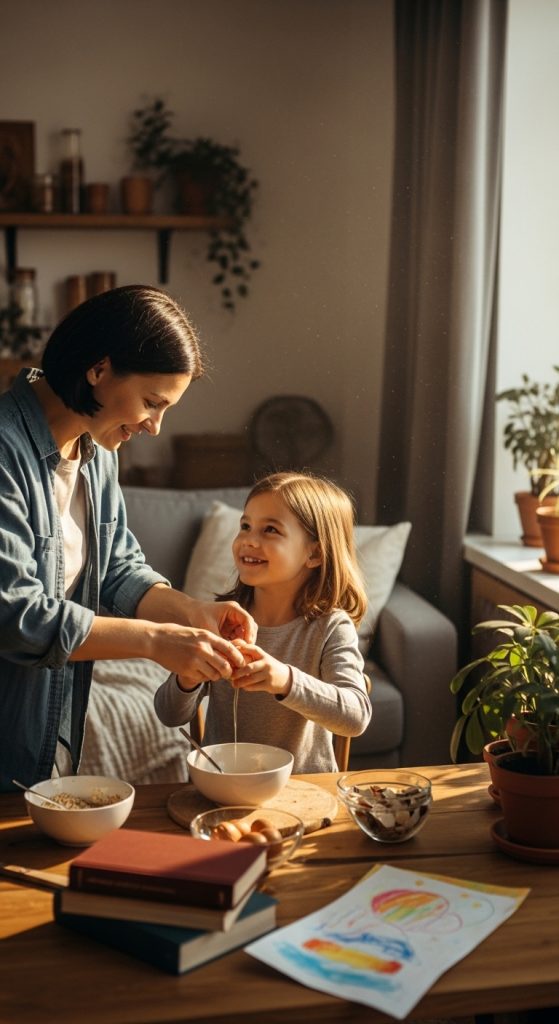
How to implement it
Start mornings as a shared routine:
1. Wake-up Together Check-in
Simple greeting and mood check.
2. Joint Activities
- Making breakfast together
- Cleaning small areas together
- Reading together
3. Shared Learning Start
Begin homeschool lessons side-by-side.
Best for
- Younger children
- Emotional bonding focused families
- Kids needing motivation support
- Parents who want stronger connection
If your child feels disconnected or unmotivated, this helps a lot.
Pro tip
Keep interaction positive and light. Avoid criticism during morning bonding time.
Mistake to avoid
Do not turn it into control-based supervision. It should feel collaborative.
Idea 13: The “Flexible Hybrid Morning Routine (Adaptive System)”
What it is
This is the most advanced homeschool morning system. It combines structure with flexibility, allowing different routines depending on the child’s mood, energy level, or learning needs.
Instead of forcing one fixed routine, it offers 2–3 interchangeable versions.
How to implement it
Create three routine modes:
1. High-Energy Day Routine
- Movement + outdoor activity
- Fast-paced start
2. Calm Focus Day Routine
- Quiet reading
- Slow transitions
3. Creative Day Routine
- Drawing
- Projects
- Hands-on learning
Each morning, choose the best-fit version.
Best for
- Older homeschool children
- Creative or unpredictable learners
- Families with flexible schedules
- Long-term sustainable homeschooling
If rigid routines never work for your child, this solves that.
Pro tip
Let children help choose the daily mode. This builds decision-making skills.
Mistake to avoid
Do not switch routines randomly without structure. Flexibility still needs boundaries.