
Small bedrooms present a unique design challenge. Unlike large master suites, small spaces require intentionality and thoughtful planning to achieve a cozy, functional, and stylish environment. The goal is to make the room feel intimate and inviting without sacrificing comfort or creating a cramped atmosphere. A well-decorated small bedroom can feel luxurious, personalized, and Pinterest-worthy, despite its compact size.
Cozy design in small bedrooms relies on a combination of strategic furniture choices, layered textures, effective lighting, and smart storage solutions. Furniture scale is critical; oversized beds or bulky dressers can overwhelm the room. Every item should serve a purpose while maintaining visual openness. Multifunctional pieces, such as storage beds or floating shelves, are essential in maximizing space.

Color also plays a significant role in creating coziness. Light and neutral base colors expand the space visually, while warm accent tones add personality and depth. Layering textiles like soft rugs, plush blankets, and decorative pillows introduces tactile warmth. Properly layered lighting—from ceiling lights to bedside lamps—enhances ambiance and highlights décor elements, creating a welcoming environment.
Storage solutions are particularly important in small bedrooms. Built-in cabinets, under-bed storage, vertical shelving, and creative hooks can keep the space clutter-free. Maintaining clear walkways ensures functionality and prevents the room from feeling tight. Personal touches, such as artwork, framed photos, or small decorative accents, make the room feel lived-in, comfortable, and uniquely yours.
A small bedroom can be multifunctional, serving as a retreat for relaxation, reading, working, or even light exercise. Space-efficient design allows each zone to flow naturally without feeling crowded. Mirrors can amplify light and create the illusion of a larger room. Thoughtful placement of rugs, furniture, and décor elements further enhances the sense of depth and warmth.
Each idea includes a clear explanation, step-by-step implementation, and a list of materials to help you recreate these looks easily. Whether you’re working with a tiny studio bedroom, a guest room, or a compact master bedroom, these ideas will inspire functional, comfortable, and stylish designs that maximize space while making the room feel inviting.
By the end, you’ll have a complete blueprint for transforming your small bedroom into a cozy, functional, and visually appealing retreat that’s fully optimized for style and comfort.
IDEA 1: Choose a Compact, Comfortable Bed
Introduction
The bed is the centerpiece of any bedroom, and in small spaces, choosing the right one is critical. Oversized beds can make a room feel cramped and reduce circulation, while compact beds can maintain functionality and comfort. A twin, full, or queen-sized bed with a slim frame is ideal, depending on the room dimensions.
Opt for a bed with built-in storage drawers or lift-up storage to maximize space efficiency. Platform beds work well in small bedrooms because they eliminate the need for a bulky box spring and often offer under-bed storage options. Light-colored frames or upholstered beds enhance the room’s airy feel while soft fabrics add warmth and coziness.
Accessories such as layered pillows, textured bedding, and a cozy throw blanket can make a smaller bed feel inviting and stylish. Choosing proportionate bedding ensures the room feels balanced without overwhelming the walls or floor space.
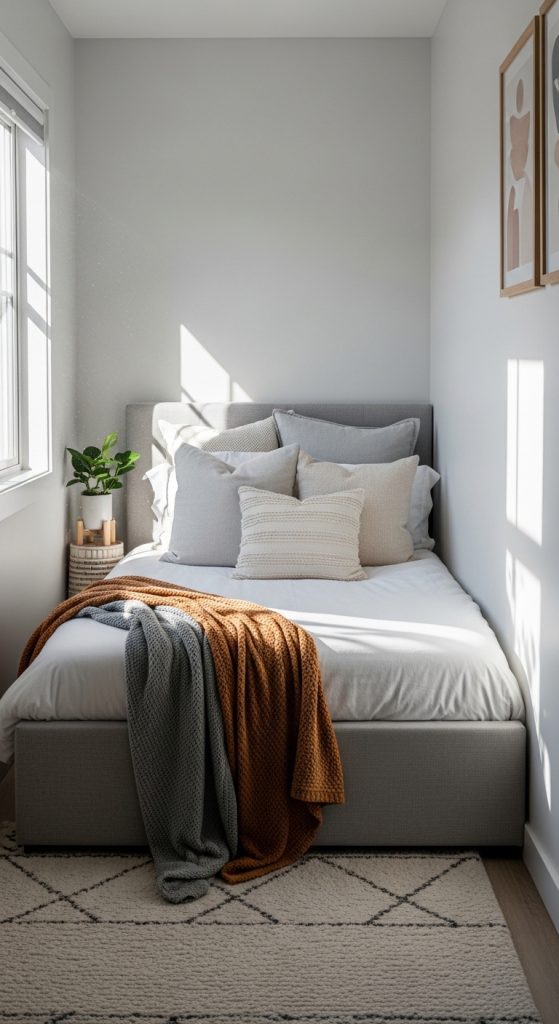
What This Idea Means
Selecting a bed that maximizes comfort while fitting proportionally in a small bedroom, with optional storage features for efficiency.
Step-by-Step How-To
- Measure the available bedroom space.
- Choose the bed size (twin, full, or queen) proportionate to the room.
- Select a platform or storage bed for functionality.
- Add bedding, layered pillows, and a cozy throw.
- Ensure there is enough walking space around the bed.
Materials / Items Needed
- Bed frame (compact or storage)
- Mattress and bedding set
- Throw pillows and blanket
- Measuring tape
IDEA 2: Use Light Walls with Cozy Accent Colors
Introduction
Wall color plays a crucial role in the perception of space in small bedrooms. Light neutral walls, such as white, cream, or soft gray, create an open and airy foundation. Neutral walls reflect light and visually expand the room, making it feel more spacious and welcoming.
To maintain warmth and personality, incorporate cozy accent colors through accessories such as pillows, curtains, rugs, or small décor items. Soft blush, muted mustard, sage green, or terracotta tones add depth and charm without overpowering the space. These subtle accents make the room feel inviting and layered.
Layering color through textiles and small décor items allows flexibility. You can change the mood seasonally by swapping pillow covers, throws, or wall art. This approach keeps the bedroom cozy while preventing it from feeling visually cluttered or cramped.

What This Idea Means
Painting walls light neutrals and layering accent colors through décor and textiles to create a cozy and visually open bedroom.
Step-by-Step How-To
- Choose a light neutral wall color.
- Paint walls evenly using high-quality paint.
- Select 2–3 warm accent colors for accessories.
- Add accent pillows, rugs, curtains, or wall décor.
- Keep the color scheme cohesive for a balanced look.
Materials / Items Needed
- Wall paint (neutral color)
- Paintbrushes or rollers
- Accent pillows, rugs, or throws
- Curtains or blinds
- Wall décor
IDEA 3: Incorporate Multi-Functional Furniture
Introduction
In small bedrooms, every piece of furniture must work harder. Multi-functional furniture maximizes space while adding practicality and style. Storage beds, small desks, nightstands with drawers, and foldable chairs allow for multiple functions without overcrowding.
For instance, a desk that doubles as a vanity or a nightstand with storage drawers keeps essentials organized while maintaining a clean aesthetic. Compact furniture with raised legs or slim profiles preserves an airy feel. Multi-functional pieces are especially helpful in studio apartments or rooms that serve multiple purposes.
Well-chosen multi-functional furniture enhances both comfort and convenience. It prevents clutter and makes a small bedroom feel intentional and cozy. Layered textiles and decorative accents can further soften the overall look, resulting in a Pinterest-worthy small bedroom design.

What This Idea Means
Selecting furniture that combines multiple functions to maximize storage, efficiency, and comfort in a small bedroom.
Step-by-Step How-To
- Identify the functional needs of your bedroom.
- Select furniture pieces with dual purposes (e.g., storage bed, nightstand with drawers).
- Ensure dimensions fit the small space proportionally.
- Position furniture for optimal flow and circulation.
- Style minimally to maintain an open and cozy atmosphere.
Materials / Items Needed
- Storage bed or compact bed
- Multi-functional nightstands
- Small foldable desk or chair
- Decorative baskets or storage bins
- Measuring tape
IDEA 4: Layer Soft Textiles
Introduction
Layering textiles adds warmth, texture, and coziness to small bedrooms. Rugs, pillows, blankets, and bedding introduce tactile elements that make a room feel comfortable and inviting without consuming additional space.
A plush area rug anchors the bed, while layered throw blankets and pillows create a tactile, lived-in atmosphere. Mixing fabrics like knitted throws, velvet pillows, and faux fur cushions adds dimension and prevents monotony. These layers contribute to a cozy, Pinterest-ready aesthetic while maintaining visual balance.
Textiles also allow seasonal flexibility. Swapping throws or cushions can refresh the room’s look without major renovations. In compact bedrooms, texture becomes a key element in achieving warmth and style while keeping the space open and functional.

What This Idea Means
Using rugs, pillows, throws, and bedding in layers to create warmth, texture, and a cozy atmosphere.
Step-by-Step How-To
- Place a soft area rug under or around the bed.
- Layer 2–4 pillows of varying textures on the bed.
- Drape a cozy throw blanket over the bed.
- Add a small floor cushion or pouf for additional seating.
- Rotate textures or colors seasonally to refresh the space.
Materials / Items Needed
- Area rug
- Pillows of varying textures
- Throw blankets
- Pouf or floor cushion
IDEA 5: Maximize Natural Light
Introduction
Natural light enhances the feeling of space and warmth in small bedrooms. Sunlight makes the room feel larger, more inviting, and instantly cozy. Even compact rooms can benefit from maximizing daylight through strategic window treatments and reflective surfaces.
Sheer curtains allow light to filter softly, while blinds or layered panels provide privacy when needed. Mirrors positioned opposite windows amplify natural light and visually expand the room. Light-colored walls and bedding further enhance the bright, airy feel.
Properly managed natural light not only improves aesthetics but also contributes to the cozy and inviting atmosphere essential for a restful bedroom. Combining daylight with layered artificial lighting ensures the room remains functional and stylish at all hours.
What This Idea Means
Optimizing natural light with sheer curtains, reflective surfaces, and light colors to enhance spaciousness and warmth.

Step-by-Step How-To
- Remove heavy drapes or bulky curtains.
- Install sheer panels for filtered light.
- Place mirrors opposite windows to reflect sunlight.
- Use light-colored bedding and décor to amplify brightness.
- Keep windows clean to maximize light flow.
Materials / Items Needed
- Sheer curtains or light blinds
- Mirror(s)
- Light-colored bedding and décor
- Cleaning supplies
IDEA 6: Create a Reading Nook
Introduction
Even in small bedrooms, a cozy reading nook adds charm and functionality. A dedicated corner with a compact chair or cushioned bench can transform the space into a relaxing retreat. Small bedrooms benefit from multi-purpose corners like this, which provide both comfort and style without overwhelming the room.
Select a chair or bench proportional to the available space. Pair it with a small side table for books, a cup of tea, or a bedside lamp. Layer pillows and a soft throw blanket for tactile warmth. Vertical shelving or floating wall-mounted shelves can hold books and small décor, keeping the floor uncluttered.
A reading nook enhances the perception of intimacy in a small bedroom. Even minimal furniture and well-chosen accessories can create a corner that feels cozy, inviting, and Pinterest-worthy. This idea combines comfort, practicality, and visual appeal in a compact, stylish way.

What This Idea Means
Designing a small corner with seating, lighting, and storage to create a cozy reading or relaxing area.
Step-by-Step How-To
- Identify an unused corner near a window or wall.
- Place a compact chair, cushioned bench, or small accent chair.
- Add a side table for books, beverages, or décor.
- Layer pillows and a soft throw blanket on the seating.
- Install a small wall-mounted shelf or lamp to complete the nook.
Materials / Items Needed
- Compact chair, bench, or accent chair
- Side table
- Throw blanket and pillows
- Wall-mounted shelves or lamp
- Small decorative items
IDEA 7: Install Floating Shelves for Storage
Introduction
Floating shelves are perfect for small bedrooms, offering storage and décor display without taking up floor space. They help maintain visual openness while keeping essentials organized. In a cozy bedroom, floating shelves can hold books, small plants, framed photos, or decorative objects.
Unlike bulky furniture, floating shelves don’t dominate the room, making them ideal for compact spaces. Placing them above the bed, beside the desk, or near a reading nook draws the eye upward, creating the illusion of height. The arrangement and styling of items on the shelves contributes to the room’s personality without cluttering the floor.
Floating shelves also allow seasonal styling. You can rotate decorative items, plants, or small artwork to refresh the look. They combine functionality and aesthetic appeal, making them a practical, Pinterest-worthy addition to small bedrooms.

What This Idea Means
Using wall-mounted floating shelves to maximize storage and display while keeping the small bedroom visually open.
Step-by-Step How-To
- Identify vertical wall space above furniture or empty walls.
- Choose shelves proportional to wall size.
- Install securely using wall anchors.
- Arrange books, plants, and small décor items neatly.
- Keep spacing even and maintain balance in styling.
Materials / Items Needed
- Floating shelves
- Screws and wall anchors
- Measuring tape and level
- Books, small plants, and décor items
IDEA 8: Use Mirrors to Expand Space
Introduction
Mirrors are essential tools for small bedrooms, reflecting light and creating the illusion of a larger space. A strategically placed mirror brightens the room, enhances depth, and doubles as décor. In cozy bedrooms, mirrors can serve both functional and aesthetic purposes.
A floor-length mirror or wall-mounted mirror above a dresser works well. Position mirrors opposite a window or light source to amplify natural light. Grouping smaller mirrors in a decorative arrangement adds personality and visual interest without crowding the room.
Mirrors also contribute to the cozy ambiance by reflecting warm tones, layered textiles, and soft lighting. Even in compact spaces, a single well-placed mirror can transform the perception of size, making the bedroom feel open, airy, and Pinterest-ready.

What This Idea Means
Installing mirrors to reflect light, visually expand the bedroom, and add decorative focal points.
Step-by-Step How-To
- Choose a wall or corner for mirror placement.
- Select a mirror size proportional to the wall.
- Install securely using anchors or brackets.
- Position it to reflect light or attractive décor.
- Style surrounding area minimally to avoid clutter.
Materials / Items Needed
- Floor-length or wall-mounted mirror
- Screws and wall anchors
- Measuring tape and level
IDEA 9: Layer Lighting for Warmth
Introduction
Lighting plays a crucial role in creating a cozy ambiance in small bedrooms. A single ceiling light often leaves corners dark, making the room feel smaller and less inviting. Layering ambient, task, and accent lighting ensures warmth, functionality, and visual interest.
Ambient lighting provides general illumination, while task lighting, like bedside lamps or desk lamps, supports reading and work. Accent lighting, such as wall sconces, LED strips, or small string lights, highlights décor or architectural features. Layered lighting creates depth, enhances textures, and makes the room feel more intimate.
Warm-toned bulbs and dimmers can further enhance coziness. Even in compact spaces, thoughtful lighting transforms a small bedroom into a relaxing retreat while maintaining a stylish, Pinterest-worthy look.
What This Idea Means

Combining multiple light sources to create a cozy, functional, and visually appealing small bedroom.
Step-by-Step How-To
- Identify functional areas: bed, desk, reading nook.
- Install ambient lighting as primary illumination.
- Add bedside or task lamps for focused lighting.
- Use accent lights to highlight décor or architectural elements.
- Choose warm light bulbs and consider dimmers for flexibility.
Materials / Items Needed
- Ceiling light or pendant
- Bedside or desk lamps
- Accent lighting (LED strips, sconces, string lights)
- Warm LED bulbs
- Dimmer switches (optional)
IDEA 10: Use Rugs to Define Zones
Introduction
Rugs do more than add color and texture—they define zones in small bedrooms, anchor furniture, and enhance warmth. In compact spaces, a well-placed rug creates visual separation between areas like the bed, reading nook, or desk.
Choose rugs proportional to the furniture layout. A rug under the bed that extends on either side visually anchors the sleeping area. Layering smaller rugs or using textured or patterned designs adds depth and interest. Rugs also add softness underfoot, making the bedroom feel cozy and inviting.
Rugs contribute to a cohesive, Pinterest-worthy small bedroom design by balancing textures, colors, and furniture. They are a practical and aesthetic tool for defining space while maintaining visual openness.

What This Idea Means
Using rugs to anchor furniture, define functional zones, and enhance comfort in a small bedroom.
Step-by-Step How-To
- Measure the bedroom floor to choose an appropriately sized rug.
- Place the main rug under the bed with edges extending outward.
- Add smaller accent rugs in secondary zones if desired.
- Ensure rugs don’t obstruct walkways.
- Layer textures and patterns for visual interest.
Materials / Items Needed
- Main area rug
- Optional accent rugs
- Non-slip rug pad
- Measuring tape
IDEA 11: Add a Compact Vanity or Desk
Introduction
A small bedroom can be multifunctional by incorporating a compact vanity or desk. This adds utility for working, studying, or getting ready without consuming excessive space. Choosing a streamlined design with drawers or shelves maximizes storage while maintaining a clean, open feel.
A slim desk or vanity can fit beside a window, allowing natural light to enhance functionality and ambiance. Pair with a small chair or stool that tucks neatly underneath to save space. Mirrors above a vanity further reflect light and expand the room visually. Accessories like a table lamp, small organizers, and decorative accents enhance both practicality and style.
A compact desk or vanity provides a functional corner without overwhelming a small bedroom. With thoughtful styling, it can become a Pinterest-worthy feature while keeping the room cozy and uncluttered.

What This Idea Means
Integrating a small, functional vanity or desk to maximize utility while maintaining openness in a compact bedroom.
Step-by-Step How-To
- Identify an underutilized wall or corner.
- Choose a compact desk or vanity with storage drawers.
- Position a chair or stool that tucks under the desk.
- Add a small mirror or lamp for functionality.
- Style with minimal décor and organizers.
Materials / Items Needed
- Compact desk or vanity
- Chair or stool
- Table lamp
- Mirror
- Organizers and small décor
IDEA 12: Use Under-Bed Storage
Introduction
Under-bed storage is a practical solution for small bedrooms. Utilizing the space beneath the bed keeps belongings organized while freeing up floor space, which is essential for creating a cozy, uncluttered environment.
Storage drawers, bins, or rolling baskets work well under low-profile beds or platform beds. Items like off-season clothing, extra linens, or books can be neatly stored without taking up visible space. Clear bins allow for easy identification of contents, while decorative baskets maintain aesthetic appeal.
This approach combines functionality with a tidy, Pinterest-ready look. Efficient storage ensures the bedroom feels spacious and cozy, preventing clutter from undermining comfort and design.

What This Idea Means
Maximizing hidden storage under the bed to maintain an organized, open, and cozy bedroom.
Step-by-Step How-To
- Select a bed frame with adequate under-bed clearance.
- Choose storage bins, drawers, or baskets that fit the space.
- Organize items by type for easy access.
- Label bins if necessary.
- Keep the visible area around the bed clear.
Materials / Items Needed
- Platform or elevated bed frame
- Storage bins or baskets
- Labels (optional)
- Seasonal items or clothing
IDEA 13: Install Floating Nightstands
Introduction
Floating nightstands are ideal for small bedrooms, providing bedside storage without occupying floor space. They visually open the room while maintaining functionality, offering surfaces for lamps, books, or small décor items.
These sleek wall-mounted units keep essentials within reach and can be styled minimally for a modern, cozy feel. Pair them with wall-mounted lights or sconces to further save space and add ambient lighting. Floating nightstands create a clean, airy look while enhancing the room’s Pinterest-worthy aesthetic.

What This Idea Means
Using wall-mounted nightstands to provide bedside storage while keeping floor space open and the room visually spacious.
Step-by-Step How-To
- Measure wall space beside the bed.
- Choose floating nightstands proportional to the bed size.
- Install securely with anchors and screws.
- Style with a lamp, clock, or minimal décor.
- Keep the floor clear to maintain openness.
Materials / Items Needed
- Floating nightstands
- Screws and wall anchors
- Small lamp or clock
- Decorative items (optional)
IDEA 14: Layer Window Treatments
Introductionx
Window treatments in small bedrooms control light, add privacy, and enhance coziness. Layering sheer curtains with heavier drapes offers versatility, allowing you to adjust brightness and warmth as needed.
Sheer panels filter natural light, creating a soft, inviting glow. Heavier drapes or blinds provide privacy and insulation. Hanging curtains slightly above the window frame and extending them to the floor visually increases height, making the room feel taller and more spacious. Coordinating colors with walls and bedding ensures visual harmony.
Layered window treatments enhance both functionality and aesthetics, giving a small bedroom a polished, cozy, and Pinterest-ready look.

What This Idea Means
Using layered curtains or blinds to control light, maintain privacy, and enhance warmth in a compact bedroom.
Step-by-Step How-To
- Measure the window width and height.
- Install a curtain rod above the frame.
- Hang sheer curtains first, then heavier drapes.
- Ensure curtains reach the floor for height illusion.
- Use tiebacks or clips to adjust light during the day.
Materials / Items Needed
- Sheer curtains
- Heavier drapes or panels
- Curtain rod and brackets
- Tiebacks or clips
IDEA 15: Incorporate Small Indoor Plants
Introduction
Plants bring life, texture, and coziness to small bedrooms. Even compact spaces benefit from greenery, which adds natural warmth, improves air quality, and enhances the overall aesthetic.
Small potted plants, trailing vines, or tiny indoor trees can be placed on floating shelves, windowsills, or bedside tables. Low-maintenance options like snake plants, pothos, or ferns work best. Coordinated planters in neutral tones maintain a cohesive and stylish look. Layering plants with other décor elements adds depth and visual interest.
Plants create focal points, balance textures, and make the room feel inviting. This simple addition transforms small bedrooms into a cozy retreat and adds a Pinterest-ready touch.
What This Idea Means

Adding compact indoor plants to small bedrooms for warmth, visual interest, and a cozy atmosphere.
Step-by-Step How-To
- Select small, low-maintenance plants.
- Place on shelves, windowsills, or bedside tables.
- Use matching planters for visual cohesion.
- Rotate plants periodically for sunlight exposure.
- Combine with other décor for layered style.
Materials / Items Needed
- Small indoor plants
- Planters or pots
- Watering can and soil
- Optional decorative stones