
Hallways are often the unsung heroes of home design. They are transitional spaces, connecting living areas, bedrooms, and sometimes even outdoor entrances, yet they can have a profound effect on how a home feels. A modern hallway designed with neutral tones is about more than just a path from one room to another—it can be a functional, serene, and aesthetically pleasing part of your home that reflects your style and enhances the sense of space.
Neutral tones are the foundation of modern hallway design because they create visual continuity, help small spaces feel larger, and provide a calming backdrop for decorative accents. Shades like soft white, beige, cream, muted taupe, and gentle grays reflect light, giving hallways an airy, open feel. These tones also seamlessly integrate with the surrounding rooms, creating a sense of flow throughout your home. When the eye travels down a hallway that is cohesive, light, and uncluttered, it perceives the space as more expansive and harmonious.
Modern hallway design emphasizes simplicity, function, and subtle architectural elements. Clean lines, uncluttered surfaces, and carefully curated accents define the aesthetic. In narrow corridors, furniture must be purposeful yet unobtrusive, and lighting should enhance rather than overwhelm. Even small decorative elements like a slim console table, a single vase, or a carefully placed runner rug can elevate the space when executed thoughtfully.
Textures play a vital role in adding depth to neutral hallways. While the color palette remains calm, layering materials like natural wood, linen, soft wool, brushed metals, and matte ceramics brings dimension and tactile interest. A neutral hallway that incorporates texture feels inviting rather than sterile, and it subtly communicates refinement. Flooring is another key element. Continuous flooring in a light wood, soft stone, or neutral tile stretches the space visually and provides a clean, cohesive foundation for other design features.
Lighting is equally essential. Many hallways lack natural windows, making layered lighting crucial for ambiance and function. Modern designs often combine recessed ceiling lights, sleek wall sconces, and subtle LED strip lighting along floors or shelves. Warm lighting enhances neutral tones, while strategically placed fixtures create focal points, highlight artwork, or emphasize architectural details like paneling or moldings.
Decorative elements in a modern neutral hallway should be restrained but intentional. A large mirror can reflect light and create a sense of depth, while a slim console table can provide functional storage for keys and mail. Artwork or photography in neutral frames can add personality without breaking the serene palette. Storage solutions such as built-in cabinets or concealed shelving prevent clutter from accumulating and maintain the hallway’s clean lines.
A well-designed neutral hallway also prioritizes circulation. Even if the space is narrow, furniture placement should ensure a clear walking path. Avoid oversized pieces, overstuffed decor, or multiple conflicting colors. Instead, focus on a few elevated, high-quality items that create intentional points of interest. Symmetry, repetition, and alignment of design elements can enhance the sense of order, which is central to modern aesthetics.
In this guide, we will explore highly detailed modern hallway design ideas using neutral tones, each designed to be practical, beginner-friendly, and Pinterest-ready. Each idea includes a structured introduction, explanation, step-by-step implementation guide, and a materials list so you can recreate the look in your own home. By the end of this section, you will understand how to combine lighting, furniture, decor, flooring, texture, and storage to create hallways that feel purposeful, spacious, and beautifully cohesive.
Modern neutral hallways are not about being completely empty or stark; they are about intentionality, clarity, and functionality. Every item, color, and texture should have a reason for being there. When executed correctly, a hallway can become a statement space that elevates your home, sets the tone for each room you enter, and creates a lasting first impression. By applying these ideas, your hallway will be transformed from a mere passage into a polished, serene, and highly functional part of your home.
1. Slim Console Table with Layered Neutral Styling
Introduction
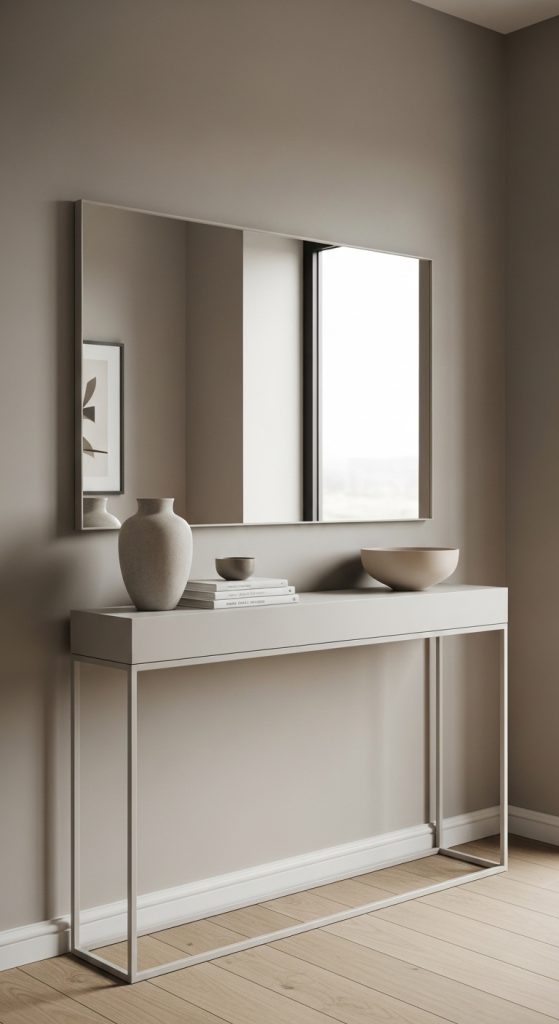
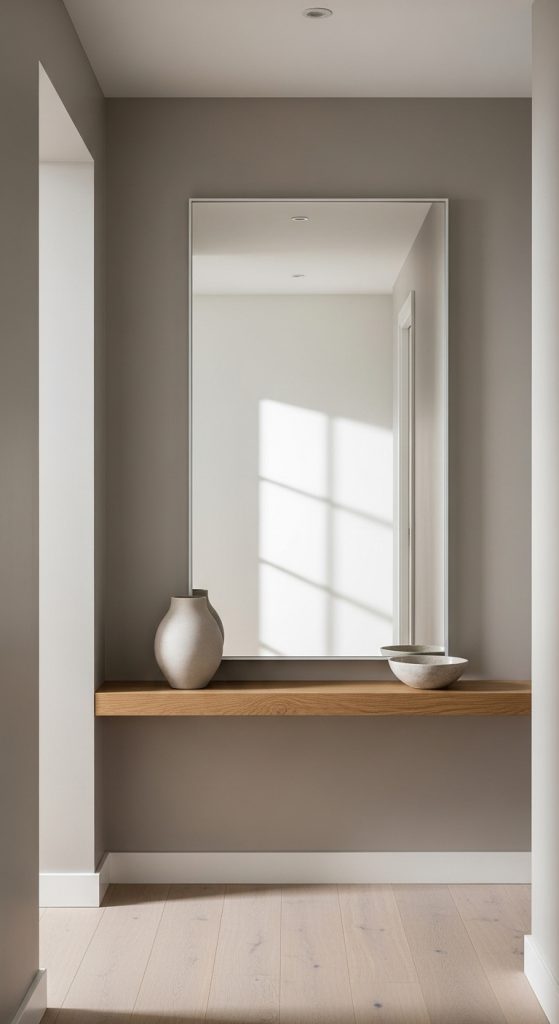
A slim console table is one of the most effective ways to add structure and style to a hallway without blocking the path. In modern hallway design, the console table functions as both a decorative and functional anchor. The key is choosing a piece that complements your hallway’s dimensions while remaining minimal in style. In a neutral-toned hallway, the console should feel integrated rather than dominant, using light wood, matte white, or soft beige finishes.
The table provides a surface for subtle decorative layers—vases, ceramic bowls, small sculptures, or a stack of minimalist books. Overcrowding defeats the purpose, so aim for restraint. Paired with a large wall mirror above, a console table can reflect light and create the illusion of expanded space, enhancing the hallway’s airy feel.
Explanation
The slim console table provides a balance of function and design. It holds essential items such as keys or mail, serves as a staging area for small decor, and visually anchors the space without restricting circulation.
Step-by-Step How-To
- Measure the hallway width to determine maximum table depth.
- Select a table depth of 10–14 inches for narrow corridors.
- Choose neutral finishes like oak, beige, or matte white.
- Add 2–3 curated decor items.
- Hang a mirror above for depth and light reflection.
- Keep the space under the table clear to maintain openness.
Materials Needed
- Slim console table
- Large mirror
- Neutral ceramic vase
- Decorative bowl
- Minimalist books
2. Neutral Textured Runner Rug
Introduction
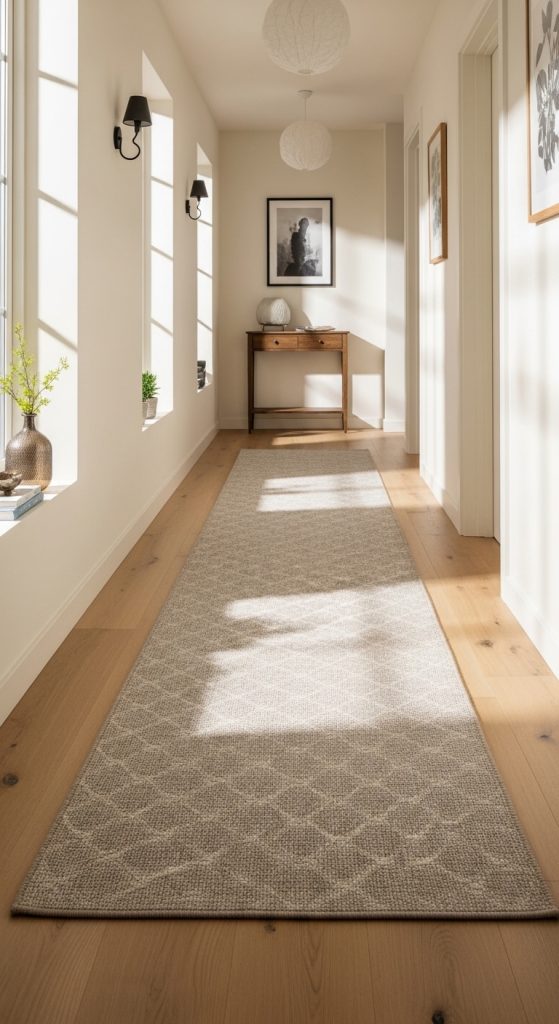
A runner rug is a hallway essential for warmth, texture, and visual guidance. Neutral runners elongate corridors visually and soften hard flooring surfaces, preventing a cold or sterile feel. Textures such as low-pile wool, jute, or flat-weave cotton add tactile depth while keeping the aesthetic modern and minimal. Subtle patterns like tone-on-tone stripes or geometric shapes add interest without disrupting the serene neutral palette.
Explanation
The runner defines circulation, protects flooring, absorbs sound, and contributes visual continuity. It creates rhythm and subtly leads the eye down the corridor.
Step-by-Step How-To
- Measure hallway length and width for proper fit.
- Choose low-pile or flat-weave materials for safety.
- Select neutral colors (beige, cream, gray, or taupe).
- Use a non-slip rug pad for stability.
- Center the runner in the hallway with equal margins on both sides.
Materials Needed
- Neutral runner rug
- Rug pad
- Measuring tape
3. Modern Wall Sconces for Soft Ambient Lighting
Introduction
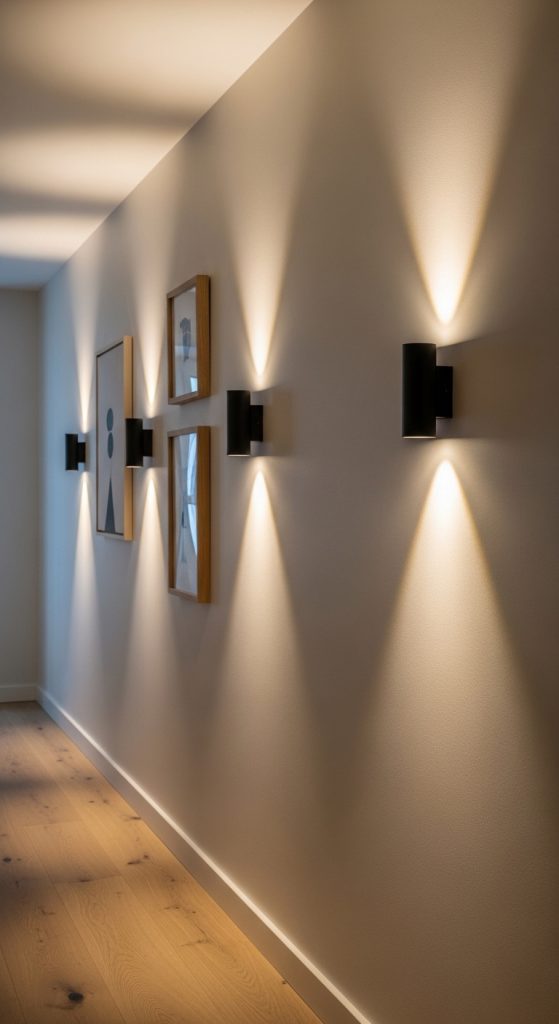
Lighting defines mood, and modern wall sconces provide a subtle yet impactful solution. Unlike overhead lighting, sconces create soft illumination along the walls, highlighting artwork, architectural features, or textured wall finishes. Matte black, brushed brass, or white fixtures are perfect in neutral hallways. Minimalist cylindrical or linear designs maintain simplicity while offering elegance. Placing them symmetrically enhances order, particularly in longer corridors.
Explanation
Sconces balance the visual weight of the hallway and provide functional lighting without overcrowding. They improve ambiance and highlight design features.
Step-by-Step How-To
- Plan spacing along the hallway wall (usually 6–8 feet apart).
- Choose fixtures with minimal design and warm LED bulbs.
- Install at eye level for optimal light distribution.
- Test lighting effect and adjust brightness as needed.
Materials Needed
- Wall sconces
- Warm white LED bulbs
- Drill and wall anchors
- Level tool
4. Large Statement Mirror for Depth and Light
Introduction
Mirrors create a sense of space and reflect light, making hallways feel larger and brighter. A large wall mirror, framed in neutral materials or left frameless, emphasizes vertical height or width. Round mirrors soften sharp architectural lines, while rectangular mirrors elongate the hallway. Positioning mirrors opposite a light source maximizes brightness and visual impact.
Explanation
A mirror serves dual purposes: it enhances spatial perception and acts as a decorative focal point, contributing to a cohesive modern aesthetic.
Step-by-Step How-To
- Select mirror size proportional to wall length and width.
- Secure mirror with appropriate wall anchors.
- Position opposite a light source if possible.
- Align top edge at eye level for balance.
Materials Needed
- Large mirror
- Wall anchors
- Level tool
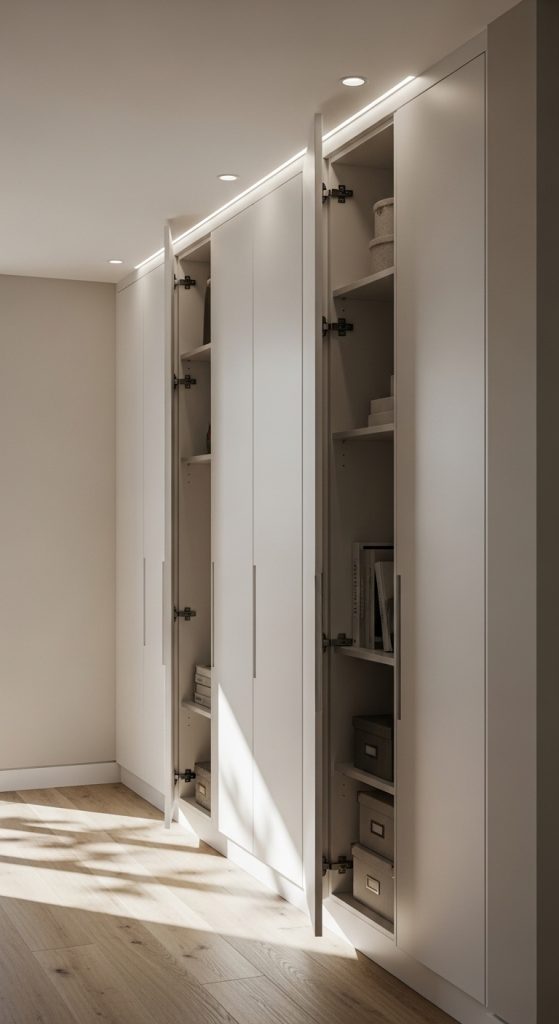
5. Minimal Built-In Storage Cabinets
Introduction
Hallways often become cluttered with shoes, bags, or seasonal items. Built-in cabinets with flat-panel, handleless doors conceal items while maintaining a minimalist look. Neutral tones like beige, matte white, or light wood ensure integration with surrounding walls. Internal shelves and bins provide compartmentalization for practical organization, keeping hallways serene.
Explanation
Concealed storage ensures visual calm by hiding everyday clutter, allowing the hallway to remain streamlined and modern.
Step-by-Step How-To
- Measure available wall depth.
- Install shallow built-in cabinets (10–12 inches deep).
- Use push-to-open or handleless doors for minimal appearance.
- Organize internal items with bins or small boxes.
Materials Needed
- Built-in cabinets
- Storage bins
- Measuring tape
- Push-to-open mechanisms
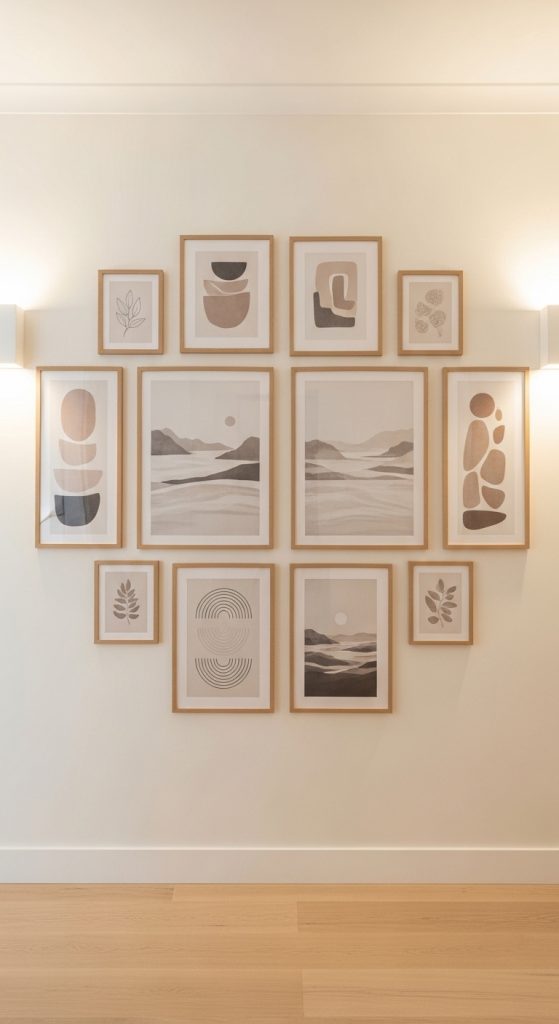
6. Gallery Wall in Soft Neutral Frames
Introduction
A hallway can become an understated gallery that showcases personality while keeping a modern neutral aesthetic. The key to success is restraint: select artwork in muted tones—beige, taupe, gray, or soft white—that complements the neutral palette of the walls and flooring. Frames should match in color and finish, such as natural oak, matte white, or black metal, to maintain cohesion. Overcrowding a gallery wall creates visual chaos, especially in narrow hallways. Instead, aim for a clean grid layout or a linear arrangement along one side of the corridor.
Beyond visuals, gallery walls can also introduce texture through subtle 3D art, fabric wall hangings, or neutral-toned photography. Symmetry and alignment are crucial: evenly spaced frames create rhythm and flow, which draws the eye naturally down the hallway. This approach turns a transitional space into a design feature that feels intentional and refined, without overwhelming the minimalist foundation. A well-executed gallery wall reflects a curated lifestyle and elevates the hallway from a functional path to a visually engaging space.
Clear Explanation
A neutral gallery wall adds personality, texture, and rhythm to a hallway while maintaining modern minimalism. Proper alignment and restraint preserve a clean, cohesive aesthetic.
Step-by-Step How-To
- Select artwork or prints in muted neutral tones.
- Choose frames that match in finish (white, oak, or black).
- Arrange frames on the floor first to finalize layout.
- Maintain 2–3 inch spacing between frames for uniformity.
- Measure wall height and center layout at eye level.
- Secure frames with wall anchors, using a level for precision.
Materials Needed
- Neutral artwork or prints
- Matching frames
- Wall anchors and nails
- Level tool
- Measuring tape
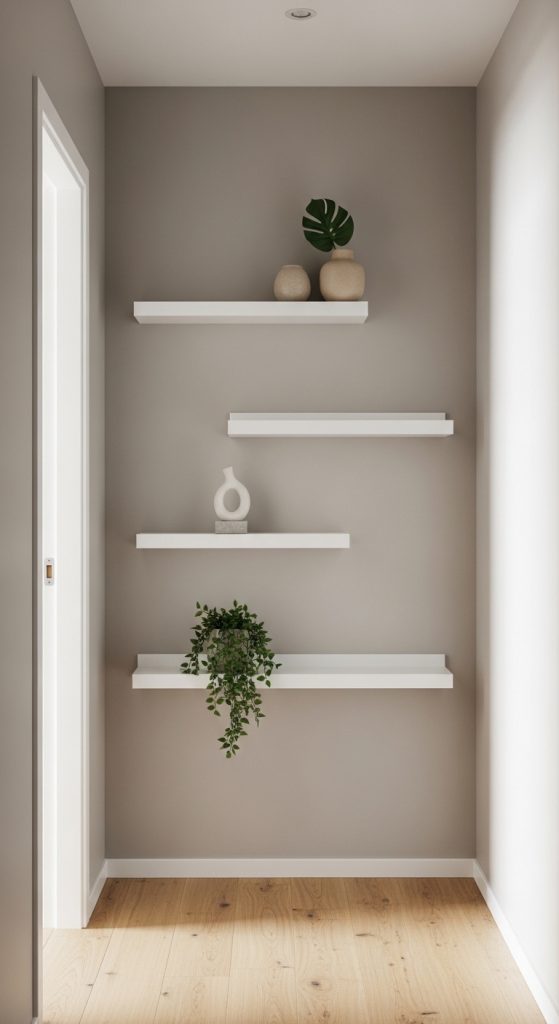
7. Floating Shelves with Minimal Decor
Introduction
Floating shelves are an elegant solution for hallways, providing surface area for subtle decorative touches without consuming floor space. In a neutral modern hallway, shelves should be minimal in depth (6–10 inches) and finished in soft wood, matte white, or light beige. Overloaded or deep shelves break the clean, streamlined aesthetic. The power of floating shelves lies in their ability to display a small number of curated items—a single vase, one small plant, or a simple sculpture.
The goal is restraint and balance. Objects should be spaced evenly, with intentional gaps that allow the wall and the shelf to “breathe.” This creates a gallery-like display that maintains open circulation. Floating shelves also provide functional storage for small accessories such as keys, gloves, or mail, while preserving the hallway’s clean lines. By choosing neutral materials and simple forms, floating shelves seamlessly blend into the modern design, enhancing both style and utility.
Clear Explanation
Floating shelves add functional and decorative surfaces while keeping the hallway visually light and clutter-free.
Step-by-Step How-To
- Identify a wall section for shelves, preferably away from high-traffic areas.
- Choose 6–10 inch deep floating shelves in neutral tones.
- Install brackets or concealed supports for stability.
- Limit decor items to 1–3 per shelf.
- Space objects evenly for visual rhythm.
- Maintain regular cleaning to keep shelves minimal.
Materials Needed
- Floating shelves
- Wall anchors or concealed brackets
- Small decor objects (vase, sculpture, plant)
- Level tool
- Measuring tape
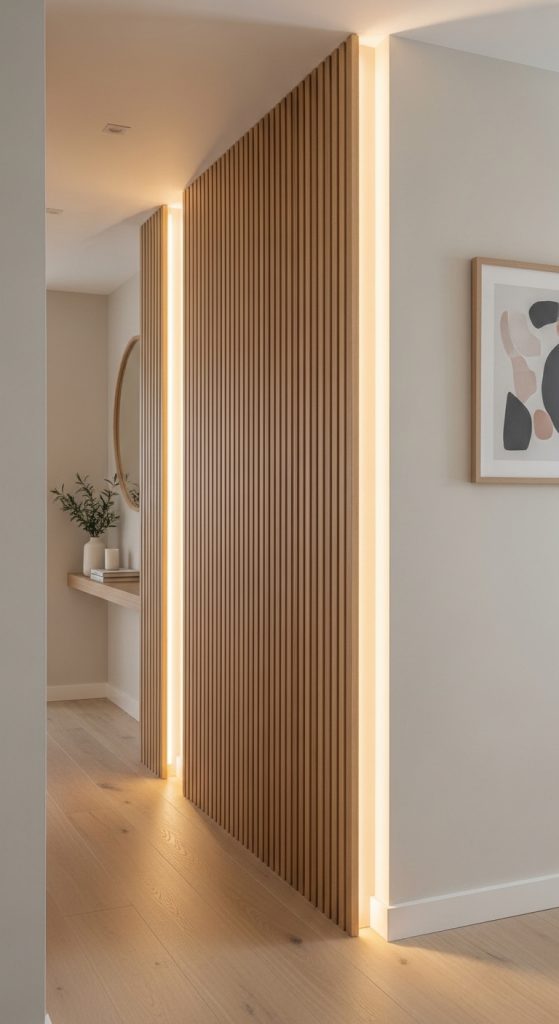
8. Light Wood Accent Panels
Introduction
Vertical or horizontal light wood accent panels can transform a neutral hallway by adding subtle texture and warmth. These panels break up plain walls without introducing bold color, keeping the modern neutral aesthetic intact. Materials like oak, birch, or maple, finished in matte or soft natural tone, complement existing flooring and cabinetry. Panels can be used as full wall treatments, partial wainscoting, or subtle vertical strips that draw the eye upward, enhancing perceived height.
The layered effect of wood panels adds depth to a hallway, which is especially effective in narrow corridors. Panels can also serve as a backdrop for artwork, mirrors, or wall-mounted lighting, integrating seamlessly with other design elements. In combination with neutral walls and minimal decor, wood accents create an elevated, tactile experience, bringing visual interest without overcrowding the space.
Clear Explanation
Light wood accent panels provide texture, warmth, and vertical interest while maintaining a clean neutral palette.
Step-by-Step How-To
- Measure the wall area and decide on panel coverage.
- Cut panels to uniform size or select prefabricated strips.
- Install with adhesive or nails, ensuring even spacing.
- Seal panels with a matte finish for protection and subtle sheen.
- Optionally, integrate wall decor or lighting above panels.
Materials Needed
- Light wood panels or strips
- Adhesive or finishing nails
- Matte wood sealant
- Level tool
- Measuring tape
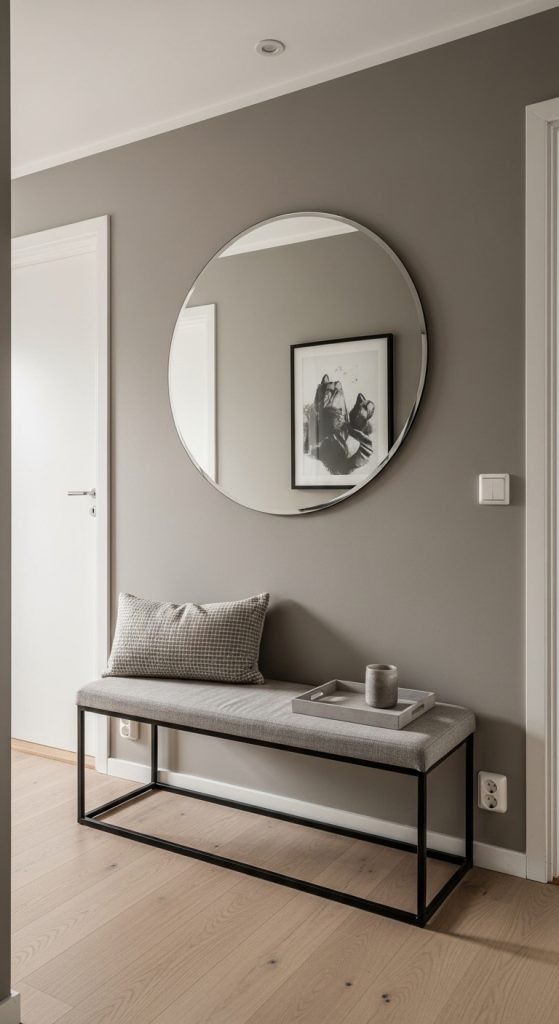
9. Minimal Bench Seating
Introduction
A hallway bench adds both practicality and aesthetic appeal. In neutral modern hallways, choose a slim-profile bench with minimal legs, upholstered in soft neutral fabric like linen, boucle, or muted cotton. The bench provides seating for putting on shoes, setting down bags, or simply creating a pause point in the corridor.
The placement of the bench is crucial: position it under a mirror or artwork for visual balance, or alongside a floating shelf for integrated styling. Avoid benches with excessive ornamentation or bold colors, as they can dominate a narrow hallway. The use of neutral tones ensures the bench blends seamlessly while providing a functional focal point. Adding a small throw or cushion in complementary textures introduces subtle layering without compromising the minimal aesthetic.
Clear Explanation
A slim upholstered bench adds comfort, function, and style while maintaining open circulation and visual calm.
Step-by-Step How-To
- Measure hallway width for appropriate bench size.
- Select a narrow design (10–14 inches depth).
- Choose neutral upholstery.
- Position under mirror or artwork for balance.
- Optionally, add a small textured throw for softness.
Materials Needed
- Slim bench
- Neutral cushion or upholstery
- Optional small throw
- Measuring tape
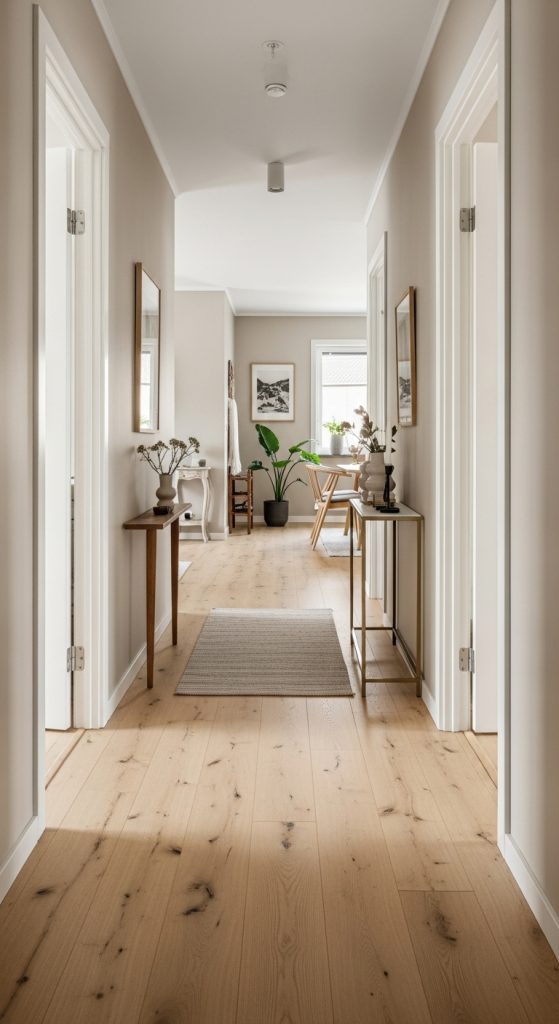
10. Seamless Neutral Flooring Flow
Introduction
Continuous flooring is a powerful design tool in hallways. A single neutral material, like light oak wood, beige stone tile, or cream-colored vinyl, creates visual continuity, elongates space, and enhances the modern neutral aesthetic. Flooring transitions should be smooth, with minimal seams or abrupt changes in color, to preserve a streamlined appearance.
Beyond aesthetics, neutral flooring is practical. It reflects light, hides minor dirt, and pairs effortlessly with wall colors, furniture, and decorative elements. Incorporating rugs or runners on top of a cohesive floor can add texture without breaking the flow. In hallways, maintaining a clean line from room to room ensures that the corridor feels integrated with the rest of the home, supporting both modern design principles and visual spaciousness.
Clear Explanation
Consistent neutral flooring unifies the hallway, visually expands the corridor, and complements modern minimalist design.
Step-by-Step How-To
- Select a neutral flooring material that matches adjoining rooms.
- Ensure even subfloor preparation before installation.
- Lay flooring continuously, avoiding abrupt transitions.
- Maintain clean grout or seam lines for a polished appearance.
- Optionally, place a neutral runner for texture and warmth.
Materials Needed
- Flooring material (wood, tile, or vinyl)
- Installation tools (adhesive, spacers, underlay)
- Measuring tape
- Neutral runner (optional)
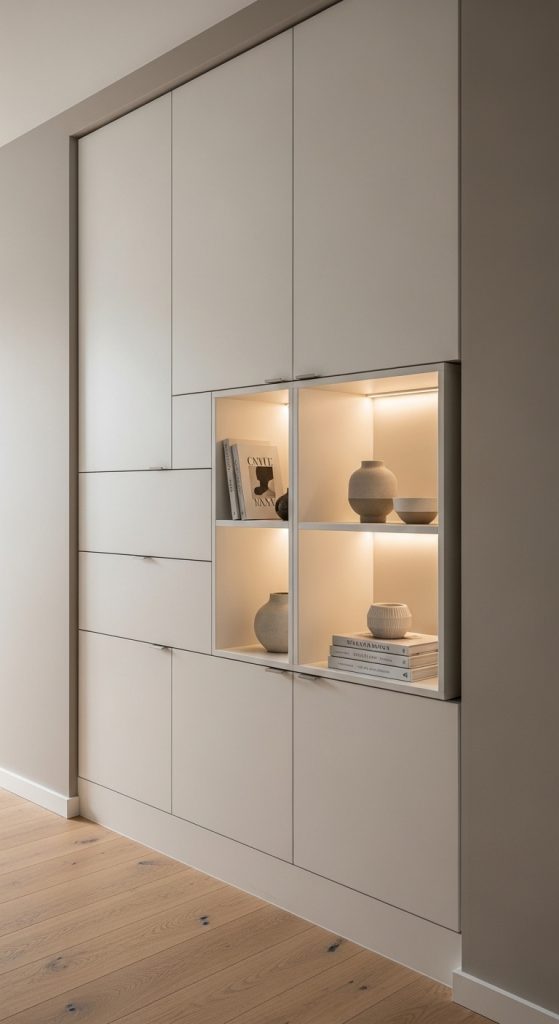
11. Integrated Wall Storage for Functional Minimalism
Many hallways are prone to clutter because they are often transitional spaces with no designated storage. Integrated wall storage—built directly into the hallway walls—offers a modern, minimal solution. Neutral-toned cabinetry with handleless doors, open cubbies, or recessed shelving keeps items like keys, bags, shoes, or seasonal accessories neatly tucked away. Unlike freestanding furniture, built-in storage preserves open circulation and maintains clean architectural lines.
By using muted tones such as matte white, soft taupe, or light beige, integrated storage blends seamlessly into the hallway, making it almost invisible while providing functional organization. Lighting can be incorporated within recessed shelves to highlight decorative objects or provide subtle illumination. This approach creates a sense of order and sophistication while eliminating visual clutter, making your hallway appear longer, brighter, and more intentional.
Clear Explanation
Integrated wall storage hides clutter while maintaining minimalist design and architectural continuity, ensuring hallways remain airy and functional.
Step-by-Step How-To
- Measure hallway wall length and depth for built-in cabinetry.
- Choose handleless, flat-panel doors in neutral tones.
- Incorporate open cubbies or recessed niches for decorative items.
- Add subtle LED strip lighting inside shelves if desired.
- Organize items in bins or baskets inside closed cabinets.
- Maintain clean lines and avoid overloading surfaces.
Materials Needed
- Built-in cabinets or recessed shelves
- Neutral-tone finish panels
- LED strip lighting (optional)
- Storage baskets or boxes
- Measuring tape
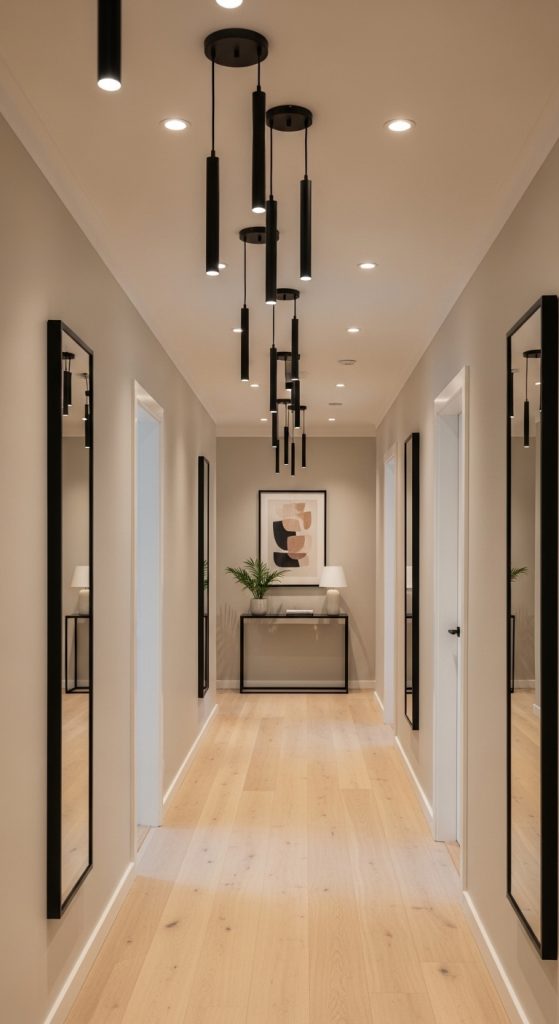
12. Layered Pendant and Recessed Lighting
Introduction
Lighting dramatically influences the feel of a hallway, particularly one in neutral tones. Combining layered lighting—pendant fixtures and recessed ceiling lights—adds depth, sophistication, and function. Pendant lights serve as focal points, drawing attention to a hallway’s midpoint or architectural feature, while recessed lights provide ambient illumination along the entire corridor.
Choosing neutral or metallic finishes for pendants, like matte black, brushed brass, or soft white, ensures cohesion with modern aesthetics. Soft warm LED bulbs enhance the neutral palette, reflecting off walls and floors to create a calming atmosphere. Layered lighting not only improves visibility but also emphasizes decorative elements such as artwork, mirrors, or textured wall panels. Properly designed, lighting can make even the narrowest hallway appear taller, wider, and more inviting.
Clear Explanation
Layered lighting combines decorative pendants and functional recessed lights to enhance ambiance, highlight key features, and maintain a minimalist neutral aesthetic.
Step-by-Step How-To
- Determine hallway length and ceiling height to plan lighting layout.
- Install recessed ceiling lights spaced evenly.
- Select pendant fixtures that complement neutral tones.
- Position pendants over central points or architectural features.
- Use dimmable warm LED bulbs for adjustable ambiance.
- Test lighting at night to ensure even coverage and mood.
Materials Needed
- Pendant light fixtures
- Recessed LED lights
- Dimmable warm white bulbs
- Ceiling mount hardware
- Drill and measuring tape
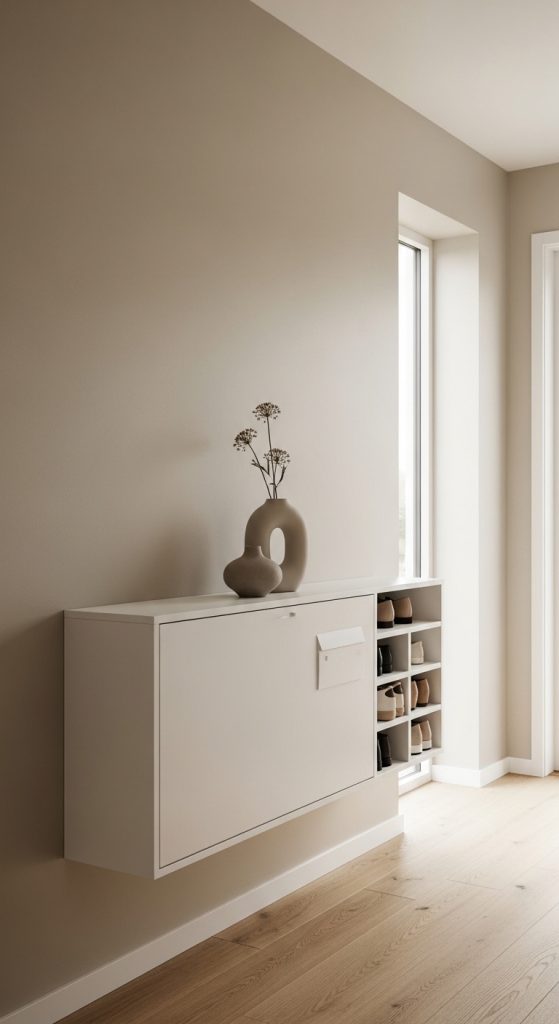
13. Neutral Floating Cabinets for Shoe or Mail Storage
Introduction
A slim floating cabinet is perfect for hallways that require functional storage without sacrificing walking space. These wall-mounted cabinets maintain a clean modern profile while hiding shoes, mail, or small daily essentials. Opting for neutral finishes like matte white, beige, or light wood ensures the cabinet integrates seamlessly with the rest of the hallway design.
Floating cabinets also create a sense of openness by leaving floor space visible, preventing the corridor from feeling crowded. A single decorative object or plant on top adds subtle style without cluttering the space. This combination of concealed functionality and minimalist styling elevates the hallway from a purely transitional area to a polished, organized, and practical part of your home.
Clear Explanation
Floating cabinets provide hidden storage while maintaining open floor space and minimal visual impact, enhancing both function and style in a modern hallway.
Step-by-Step How-To
- Measure wall width and choose cabinet length suitable for space.
- Select shallow-depth cabinets (10–12 inches).
- Mount securely with concealed brackets or wall anchors.
- Organize contents in small bins or compartments.
- Style the top with a single neutral object, vase, or small plant.
- Clean regularly to maintain sleek minimal lines.
Materials Needed
- Wall-mounted floating cabinet
- Neutral finish
- Wall anchors or brackets
- Storage bins
- Minimal decor item (optional)
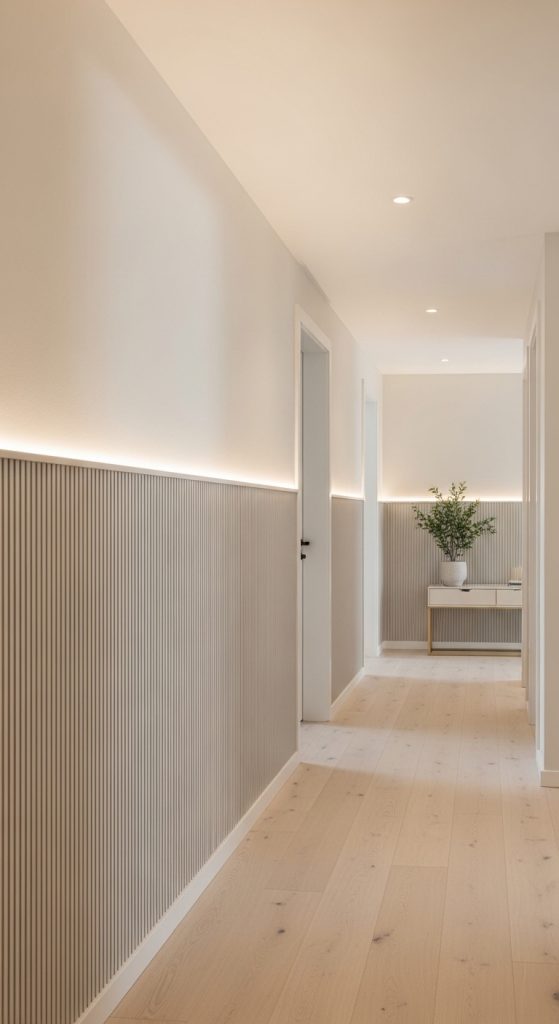
14. Subtle Wall Paneling for Architectural Interest
Introduction
Wall paneling is a subtle way to introduce texture and structure in a neutral hallway. Modern options include shallow vertical or horizontal panels, simple molding, or tongue-and-groove wood strips in muted tones like beige, white, or light gray. Unlike traditional heavy paneling, minimalist designs use clean lines and repetition to create rhythm and depth without overwhelming the space.
Paneling draws the eye and visually guides movement through the corridor. It can also serve as a backdrop for wall-mounted lighting, mirrors, or artwork. Incorporating natural wood tones or soft matte finishes ensures the hallway remains calm and cohesive. Properly executed, wall paneling transforms plain walls into an architectural feature while keeping the modern neutral aesthetic intact.
Clear Explanation
Subtle wall paneling adds depth, texture, and rhythm to a hallway without disrupting minimalist design principles or the neutral color scheme.
Step-by-Step How-To
- Choose wall section for paneling (full wall or partial).
- Select vertical or horizontal panels in neutral shades.
- Cut or purchase pre-finished panels for consistency.
- Install using adhesive or finishing nails.
- Paint or seal with matte finish for protection.
- Style adjacent decor minimally to preserve clean lines.
Materials Needed
- Neutral wall panels or wood strips
- Adhesive or finishing nails
- Matte paint or sealant
- Level tool
- Measuring tape
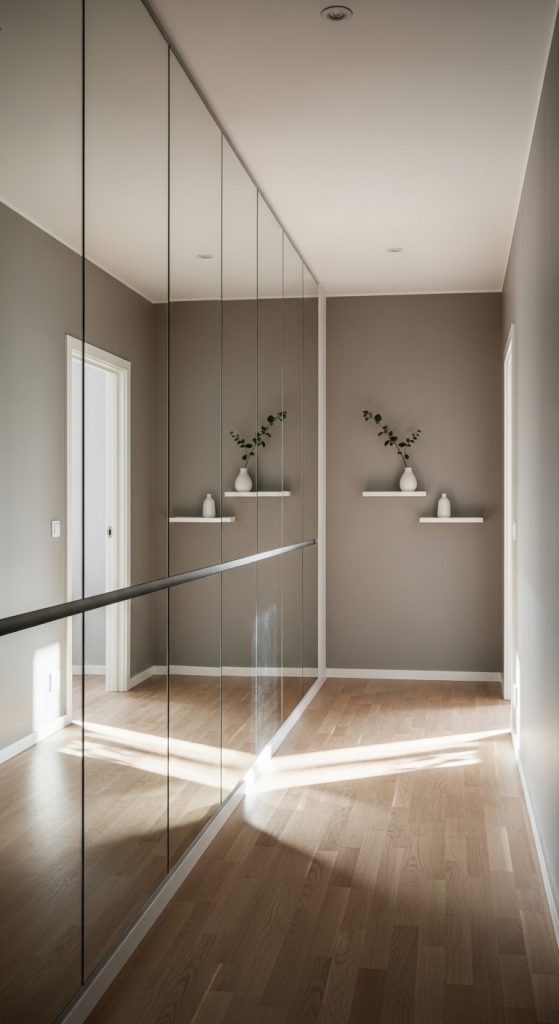
15. Statement Neutral Mirror Wall
Introduction
A hallway mirror wall is both functional and visually expansive. Multiple frameless or slim-framed mirrors arranged in a grid or linear pattern can reflect light, making the corridor appear larger and brighter. Mirrors in neutral-toned frames—like matte white, soft gray, or light oak—blend seamlessly with the palette while serving as design statements.
This approach is especially effective in long or narrow hallways, where a mirror wall can reduce the sense of confinement and visually elongate the space. Additionally, mirrors can serve as decor surfaces for small floating shelves or wall sconces, integrating function with style. The reflective surfaces add depth and a luxurious feel without introducing color contrast, staying true to a minimalist neutral aesthetic.
Clear Explanation
A mirror wall amplifies space and light, adds a modern decorative element, and enhances functionality while preserving neutrality and minimalism.
Step-by-Step How-To
- Measure wall length and determine mirror size/layout.
- Select frameless or thin neutral frames.
- Align mirrors in a grid or linear pattern.
- Secure mirrors with wall anchors or adhesive.
- Ensure even spacing and level alignment.
- Optional: Place floating shelves or sconces for added function.
Materials Needed
- Multiple mirrors (framed or frameless)
- Wall anchors or adhesive
- Level tool
- Measuring tape
- Optional floating shelves