
Designing a small living room can sometimes feel like a challenge, especially when trying to balance comfort, style, and functionality in a limited space. Every design element matters—from furniture placement and wall colors to lighting and decorative accents. However, one area that homeowners often overlook is the ceiling. The ceiling plays a crucial role in shaping the overall appearance of a room, and when designed thoughtfully, it can make even a small living room feel larger, brighter, and more elegant. One of the most popular modern solutions for ceiling design is PVC ceiling panels, which have become increasingly common in contemporary homes because of their versatility, affordability, and aesthetic appeal.

PVC, or polyvinyl chloride, is a lightweight and durable material that is widely used in interior design and construction. When applied to ceilings, PVC panels offer a clean, polished look that can instantly transform the atmosphere of a living room. For small spaces, this type of ceiling design is particularly beneficial because it allows homeowners to introduce creative patterns, lighting features, and textures without overwhelming the room. With the right PVC ceiling design, a small living room can feel sophisticated, modern, and visually spacious.
One of the main advantages of PVC ceilings is their flexibility in design. Unlike traditional plaster or wooden ceilings, PVC panels come in a wide variety of colors, textures, and patterns. Some designs mimic natural materials such as wood or marble, while others feature sleek glossy finishes that reflect light and brighten the room. This flexibility makes it easy to match the ceiling with different interior styles, whether the living room has a minimalist, contemporary, rustic, or luxurious theme.
Another reason why PVC ceilings are ideal for small living rooms is their ability to enhance lighting. Lighting plays a significant role in how spacious a room feels. PVC ceilings can be designed with recessed lights, LED strips, or decorative lighting features that add depth and dimension to the room. For example, a simple PVC ceiling with built-in LED lighting can create a soft glow that spreads evenly across the space, making the living room feel warm and inviting. In smaller areas where natural light may be limited, this lighting integration can dramatically improve the ambiance.
Durability is another factor that makes PVC ceilings a popular choice. Unlike some traditional materials, PVC is resistant to moisture, termites, and mold, which means it remains in good condition for many years. This is particularly useful in climates where humidity may affect wooden or plaster ceilings. Because PVC does not easily warp or crack, homeowners can enjoy a long-lasting ceiling design with minimal maintenance. A quick wipe with a damp cloth is usually enough to keep PVC panels clean and fresh.
In addition to durability, PVC ceilings are also known for being cost-effective and easy to install. Many homeowners choose PVC panels because they provide the appearance of a high-end ceiling design without the high cost associated with materials like solid wood or intricate plaster work. Installation is typically quicker and less complicated, which can reduce labor costs and renovation time. This makes PVC ceilings a practical choice for people who want to upgrade their living room without undergoing a lengthy remodeling process.
When it comes to decorating small living rooms, visual balance is extremely important. Large or overly complex ceiling designs can make a space feel crowded or overwhelming. PVC ceilings, however, can be customized to maintain a light and balanced appearance. For example, a simple rectangular panel design with soft lighting can create a modern and clean aesthetic. Alternatively, geometric patterns can add visual interest while still keeping the room organized and uncluttered.
Another advantage of PVC ceilings is their ability to hide wiring, pipes, and imperfections. In many homes, ceilings may contain electrical wiring, uneven surfaces, or structural elements that disrupt the overall look of the room. PVC panels can conceal these imperfections while providing a smooth, uniform surface. This allows homeowners to maintain a polished and professional interior design without needing extensive structural changes.
In modern interior design, ceilings are increasingly treated as a statement feature rather than just a structural component. Designers often use ceiling patterns, textures, and lighting combinations to create focal points that draw attention upward and add depth to the room. In a small living room, a well-designed PVC ceiling can act as this focal point, making the entire space feel thoughtfully designed and visually engaging.
PVC ceilings also pair well with a variety of living room decor elements. Whether the room features contemporary furniture, cozy textiles, or decorative wall art, PVC panels can complement these features effortlessly. For instance, a white glossy PVC ceiling can reflect light and brighten neutral interiors, while wood-textured PVC panels can add warmth and contrast to modern furniture styles.
For homeowners looking to maximize the potential of a small living room, choosing the right ceiling design can make a dramatic difference. PVC ceilings offer a combination of style, practicality, and affordability that makes them ideal for compact spaces. From simple panel layouts to more intricate layered designs with LED lighting, there are countless ways to customize a PVC ceiling to suit personal preferences and interior themes.
In the sections that follow, you will discover creative and stylish PVC ceiling design ideas specifically suited for small living rooms. Each idea will explore different styles, layouts, and lighting combinations that can help transform a compact space into a comfortable and visually appealing living area. Whether you prefer minimalist elegance, modern geometry, or warm wood-inspired textures, there is a PVC ceiling design that can perfectly enhance the atmosphere of your small living room.
1. Simple Rectangular PVC Ceiling with LED Border
Introduction
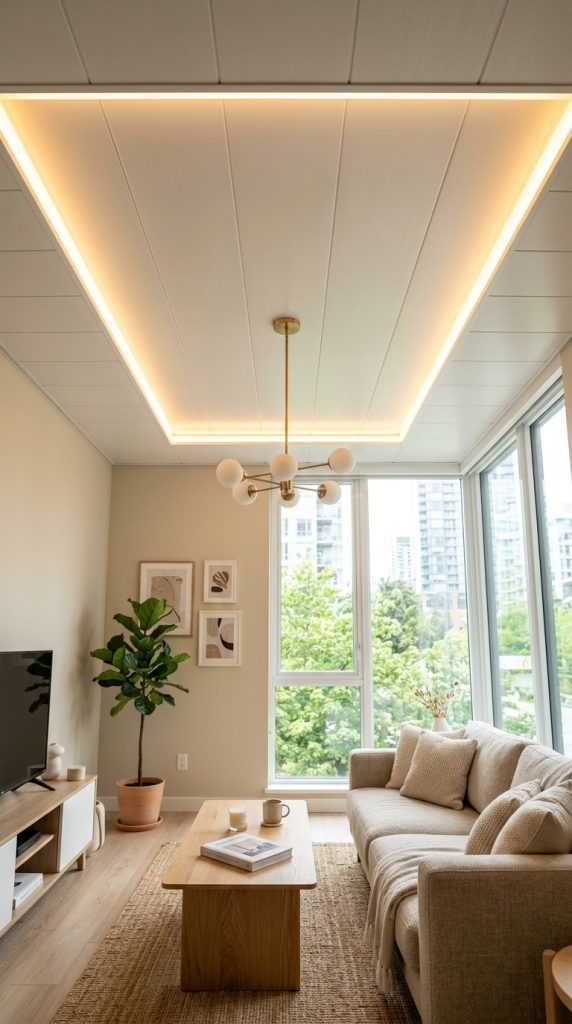
A simple rectangular PVC ceiling design is one of the most popular options for small living rooms because it creates a clean, balanced, and modern appearance without making the space feel crowded. In compact living rooms, simplicity often works best, and this design perfectly reflects that principle. The rectangular frame structure helps define the center of the ceiling while maintaining a minimalistic style that enhances the room rather than overwhelming it.
This design typically features a rectangular PVC panel placed in the center of the ceiling with LED strip lighting installed along the borders. The lighting adds a soft glow that makes the room feel warmer and more inviting. Because the design focuses on clean lines and subtle lighting, it works beautifully with many interior styles such as modern, minimalist, contemporary, and Scandinavian-inspired living rooms.
One of the biggest advantages of this design is its ability to make a small living room feel visually larger. The rectangular layout draws the eyes upward and creates a sense of structure within the room. The LED border lighting also helps spread light evenly across the ceiling, reducing shadows and brightening the overall space.
Another reason homeowners love this design is its versatility. It works well with neutral wall colors, modern furniture, and decorative lighting fixtures. Whether you prefer a simple white ceiling or a combination of colors, this PVC ceiling style can easily adapt to your interior design preferences.
Explanation
A rectangular PVC ceiling design features a central panel framed by LED strip lights, creating a structured yet elegant ceiling design.
Step-by-Step How-To
- Measure the Ceiling Area
Start by measuring the living room ceiling to determine the size of the rectangular design. - Install the Frame Structure
Install a lightweight metal or wooden framework where the PVC panels will be attached. - Attach PVC Panels
Secure the PVC ceiling panels to the frame, ensuring they align perfectly within the rectangular layout. - Install LED Strip Lighting
Place LED strip lights around the border of the rectangle to create soft indirect lighting. - Add Central Lighting
Install a small chandelier or modern ceiling light in the center if desired. - Finish and Clean
Check alignment, hide wiring, and wipe the PVC panels for a clean finish.
Materials Needed
- PVC ceiling panels
- Metal or wooden frame
- LED strip lights
- Screws and fasteners
- Electric wiring and connectors
- Decorative ceiling light (optional)
2. Glossy White PVC Ceiling for Brightness
Introduction
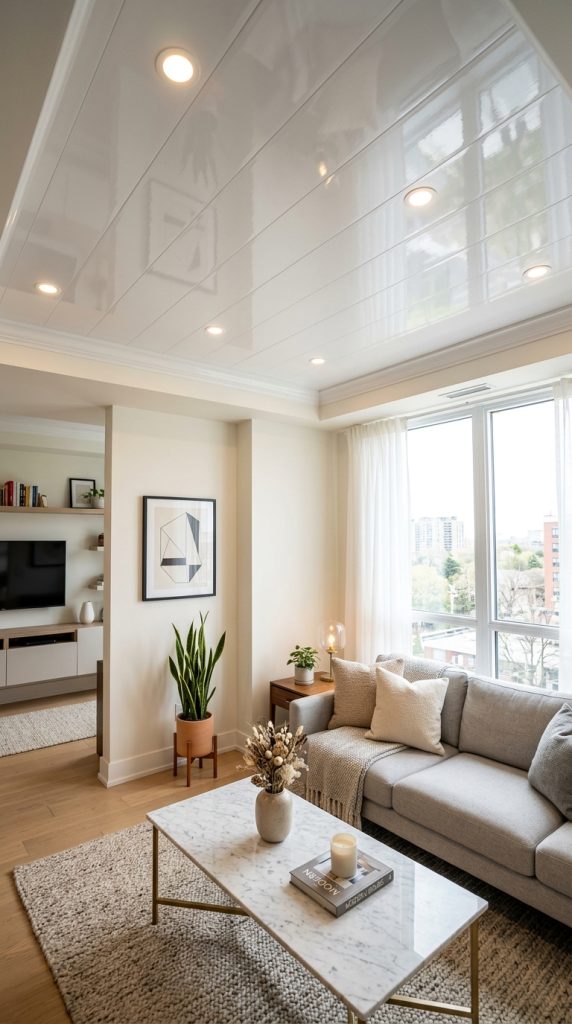
A glossy white PVC ceiling design is an excellent solution for small living rooms that need extra brightness and openness. Because small spaces often suffer from limited natural light, using reflective surfaces can dramatically improve the overall atmosphere of the room. Glossy PVC panels reflect both natural and artificial light, making the room appear larger, cleaner, and more modern.
This type of ceiling design works particularly well in minimalist interiors where simplicity and brightness are the main design goals. The smooth glossy finish creates a sleek appearance that pairs beautifully with modern furniture, neutral color palettes, and soft lighting.
Another advantage of glossy white PVC ceilings is that they create a sense of height. When light reflects off the ceiling surface, it visually lifts the ceiling, making the room feel less confined. This is especially helpful for apartments or small homes where ceiling height may be limited.
Maintenance is also extremely easy. Unlike painted ceilings that may fade or stain over time, glossy PVC panels can simply be wiped clean with a damp cloth. This makes them a practical option for homeowners who want both beauty and convenience in their living room design.
Explanation
Glossy white PVC panels cover the entire ceiling, reflecting light and creating a bright, spacious effect.
Step-by-Step How-To
- Prepare the Ceiling Surface
Ensure the ceiling surface is clean and ready for installation. - Install Support Framework
Set up a lightweight frame to hold the PVC panels securely. - Attach Glossy PVC Panels
Install the glossy panels carefully, ensuring the reflective finish remains smooth. - Install Recessed Lights
Add small recessed lights to enhance brightness. - Check Panel Alignment
Ensure all panels are aligned evenly for a seamless appearance. - Final Cleaning
Wipe panels gently to remove fingerprints or dust.
Materials Needed
- Glossy white PVC panels
- Ceiling frame structure
- Recessed LED lights
- Screws and connectors
- Cleaning cloth
3. Wooden Texture PVC Ceiling Design
Introduction
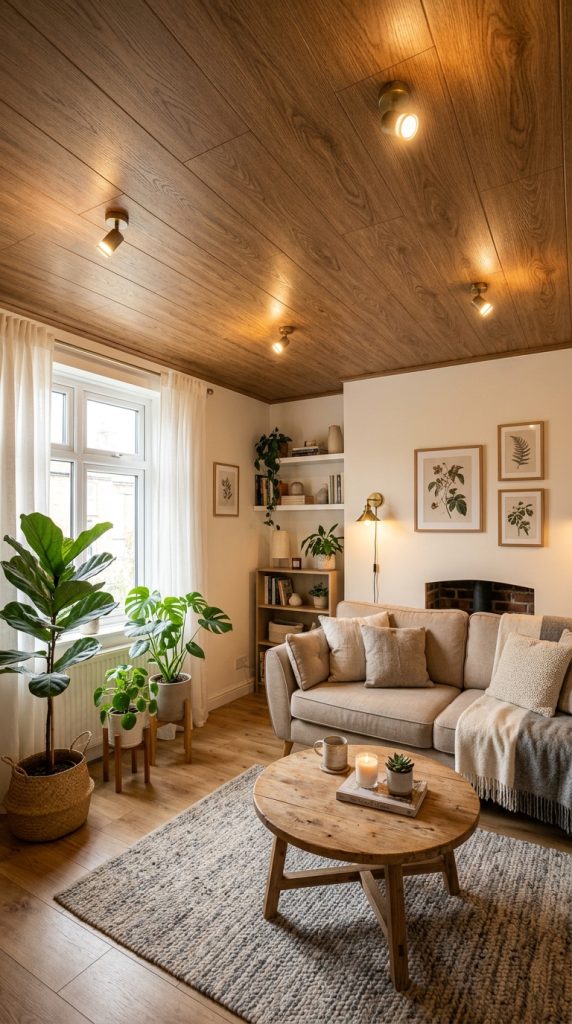
A wooden texture PVC ceiling is perfect for homeowners who want the warmth of wood without the maintenance challenges of real timber. Natural wood ceilings can be expensive and require regular care, but PVC panels designed with wood textures offer the same aesthetic appeal while being more affordable and durable.
This ceiling design brings a cozy and welcoming atmosphere to small living rooms. Wood tones add depth and contrast to neutral-colored walls, making the room feel more inviting. The texture also introduces visual interest, preventing the ceiling from looking plain or empty.
Wood-textured PVC ceilings are particularly popular in modern rustic and Scandinavian-inspired interiors. When paired with soft lighting and simple furniture, they create a comfortable environment that feels both stylish and relaxing.
Another benefit of this design is durability. PVC wood panels resist moisture, termites, and cracking, making them a practical alternative to real wood. They maintain their appearance for years without needing repainting or polishing.
Explanation
PVC panels with a wood grain texture are installed on the ceiling to create a warm, natural look.
Step-by-Step How-To
- Choose Wood Texture Panels
Select PVC panels that mimic natural wood grain. - Install Ceiling Frame
Create a framework to support the panels. - Attach Panels Horizontally or Vertically
Install the panels in your preferred pattern. - Add Warm Lighting
Install warm LED lighting to highlight the wood texture. - Secure Panels Properly
Tighten screws and ensure panels are evenly placed. - Final Inspection
Check alignment and clean the surface.
Materials Needed
- Wood texture PVC panels
- Metal or wooden ceiling frame
- Warm LED lights
- Screws and fasteners
- Electrical wiring
4. PVC Ceiling with Geometric Patterns
Introduction
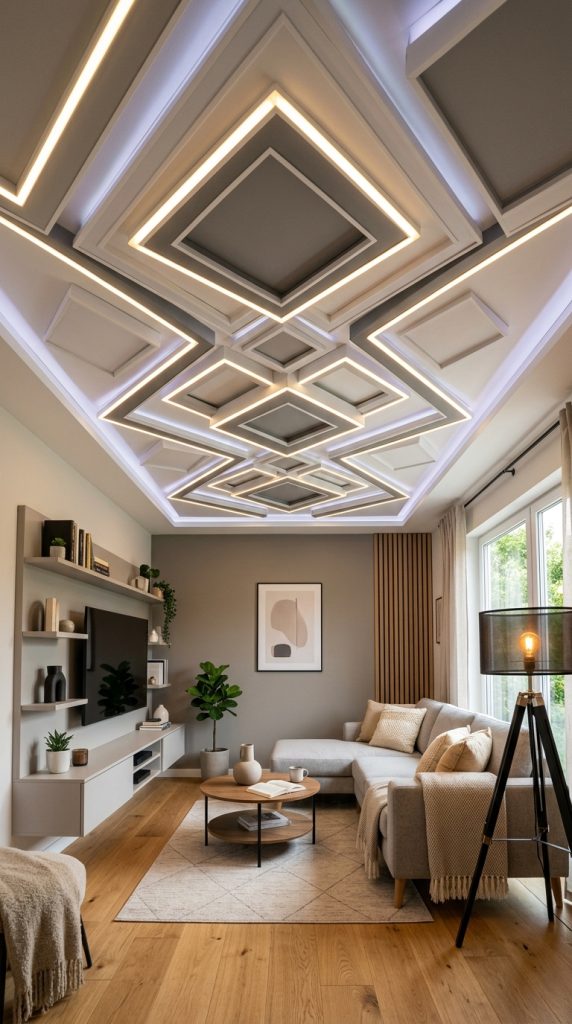
Geometric ceiling designs are an excellent way to add personality and visual interest to a small living room. Instead of a plain ceiling, geometric PVC panels introduce shapes and patterns that create a modern and stylish appearance. These patterns can include squares, rectangles, or layered shapes arranged in symmetrical layouts.
For small living rooms, geometric designs help break the monotony of flat ceilings while maintaining balance and organization. When combined with subtle lighting, the patterns create depth and dimension that make the room feel more dynamic.
This design is especially popular in contemporary and modern homes where bold shapes and creative layouts are appreciated. Even though the patterns may look intricate, PVC panels make it easier to achieve these designs compared to traditional plaster ceilings.
Explanation
PVC panels are arranged in geometric shapes to create a visually striking ceiling design.
Step-by-Step How-To
- Plan the Pattern Layout
Sketch the geometric design before installation. - Install Support Framework
Prepare a frame based on the pattern layout. - Attach PVC Panels
Install panels in geometric shapes. - Add LED Accent Lighting
Install lights along the shapes for emphasis. - Secure Panels
Tighten all panels and hide wiring. - Clean and Inspect
Ensure the pattern looks symmetrical and clean.
Materials Needed
- Patterned PVC ceiling panels
- Ceiling frame structure
- LED accent lights
- Screws and connectors
5. Layered PVC False Ceiling Design
Introduction
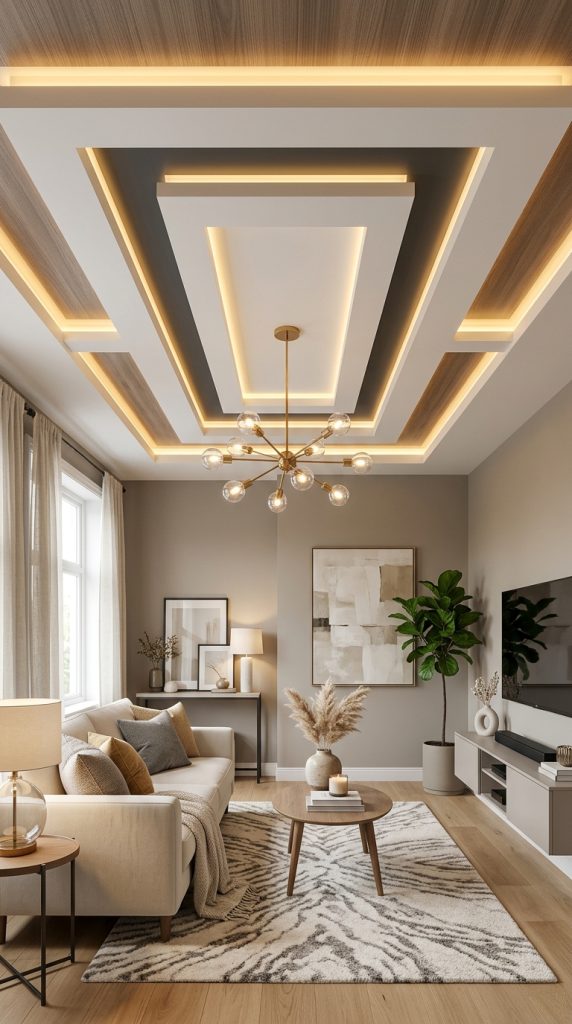
A layered PVC false ceiling design is ideal for homeowners who want to add depth and dimension to their small living room. Instead of a flat surface, this design features multiple layers of PVC panels installed at different heights. The layered structure creates a sophisticated look that immediately elevates the interior design of the room.
Even though layered ceilings may seem complex, PVC materials make them easier and more affordable to create. The different levels allow for creative lighting placement, such as LED strips hidden between the layers. This lighting technique produces a soft glow that enhances the architectural design of the ceiling.
Layered PVC ceilings also work well for defining the central area of the living room. For example, the middle section can feature a decorative light fixture while the surrounding layers contain LED lighting. This combination creates a focal point that draws attention upward.
Explanation
Multiple PVC layers are installed at different heights to create depth and a stylish ceiling structure.
Step-by-Step How-To
- Design the Layer Layout
Plan how many layers you want and their size. - Install Structural Framework
Build a frame to support each ceiling layer. - Attach PVC Panels to Each Layer
Secure panels carefully according to the design. - Install Hidden LED Lighting
Place LED strips between layers. - Add Center Lighting Fixture
Install a decorative light in the middle. - Final Adjustment
Inspect the ceiling and clean the panels.
Materials Needed
- PVC ceiling panels
- Metal or wooden framework
- LED strip lights
- Decorative ceiling light
- Screws and wiring
6. PVC Ceiling with Cove Lighting
Introduction
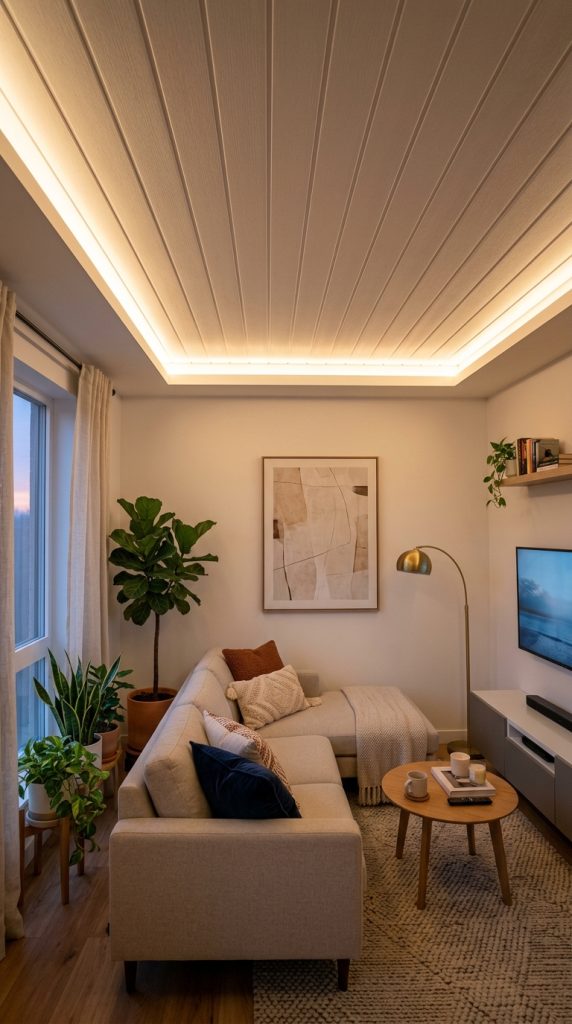
Cove lighting is one of the most elegant ways to enhance a small living room ceiling. When combined with PVC ceiling panels, it creates a soft and luxurious atmosphere that feels both modern and relaxing. Cove lighting is installed in hidden recesses along the edges of the ceiling, allowing light to glow indirectly rather than shining directly downward. This technique produces a smooth, ambient light that spreads evenly across the room.
For small living rooms, this lighting style is particularly effective because it reduces harsh shadows and visually expands the space. Instead of making the ceiling feel heavy or crowded, the gentle glow creates the illusion of height and openness. Many interior designers recommend cove lighting for compact rooms because it adds sophistication without overwhelming the design.
PVC panels make it easy to create recessed sections where LED strip lights can be installed. The lightweight material allows for flexible ceiling shapes while maintaining durability and affordability. Whether you choose a rectangular layout or a curved design, the cove lighting will highlight the ceiling structure beautifully.
Another advantage is the ability to adjust lighting colors and brightness. Modern LED systems allow homeowners to change the lighting tone to suit different moods, from warm cozy evenings to brighter daytime settings. This versatility makes the PVC cove ceiling design both stylish and functional for everyday living.
Explanation
This design features PVC ceiling panels with hidden LED lighting placed along the edges of the ceiling, creating a glowing border effect that enhances the overall ambiance of the room.
Step-by-Step How-To
- Plan the Cove Layout
Decide where the recessed lighting channel will be placed along the ceiling edges. - Install a Support Framework
Build a metal or wooden frame that creates a gap for the LED lighting. - Attach PVC Panels
Install PVC ceiling panels over the frame while leaving space for the lighting recess. - Install LED Strip Lights
Place LED strips inside the recessed area to create indirect lighting. - Hide Electrical Wiring
Conceal all wires behind the panels for a clean appearance. - Test Lighting Effects
Turn on the LED lights to ensure even brightness and proper placement.
Materials Needed
- PVC ceiling panels
- LED strip lights
- Wooden or metal support frame
- Electrical wiring and connectors
- Screws and fasteners
7. PVC Ceiling with Central Circular Design
Introduction
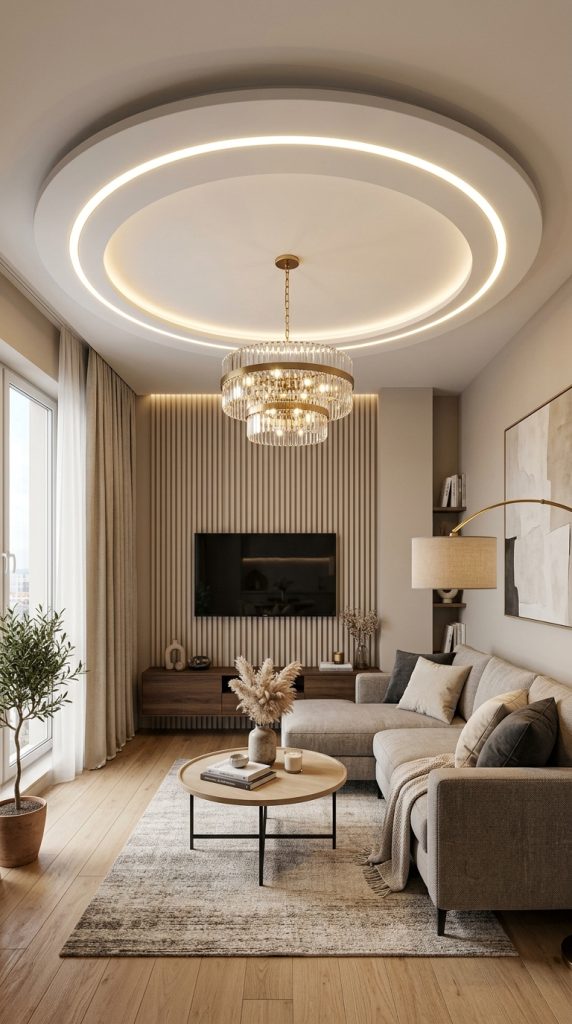
A central circular PVC ceiling design is a stylish option that creates a focal point in a small living room. Instead of having a plain ceiling surface, the circular design draws attention to the center of the room and adds a decorative element that enhances the entire interior. This type of ceiling design works especially well when paired with a chandelier or pendant light.
The circular shape introduces softness and balance to the living room. While rectangular and square shapes are common in furniture and architecture, adding a circular ceiling feature breaks the monotony and makes the space feel more dynamic. In smaller rooms, this can help create a visually interesting design without using too many decorations.
PVC panels are perfect for this type of design because they can easily be cut and shaped to form curved patterns. The lightweight material allows installers to create smooth circular forms without the difficulty of traditional plaster ceilings.
Lighting plays a key role in enhancing the circular design. Many homeowners add LED lights around the circle to highlight its shape and create a glowing ring effect. This combination of shape and lighting transforms the ceiling into a decorative centerpiece for the living room.
Explanation
This ceiling style features a circular PVC panel design in the center, often highlighted with lighting and decorative fixtures.
Step-by-Step How-To
- Mark the Circular Layout
Use measuring tools to mark the circle shape on the ceiling. - Create the Frame Structure
Build a circular frame that will support the PVC panels. - Cut PVC Panels to Shape
Carefully cut the panels to fit the circular pattern. - Install Panels on the Frame
Secure the panels evenly to maintain a smooth circular design. - Add LED Ring Lighting
Install LED lights around the circular border. - Install Center Light Fixture
Attach a chandelier or pendant light in the center.
Materials Needed
- PVC ceiling panels
- Circular support frame
- LED strip lights
- Chandelier or pendant light
- Screws and wiring
8. Two-Tone PVC Ceiling Design
Introduction
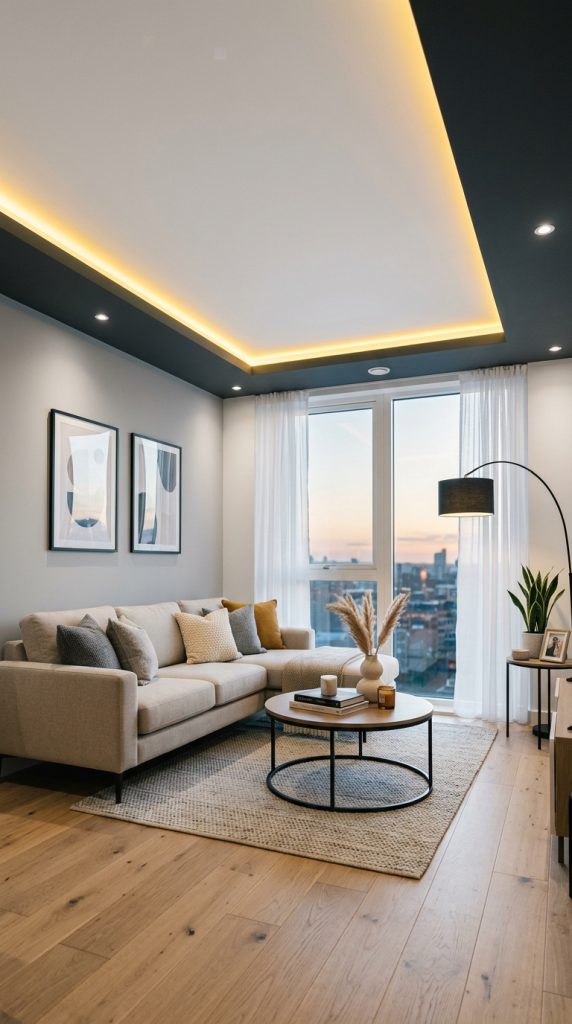
A two-tone PVC ceiling design is a creative way to add color contrast and visual interest to a small living room. Instead of using a single color for the entire ceiling, this design combines two complementary shades to create a layered and stylish appearance.
For small spaces, color contrast can help define different sections of the ceiling while maintaining harmony with the rest of the room. For example, a white center panel paired with a darker border creates depth and makes the ceiling appear more structured. This design approach works well with modern and contemporary interiors.
PVC panels are available in many colors and finishes, allowing homeowners to experiment with combinations that match their decor. Popular choices include white and grey, beige and brown, or glossy white with wood texture panels.
Lighting can also enhance the two-tone effect. Installing LED lights along the border between the colors helps emphasize the design and adds a soft glow to the ceiling.
Explanation
Two different colors of PVC panels are used to create contrast and highlight the ceiling design.
Step-by-Step How-To
- Choose Color Combination
Select two complementary PVC panel colors. - Plan the Layout
Decide which color will be used in the center and which will form the border. - Install Ceiling Framework
Build a frame that supports both panel sections. - Attach First Color Panels
Install the central panel color first. - Install Border Panels
Add the second color around the edges. - Add Accent Lighting
Place LED lights between the color sections.
Materials Needed
- Two colors of PVC panels
- Ceiling frame structure
- LED strip lights
- Screws and connectors
9. Minimalist Flat PVC Ceiling Design
Introduction
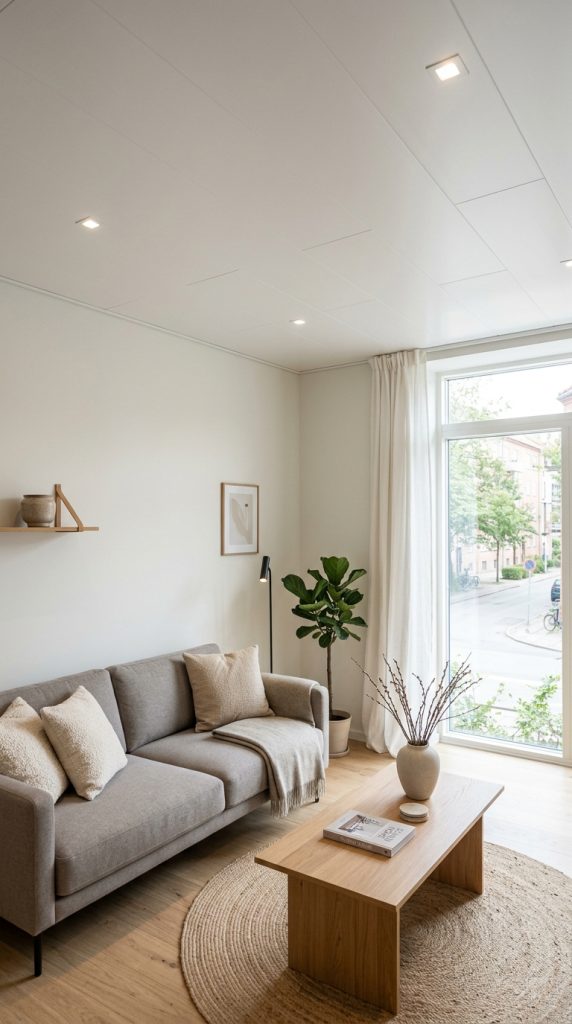
Sometimes the best design choice for a small living room is simplicity. A minimalist flat PVC ceiling focuses on clean lines and smooth surfaces, creating a modern look that feels uncluttered and relaxing. This design is perfect for homeowners who prefer a subtle and elegant interior without excessive decoration.
Minimalist ceilings are particularly effective in compact spaces because they maintain visual openness. When the ceiling is simple and streamlined, the room feels more spacious and calm. This style works beautifully with modern furniture, neutral wall colors, and simple lighting fixtures.
PVC panels make minimalist ceiling designs easy to achieve. The panels create a smooth and uniform surface that looks neat and polished. Unlike traditional plaster ceilings, PVC panels do not crack easily and require very little maintenance.
Lighting can be kept simple as well. Small recessed lights or sleek LED panels complement the minimalist design without drawing too much attention.
Explanation
This design uses flat PVC panels across the entire ceiling with minimal decorative elements.
Step-by-Step How-To
- Measure the Ceiling Area
Determine the number of panels needed. - Install Support Framework
Create a basic structure for panel installation. - Attach PVC Panels Evenly
Secure panels to the frame to create a smooth surface. - Install Recessed Lighting
Add small ceiling lights for illumination. - Hide Wiring
Conceal electrical cables behind the panels. - Clean and Finish
Wipe panels to maintain a polished look.
Materials Needed
- Flat PVC ceiling panels
- Ceiling frame
- Recessed lights
- Screws and fasteners
10. PVC Ceiling with LED Panel Lights
Introduction
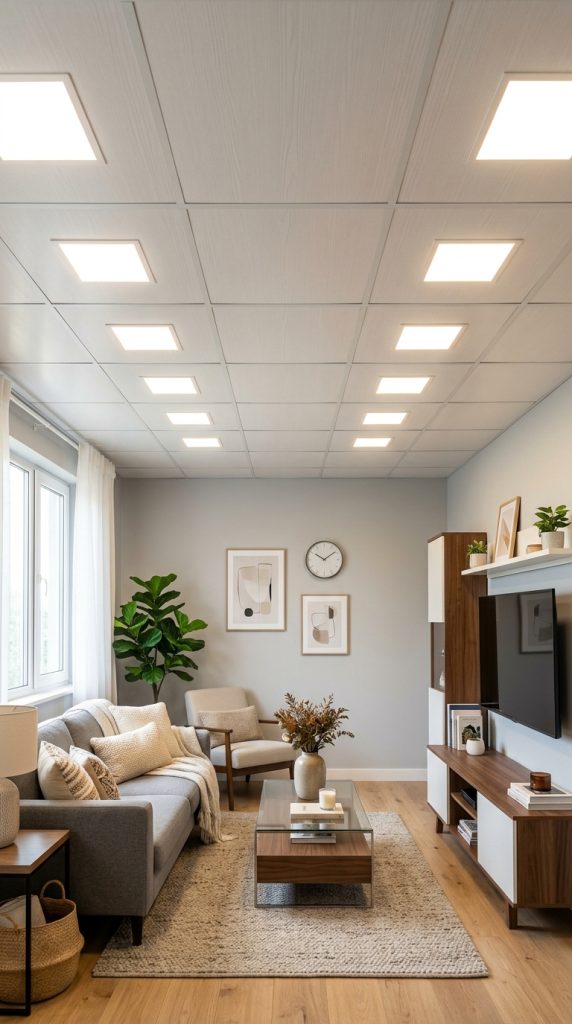
LED panel lighting combined with PVC ceiling panels creates a sleek and futuristic ceiling design that works beautifully in modern small living rooms. LED panels provide bright and even illumination, while PVC panels add structure and style to the ceiling surface.
This design is particularly useful in rooms that require strong lighting, such as living spaces that double as work or study areas. The LED panels distribute light evenly across the room, eliminating dark corners and making the space feel open and comfortable.
PVC panels surrounding the LED lights can be arranged in different patterns, such as rectangles or grids, to create a modern geometric appearance. The result is a ceiling that looks both functional and stylish.
Another advantage of LED panels is energy efficiency. They consume less electricity compared to traditional lighting systems and last much longer, making them an environmentally friendly choice for homeowners.
Explanation
Large LED panel lights are installed within a PVC ceiling layout to provide bright, modern lighting.
Step-by-Step How-To
- Plan Lighting Placement
Decide where LED panels will be installed. - Install Ceiling Frame
Create a framework that supports both PVC panels and LED lights. - Attach PVC Panels
Secure panels around the lighting areas. - Install LED Panels
Fit LED lights into the designated spaces. - Connect Electrical Wiring
Ensure safe and proper electrical connections. - Test Lighting System
Turn on lights and check brightness distribution.
Materials Needed
- PVC ceiling panels
- LED panel lights
- Ceiling framework
- Wiring and connectors
- Screws and installation tools