
Living in a small space has become increasingly common, especially in modern cities where apartments, studios, and shared rooms are designed to maximize affordability rather than size. While small spaces can feel cozy and manageable, they often come with one major challenge: storage. When every corner is limited, even basic daily items can quickly create visual clutter, making the room feel cramped, disorganized, and overwhelming.
This is where smart storage hacks completely change the game. Instead of needing a bigger room, you learn how to use the same space more intelligently. Small space storage is not just about hiding things—it is about creating a system where everything has a place, and the room still feels open, breathable, and visually calm.
One of the biggest misconceptions about storage in small spaces is that you need expensive furniture or major renovations. In reality, most high-functioning small rooms rely on simple, strategic adjustments that maximize unused areas. Walls, vertical space, under-bed areas, doors, and corners are often overlooked, yet they hold enormous storage potential when used correctly.
Another important factor is visual organization. In small rooms, clutter is not just physical—it is also visual. Even if everything technically “fits,” a messy arrangement can make the space feel smaller than it actually is. This is why smart storage focuses not only on where things go, but also on how they are hidden, arranged, and visually balanced.
For example, open shelves filled with random items can make a room feel chaotic, while closed storage with clean surfaces creates a calm, high-end look. Similarly, stacking items randomly under a bed can create clutter, but using organized storage boxes instantly transforms that same space into a functional system.
Lighting and color also play a supporting role in small space storage. Lighter tones and reflective surfaces help maintain openness, while dark, bulky storage units can visually shrink a room. This is why modern interior design often combines storage solutions with minimalist aesthetics to maintain both functionality and beauty.
What makes storage hacks especially powerful is their ability to reduce mental stress. Studies in interior psychology show that cluttered environments can increase anxiety and reduce focus. When your space is organized and everything has a clear place, it becomes easier to relax, think clearly, and feel in control of your environment.
Small space storage is also about lifestyle efficiency. When your belongings are organized properly, daily routines become smoother. You spend less time searching for items, less time cleaning, and more time actually enjoying your space. This is especially important for people with busy schedules or shared living environments.
In modern interior trends, especially on platforms like Pinterest and Instagram, small space organization has become a major aesthetic category. Clean, organized rooms with hidden storage systems, minimal clutter, and smart layouts are often associated with “luxury living” regardless of room size. This proves that luxury is not about square footage—it is about how well the space is used.
Another key idea in small space storage is adaptability. A good storage system should grow with your needs. It should not just solve today’s clutter problem but also make it easier to maintain order in the long term. This is why flexible storage solutions—like modular furniture, foldable items, and multi-purpose designs—are becoming increasingly popular.
In this guide, you will explore 11 small space storage hacks that change everything, designed to help you maximize every inch of your room without making it feel crowded. Each idea will focus on:
- What the storage hack is
- How to apply it in real life
- Why it works in small spaces
- Who it is best suited for
- Expert tips for better results
- Common mistakes to avoid
The goal is not just to hide clutter, but to completely transform how your space functions and feels. These hacks will help you create a room that is organized, visually clean, and surprisingly spacious—even if the actual size remains the same.
Now let’s begin exploring the first storage hacks that can completely change your small space experience and turn chaos into calm, functional design.
1. Under-Bed Storage System for Hidden Maximum Space
Explanation (What it is)
Under-bed storage is one of the most underrated yet powerful solutions for small spaces. The area beneath your bed is often completely unused, but in reality, it can become one of the largest storage zones in your entire room.
What makes this hack so effective is that it uses “invisible space.” Since the under-bed area is naturally hidden, you can store a large number of items without affecting the visual cleanliness of your room. This instantly makes the space feel more organized and less cluttered.
In small apartments or bedrooms, clutter often comes from seasonal clothes, extra bedding, shoes, or miscellaneous items. Under-bed storage solves this by giving those items a dedicated hidden zone, keeping surfaces clean and open.
This method is also widely used in high-end interior design because it maintains a minimalist look while increasing functionality. A clean floor visually makes the room feel larger and more breathable.

How to implement (Practical steps)
Start by assessing your bed height:
- If low, consider bed risers or storage bed frames
- If already high, use flat storage boxes
Then organize items into categories:
- Seasonal clothing (winter/summer separation)
- Extra bedding and blankets
- Shoes or accessories
Choose storage types:
- Rolling storage boxes for easy access
- Vacuum bags for clothes to save space
- Labeled containers for organization
Keep frequently used items near the front for easy access.
Best for (Who should use it)
- Small bedrooms or studio apartments
- People with limited closet space
- Students or shared living spaces
- Anyone wanting hidden clutter control
Pro tip (Expert advice)
Use clear or labeled containers so you don’t forget what’s stored—hidden should still be organized, not forgotten chaos.
Mistake to avoid
Avoid dumping items loosely under the bed. This turns hidden space into long-term clutter instead of smart storage.
2. Vertical Wall Storage for Instant Space Expansion
Explanation (What it is)
Vertical wall storage is the practice of using wall height instead of floor space to store and organize items. In small rooms, the biggest mistake people make is only thinking horizontally—placing everything on the floor or furniture surfaces.
Walls, however, offer massive unused potential. By going vertical, you free up floor space and make the room feel taller, cleaner, and more open.
This hack is especially important because the human eye naturally perceives vertical openness as “bigger space.” So when storage is moved upward, the room automatically feels less crowded.
Vertical storage is commonly used in modern minimalist and Scandinavian interiors because it combines functionality with visual simplicity.
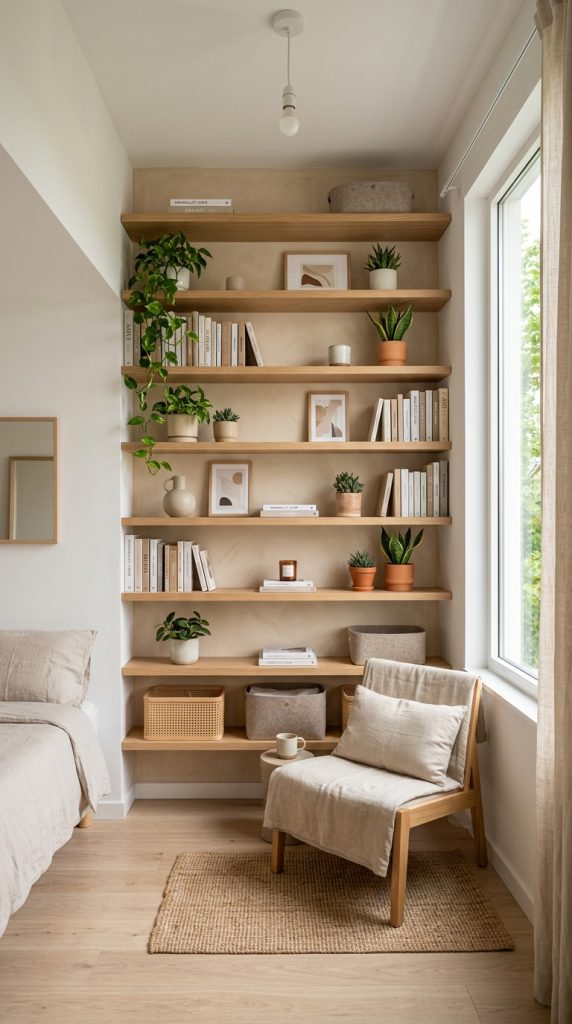
How to implement (Practical steps)
Start by identifying empty wall areas:
- Above desks
- Behind doors
- Corner walls
Add vertical storage solutions:
- Tall shelving units
- Wall-mounted shelves
- Hanging organizers
- Pegboards or hooks
Organize by height:
- Frequently used items at eye level
- Rare items placed higher up
- Decorative + functional mix on shelves
Keep spacing consistent for a clean aesthetic.
Best for (Who should use it)
- Very small rooms or apartments
- People with limited floor space
- Work-from-home setups
- Organized lifestyle lovers
Pro tip (Expert advice)
Vertical storage looks most high-end when it is not overcrowded—leave empty gaps between items for visual breathing room.
Mistake to avoid
Avoid filling every shelf completely. Overpacked vertical space can look more cluttered than no storage at all.
3. Multi-Functional Furniture for Smart Space Saving
Explanation (What it is)
Multi-functional furniture is one of the most effective storage solutions for small spaces because it combines two or more purposes in a single piece. Instead of having separate items for seating, storage, or sleeping, you use one item that performs multiple roles.
This approach dramatically reduces clutter while increasing usability. For example, a bed with drawers eliminates the need for extra storage units, and an ottoman with storage inside replaces both seating and storage boxes.
What makes this hack powerful is efficiency. In small rooms, every piece of furniture should justify its presence. Multi-functional furniture ensures nothing is wasted—every item has dual value.
This is also a key principle in modern luxury small-space design, where simplicity and smart function are prioritized over excess furniture.

How to implement (Practical steps)
Start by identifying your needs:
- Seating
- Sleeping
- Storage
- Work space
Then replace single-use furniture with dual-purpose options:
- Storage beds with drawers underneath
- Sofa beds for guests or sleeping
- Ottomans with hidden storage inside
- Foldable desks or wall-mounted tables
Prioritize compact designs:
- Slim frames
- Hidden compartments
- Lightweight but durable materials
Keep layout flexible so furniture can adapt to different uses.
Best for (Who should use it)
- Studio apartments
- Small bedrooms or shared rooms
- People on a budget
- Minimalist lifestyle lovers
Pro tip (Expert advice)
Choose furniture that hides storage instead of exposing it—hidden storage always looks more expensive and clean.
Mistake to avoid
Avoid buying bulky multi-functional furniture that overwhelms the room. It should save space, not consume it.
4. Behind-the-Door Storage for Invisible Organization Power
Explanation (What it is)
Behind-the-door storage is a highly effective small-space hack that uses one of the most ignored areas in a room—the back of doors. In most homes, this space is completely wasted, yet it has huge potential for organizing everyday items without taking up any visible floor or wall space.
What makes this hack so powerful is its “invisible impact.” Since the storage is hidden behind a door, it doesn’t affect the room’s visual design. This keeps the space looking clean and minimal while still being highly functional.
It works especially well in small rooms where even a single shelf or cabinet can make the space feel crowded. By moving storage to the door, you preserve open areas and reduce visual clutter instantly.
This method is commonly used in smart apartments and dorm rooms where maximizing every inch is necessary.

How to implement (Practical steps)
Start by choosing the right door:
- Bedroom door
- Closet door
- Bathroom door
Then add storage tools:
- Over-the-door hanging organizers
- Hooks for bags, scarves, or towels
- Slim racks for shoes or accessories
Organize items by frequency:
- Daily-use items at eye level
- Less-used items higher or lower
Keep weight balanced:
- Avoid overloading one side of the door
- Distribute items evenly
Best for (Who should use it)
- Small bedrooms or shared apartments
- People with limited closet space
- Students or renters
- Anyone wanting hidden storage solutions
Pro tip (Expert advice)
Use neutral-colored organizers so even when visible, they blend with the room instead of standing out.
Mistake to avoid
Avoid overcrowding the door with too many items—it can make the space feel chaotic and harder to access.
5. Hidden Drawer Dividers for Perfect Internal Organization
Explanation (What it is)
Hidden drawer dividers are a simple but powerful storage hack that transforms messy drawers into perfectly organized compartments. Instead of throwing items into one large space, dividers create structured sections inside the drawer so everything has a designated place.
What makes this hack essential for small spaces is efficiency. When drawers are organized internally, you can store more items without increasing visible clutter. Everything stays hidden but easy to find, which is exactly what small-space living requires.
This system is widely used in high-end homes because it supports a clean lifestyle. Even if the room is small, organized drawers make the entire space feel controlled and clutter-free.
It also saves time daily because you no longer need to search through messy piles to find essentials.
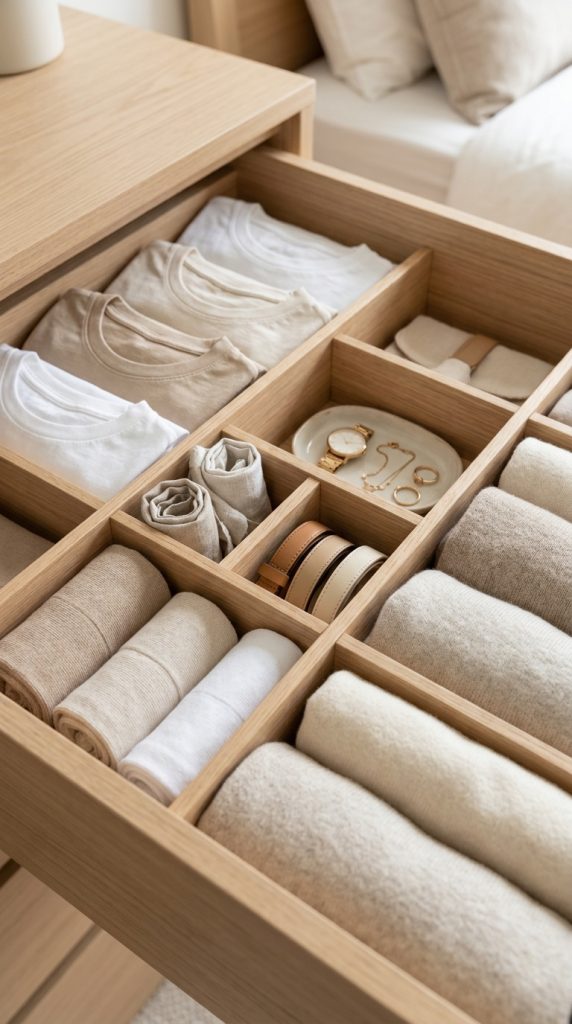
How to implement (Practical steps)
Start by emptying drawers completely:
- Sort items into categories (clothes, accessories, stationery)
Add dividers:
- Adjustable plastic or wooden dividers
- DIY cardboard separators for budget option
- Small boxes for compartment grouping
Organize strategically:
- Group similar items together
- Keep frequently used items at the front
- Store seasonal or rare items at the back
Maintain consistency:
- Don’t mix categories in one drawer
- Assign each drawer a purpose
Best for (Who should use it)
- Small bedrooms and wardrobes
- Makeup or vanity storage
- Office or study desks
- People who struggle with clutter
Pro tip (Expert advice)
Use uniform containers inside drawers for a visually clean and high-end “organized system” effect.
Mistake to avoid
Avoid random stacking inside drawers even with dividers—it defeats the purpose of structured storage.
6. Corner Storage Optimization for Dead Space Transformation
Explanation (What it is)
Corner storage optimization focuses on using the often-forgotten corner areas of a room. In small spaces, corners are usually left empty or underutilized, even though they offer valuable storage and design potential.
What makes this hack so effective is that it turns “dead space” into functional space without interfering with the main layout of the room. Corners naturally stay out of the way, so using them for storage doesn’t disrupt movement or openness.
In interior design, corners are also used to add balance and depth to a room. When styled correctly, they can make a small space feel more complete and thoughtfully designed.
This hack is widely used in modern minimalist and apartment-style interiors where maximizing space without clutter is essential.
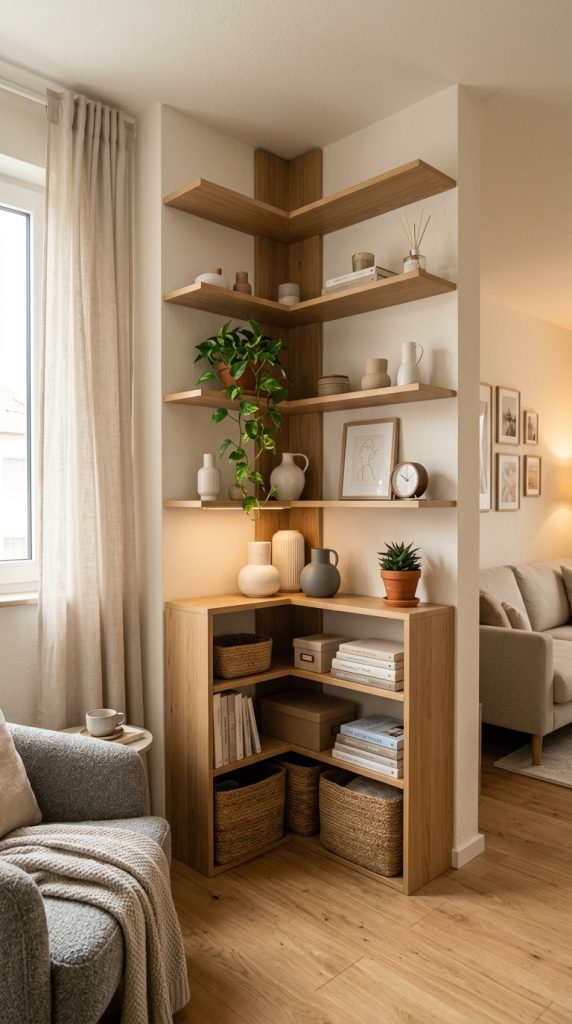
How to implement (Practical steps)
Identify unused corners:
- Bedroom corners
- Living room corners
- Desk corners
Add corner-friendly storage:
- Corner shelves (floating or stacked)
- Tall narrow cabinets
- Corner desks or study units
- Decorative storage baskets
Style smartly:
- Keep items minimal on corner shelves
- Mix storage with small decor pieces
- Avoid overcrowding vertical corner space
Use lighting if possible:
- Small lamp or soft light to highlight corner area
Best for (Who should use it)
- Small rooms and studio apartments
- People with awkward empty corners
- Work or study setups
- Minimalist home styling
Pro tip (Expert advice)
A well-styled corner looks more expensive when it has fewer but well-chosen items instead of many small objects.
Mistake to avoid
Avoid turning corners into dumping zones. If it looks messy, it will make the whole room feel cluttered.
7. Under-Sofa Storage for Hidden Living Room Space
Explanation (What it is)
Under-sofa storage is a smart small-space hack that uses the empty space beneath your sofa to store items without affecting the room’s visible design. In most living rooms, this area stays completely unused, even though it can hold a surprising amount of storage.
What makes this hack powerful is its invisibility. Since the storage is hidden under a heavy furniture piece, it doesn’t affect the aesthetic of the room. This helps maintain a clean, high-end look while still maximizing functionality.
In small apartments, living rooms often become multi-purpose spaces, which leads to clutter. Under-sofa storage solves this by giving you a hidden zone for items that don’t need daily access.
This method is also used in modern minimalist interiors because it keeps surfaces and floors visually open, which makes the space feel larger.
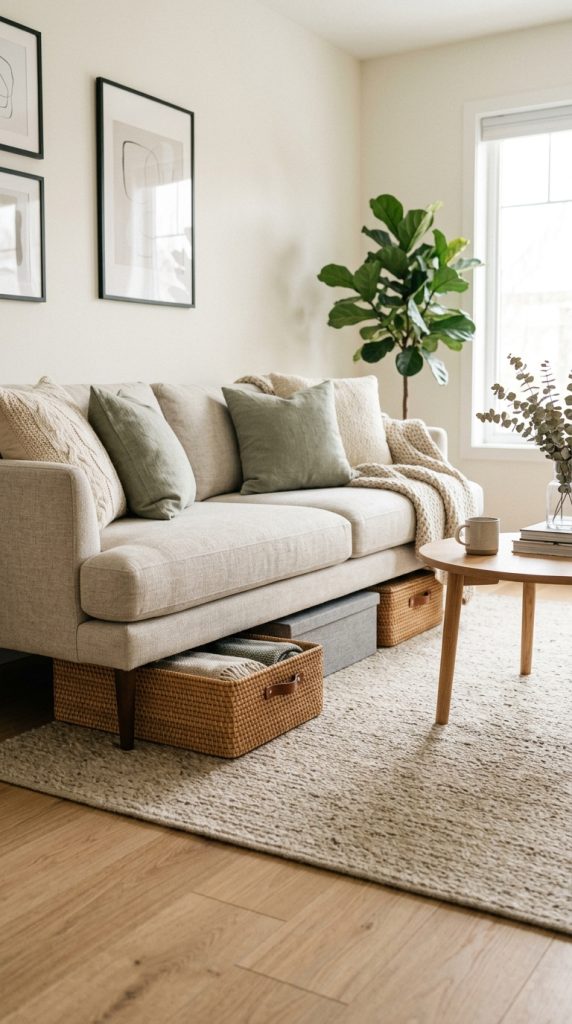
How to implement (Practical steps)
Start by checking sofa clearance:
- Measure height under your sofa
- Ensure enough space for storage boxes
Then choose storage options:
- Slim rolling bins
- Flat storage boxes
- Vacuum-sealed bags for soft items
Organize items:
- Extra blankets or throws
- Seasonal cushions
- Books or magazines
- Rarely used electronics
Label containers for easy access.
Best for (Who should use it)
- Small living rooms
- Studio apartments
- People with limited closet space
- Minimalist lifestyle homes
Pro tip (Expert advice)
Use wheels or pull-out containers so you don’t have to move the sofa every time you need something.
Mistake to avoid
Avoid stuffing items loosely under the sofa—it quickly becomes disorganized and hard to clean.
8. Overhead Storage Shelving for Vertical Expansion
Explanation (What it is)
Overhead storage shelving uses the upper wall area near the ceiling to store items that are not needed daily. In small rooms, people often forget about the upper vertical space, even though it offers valuable storage capacity without taking up floor area.
What makes this hack so effective is that it expands storage upward instead of outward. This keeps the main living area open and uncluttered while still providing space for belongings.
In high-end minimalist interiors, overhead shelving is often used in a very controlled way. It is not overcrowded but styled carefully to maintain a clean and balanced look.
This method also creates the illusion of taller ceilings, making the room feel more spacious.
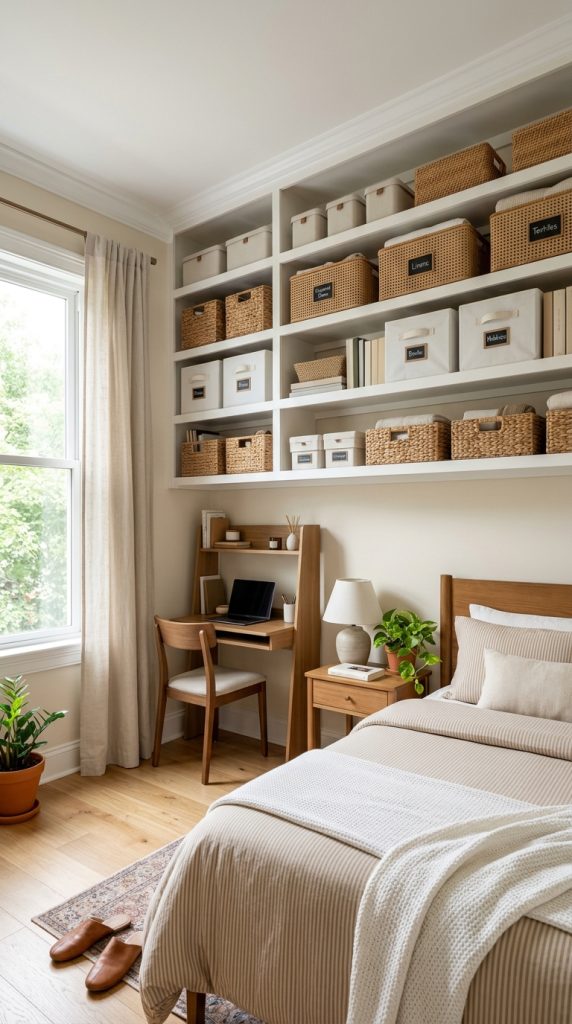
How to implement (Practical steps)
Install overhead shelves:
- Above doors or windows
- Near ceiling on empty walls
- Across unused upper corners
Organize items:
- Seasonal storage boxes
- Travel bags or luggage
- Books or decorative storage bins
Keep visual balance:
- Use matching containers for uniform look
- Avoid random object placement
Access strategy:
- Store only items you don’t need daily
- Use step stool if necessary
Best for (Who should use it)
- Very small bedrooms or studios
- People with limited storage space
- Organized minimalists
- Long-term storage needs
Pro tip (Expert advice)
Keep overhead shelves visually consistent—same color bins or boxes create a luxury, organized appearance.
Mistake to avoid
Avoid placing frequently used items too high. This leads to inconvenience and clutter over time.
9. Foldable Furniture for Flexible Space Control
Explanation (What it is)
Foldable furniture is one of the most practical and modern storage solutions for small spaces because it allows you to expand or reduce furniture use depending on your needs. Instead of permanent bulky furniture, foldable items can be stored away when not in use, freeing up valuable floor space.
What makes this hack so effective is flexibility. Small rooms often serve multiple purposes—sleeping, working, relaxing—and foldable furniture allows the room to adapt instantly to each function.
This approach is widely used in modern studio apartments and minimalist homes because it supports both functionality and open space aesthetics.
Foldable furniture also helps reduce visual clutter because unused items can be hidden completely when not needed.
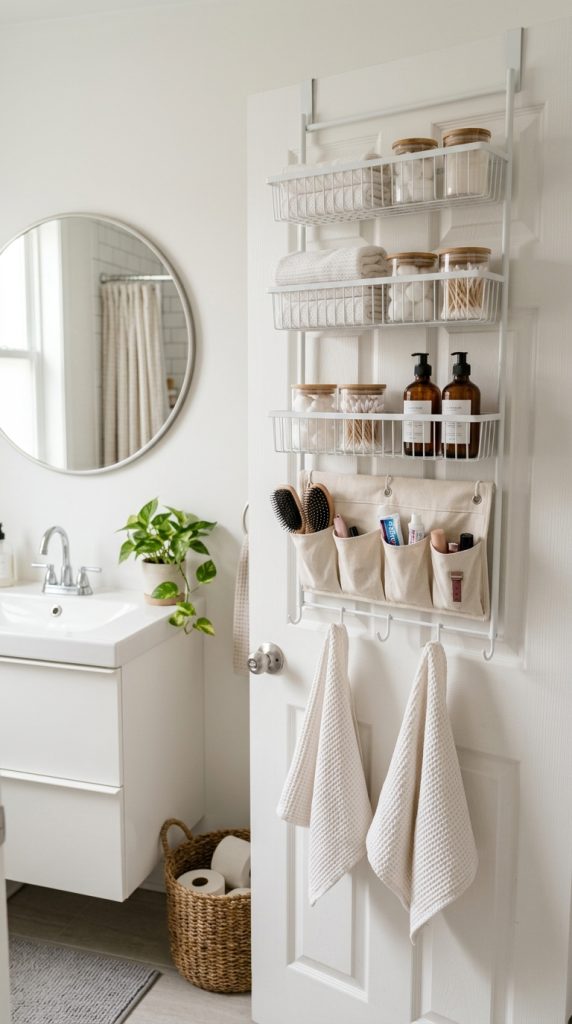
How to implement (Practical steps)
Replace bulky items with foldable alternatives:
- Foldable desks or wall-mounted desks
- Folding chairs or stools
- Expandable tables
Create usage zones:
- Work area during the day
- Open space during evening relaxation
Storage strategy:
- Store folded items in closets or behind doors
- Keep setup simple for quick use
Choose lightweight, durable materials for easy handling.
Best for (Who should use it)
- Studio apartments
- Multi-purpose rooms
- Small bedrooms or workspaces
- People needing flexible layouts
Pro tip (Expert advice)
Foldable furniture works best when paired with hidden storage so the room can fully reset into an open space.
Mistake to avoid
Avoid choosing weak or low-quality foldable furniture—it should be sturdy enough for daily use without feeling temporary or unstable.
10. Door-Mounted Storage Racks for Instant Vertical Utility
Explanation (What it is)
Door-mounted storage racks are a smart small-space solution that turns the back of doors into fully functional storage zones. Instead of using valuable floor or shelf space, this hack utilizes vertical door surfaces that are usually ignored.
What makes this idea so powerful is that it creates “instant storage expansion” without any renovation or permanent installation. In small rooms, where every inch matters, this hidden vertical zone can hold a surprising number of daily-use items while keeping the room visually clean.
High-end organization systems often rely on this principle: keep essentials accessible but out of sight. Door racks help achieve that balance by hiding storage behind a surface you already have.
This method also reduces surface clutter. When items like toiletries, accessories, cleaning supplies, or small tools are stored behind the door, tables and shelves stay minimal and organized.
How to implement (Practical steps)
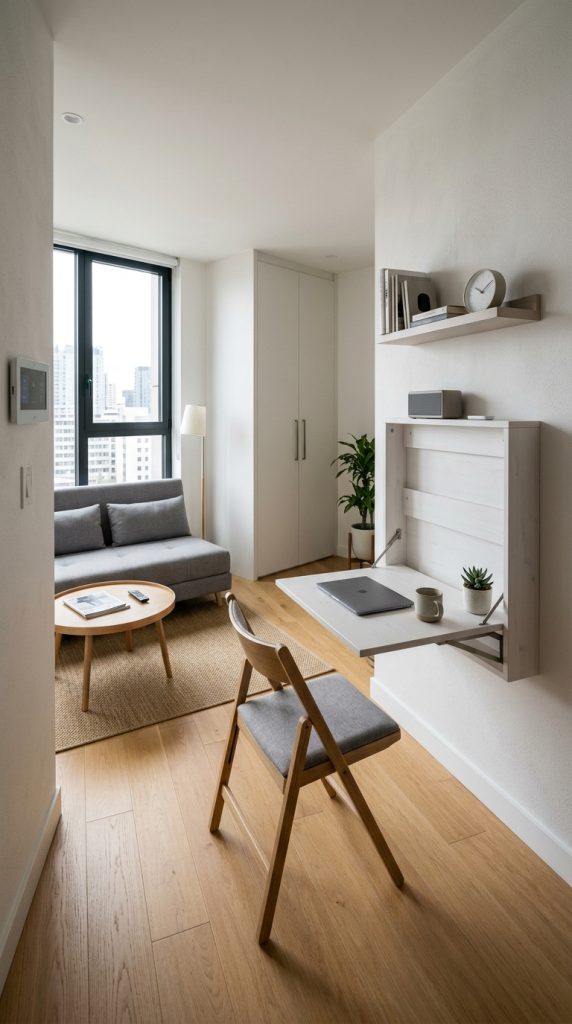
Choose the right door:
- Bedroom closet door
- Bathroom door
- Pantry or storage room door
Select storage type:
- Over-the-door hanging racks
- Slim metal or fabric organizers
- Hook-based modular systems
Organize strategically:
- Top section: rarely used items
- Middle section: daily-use essentials
- Bottom section: heavier items or bulk storage
Keep weight balanced:
- Avoid overloading one side of the door
- Ensure door still closes smoothly
Best for (Who should use it)
- Small apartments or shared rooms
- Bathrooms with limited storage
- People with many small items
- Students or renters needing flexible storage
Pro tip (Expert advice)
Use matching neutral-colored organizers so even when slightly visible, they blend into the room and maintain a clean aesthetic.
Mistake to avoid
Avoid stuffing too many heavy items—it can damage door hinges and make the space look messy instead of organized.
11. Minimal Clutter Zoning System for Organized Living Flow
Explanation (What it is)
A minimal clutter zoning system is a smart organization strategy that divides your room into specific functional zones instead of treating the entire space as one general area. Each zone has a purpose—sleeping, working, storage, dressing, or relaxation.
What makes this approach so effective is mental and visual clarity. When everything has a designated zone, the room automatically feels more structured and less chaotic. Even in a very small space, zoning creates the illusion of order and intentional design.
This system is widely used in modern minimalist interiors and studio apartments because it improves both functionality and aesthetics. Instead of random placement of items, everything follows a logical flow.
It also reduces clutter buildup because you immediately know where things belong. This prevents items from spreading across the room and creating visual mess.
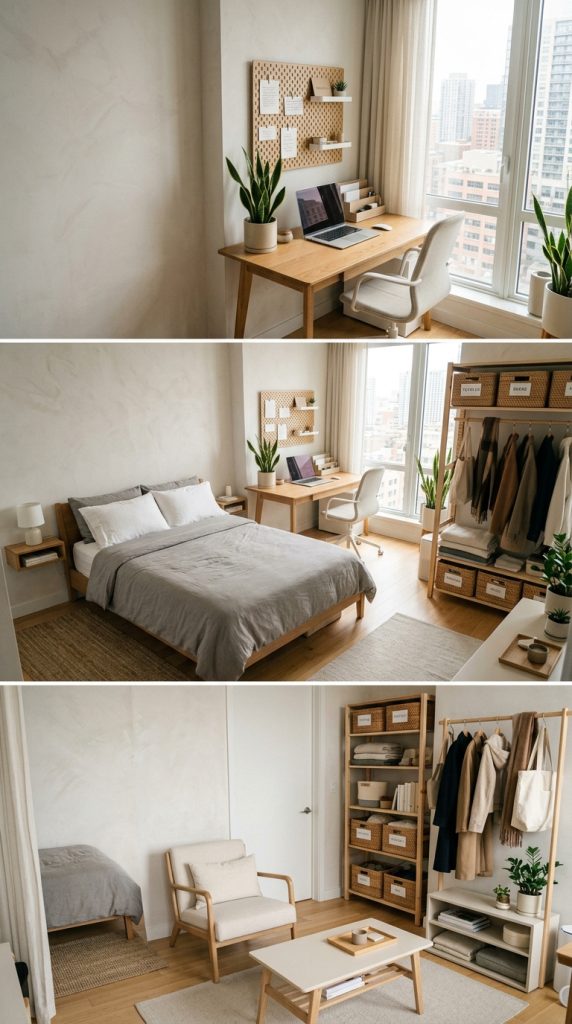
How to implement (Practical steps)
Divide your room into zones:
- Sleeping zone (bed area)
- Work/study zone (desk area)
- Storage zone (wardrobe or cabinets)
- Relaxation zone (chair or corner space)
Assign strict rules:
- No work items in sleeping zone
- No clutter in relaxation zone
- Keep surfaces minimal in every zone
Use visual separation:
- Rugs to define areas
- Lighting to highlight zones
- Furniture placement as boundaries
Maintain consistency:
- Return items to their zone after use
- Avoid mixing functions in one area
Best for (Who should use it)
- Small bedrooms or studio apartments
- People struggling with clutter control
- Work-from-home setups
- Anyone wanting structured minimalist living
Pro tip (Expert advice)
Even in very small rooms, zoning works—just 2–3 defined zones can completely transform how organized your space feels.
Mistake to avoid
Avoid overlapping zones (like working on the bed). This quickly breaks organization and increases clutter visually and mentally.