
Step into the rewarding realm of practical infrastructure and picturesque world-building. A survival world without properly crafted river crossings quickly becomes frustrating to navigate during night runs. Thoughtfully designed bridges connect distant exploration outposts while adding incredible rustic charm to natural landscapes.
A curved bridge built with wood and cobblestone represents the ultimate survival staple. These humble, renewable resources blend seamlessly into rugged mountain ravines and tranquil meadow rivers. With basic architectural techniques, you can transform flat floating planks into soaring, dynamic arches.
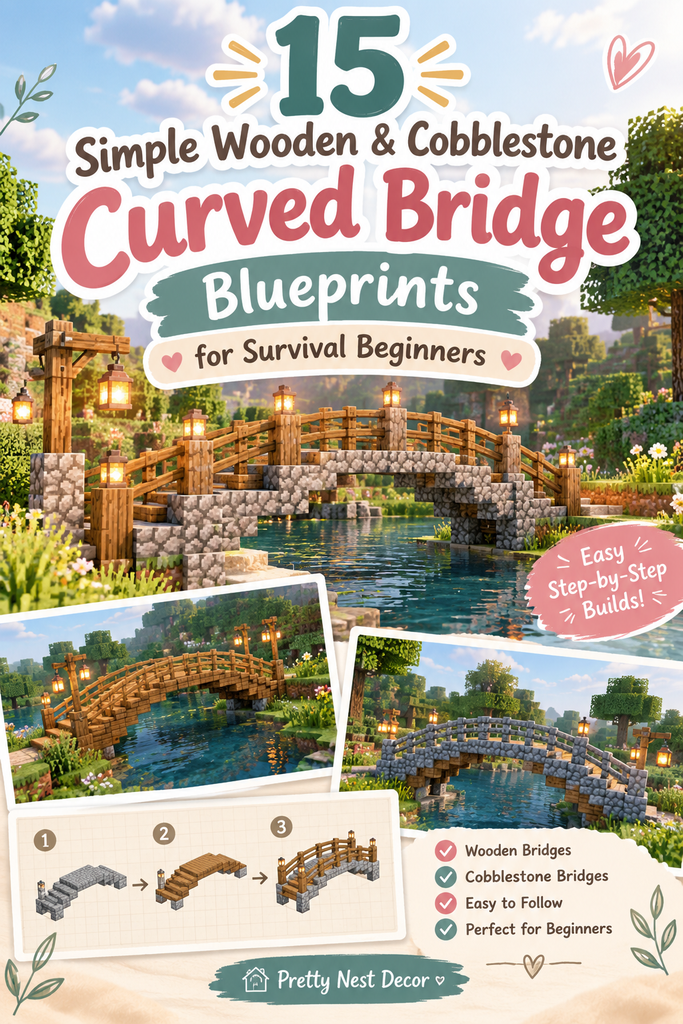
Breaking Past Flat Plank Crossings
First impressions of any survival base depend heavily on avoiding flat, single-block floating platforms. Connecting two riverbanks using an unbroken horizontal line of planks looks artificial and weightless. Instead, beginner builders must focus on vertical arch height and downward support pillars.
Introducing gentle stair and slab transitions creates smooth, natural curves that simulate realistic tension. Downward structural arches anchored into riverbeds give your crossings believable engineering weight. These simple adjustments turn functional transit lines into scenic landmarks you love revisiting.
Mastering the Beginner Material Palette
Material choices define the regional identity, historical age, and rugged durability of pathways. Pristine palaces require quartz, but wild survival terrain demands reliable stone and timber. Cobblestone, stone bricks, stripped logs, and standard wood planks provide an unbeatable palette.
Cobblestone offers sturdy foundational piers that resist rushing currents and freezing mountain water. Warm wood planks, slabs, and fences soften cold gray masonry with welcoming country warmth. Mixing these basic ingredients ensures your bridges photograph beautifully against vibrant natural biomes.
Understanding Odd-Numbered Spans
Symmetry and ease of construction rely completely on planning bridges with odd-numbered block widths. Laying decks that measure three, five, or seven blocks wide simplifies every stage. An odd-numbered width guarantees a distinct central block for lantern placement and pathing.
Furthermore, odd-numbered spans allow clean apex peaks where stairs meet flat half-slabs smoothly. You can easily center decorative arch keystones, overhead pergolas, and functional rowboat passages beneath. Once you standardize your span width, calculating vertical curves becomes lightning-fast and foolproof.
Layering Realistic Structural Textures
Texture gradients bring simple cobblestone arches to life with weathered, battle-worn character. Plain cobblestone can look repetitive and chaotic across massive, uninterrupted bridge abutments and piers. Introducing mossy cobblestone, cracked stone bricks, and smooth andesite breaks up visual noise.
Place mossy stones near water lines where moisture clings naturally to structural masonry. Use sturdy cobblestone walls to frame slim outer balustrades and realistic suspension stays. These micro-details add historical authenticity without requiring endless mining trips into deep caverns.
Protecting Bridges from Hostile Mobs
Safety is an absolute priority when designing survival pathways through unlit, hostile wilderness. Creepers, skeletons, and zombies love spawning along dark elevated spans to ambush returning players. Avoid haphazard torch placement that litters pristine wooden decks like messy birthday candles.
Hide light sources like jack-o’-lanterns or shroomlights beneath floor slabs and wooden trapdoors. Hang warm brass lanterns from overhead timber arches, fence posts, and hanging chains. Enclosing walkway edges with fence railings prevents accidental falls during frantic nighttime skeleton chases.
Designing for Waterway Navigation
A great bridge never blocks the natural flow of river transport or boats. Constructing low-clearance decks forces players to abandon rowboats when traveling along twisting water channels. Always ensure your central curved arch clears the water surface by several blocks.
This vertical clearance allows small sailing vessels and player rowboats to glide underneath. Carve natural clearance channels through riverbed reeds so water flows uninterrupted beneath structural arches. Your finished bridge functions as a harmonious, interconnected highway serving both land and water.
1. The Gentle Oak River Swell
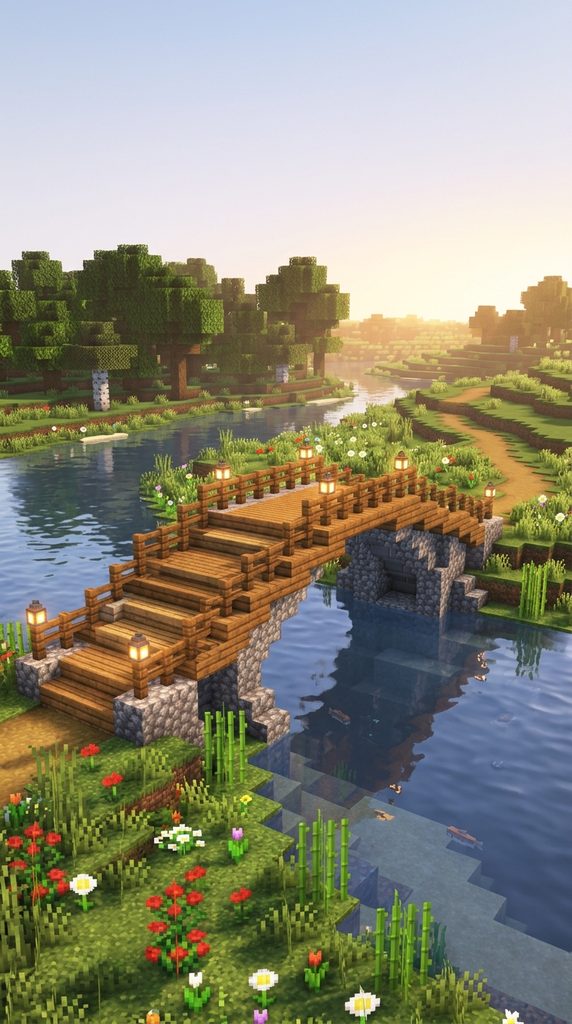
Beginner Meadow Stream Arch
Construct a low-profile, five-block-wide curved bridge designed for tranquil meadow streams and rivers. This design elevates your walking deck gently without creating steep, jarring climbing steps. The blend of warm oak timber and clean cobblestone framing feels peaceful and classic.
Sturdy cobblestone footings anchor firmly into grassy banks to prevent seasonal water erosion. Oak fences line outer deck boundaries, keeping players safe from accidental late-night river slips. It requires only introductory wooden tools to harvest, assemble, and enjoy within minutes.
Materials You Will Need
- 32 Oak Planks and 24 Oak Slabs
- 16 Oak Stairs and 20 Oak Fences
- 24 Cobblestone Blocks and 12 Cobblestone Stairs
- 8 Cobblestone Walls for bankside pilings
- 4 Lanterns and 2 Oak Fence Gates
How to Style It
Erect two cobblestone foundation piers on opposing riverbanks, five blocks wide across the gap. Place inverted cobblestone stairs facing the water on each bank to start curves. Lay oak planks across the center, stepping upward using slabs toward a high midpoint.
Frame the outer deck edges using cobblestone stairs to define the upward curve. Install oak fences along both sides, hanging brass lanterns on the central fence posts. Scatter loose cobblestone walls along the water bank beneath the bridge to mimic riprap.
2. The Steep Spruce Ravine Leap
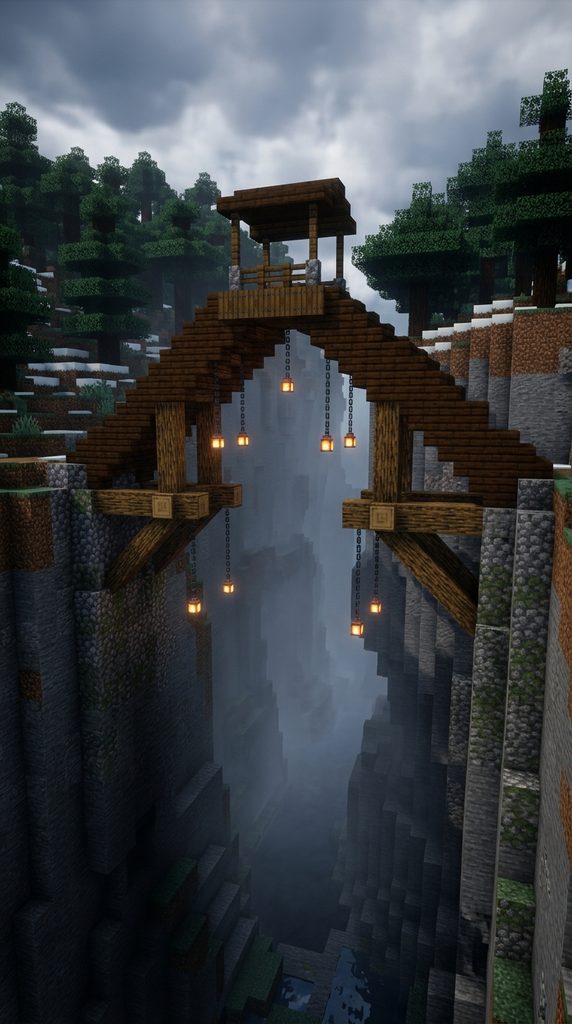
High-Altitude Canyon Crossing
Span terrifying, sheer stone chasms and alpine ravines with an aggressive, steep wooden arch. Cold mountain biomes demand durable spruce wood that matches rugged pines and jagged cliffs. This bridge utilizes steep stair ascents meeting at a high, dramatic center lookout deck.
Looking through the open stone arch underneath reveals dizzying drops and rushing mountain streams. Heavy cobblestone abutments burrow deep into solid cliff rock to support the span. It provides an exhilarating, safe passage across hazardous mountain terrain without blocking your views.
Materials You Will Need
- 48 Spruce Planks and 32 Spruce Stairs
- 16 Spruce Slabs and 24 Spruce Fences
- 36 Cobblestone Blocks and 16 Cobblestone Walls
- 4 Stripped Spruce Logs for structural cross-beams
- 6 Lanterns and 4 Iron Chains
How to Style It
Anchor wide cobblestone foundation ledges directly into opposing rock cliff faces across the chasm. Ascend steeply from each ledge using consecutive rows of spruce stairs facing upward. Join the two ascending staircases at the center using a flat three-block spruce platform.
Support the central platform from below using an inverted arch of cobblestone stairs. Run horizontal stripped spruce logs beneath the deck to serve as visible structural cross-ties. Mount spruce fences along the steep edges, suspending lanterns from chains over the abyss.
3. The Covered Cobblestone Wagon Span
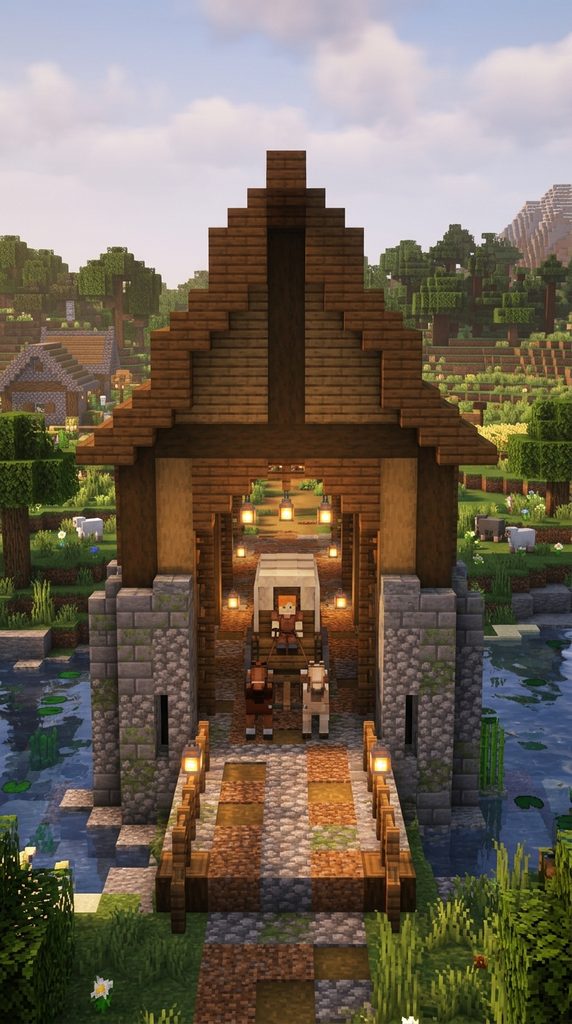
Weatherproof Country Road Tunnel
Protect tired travelers, wandering traders, and pack horses from stormy weather with roofs. This traditional covered bridge combines thick cobblestone lower walls with a pitched spruce roof. It feels like an authentic rural relic pulled from pastoral European river valleys.
The enclosed wooden interior shields torches and lanterns from heavy rain and blizzards. Narrow window slits cut through side walls allow archers to defend against monsters. It forms a monumental visual checkpoint along major overland trading highways in survival.
Materials You Will Need
- 64 Cobblestone Blocks and 32 Cobblestone Stairs
- 48 Spruce Planks and 36 Spruce Stairs for roofing
- 24 Spruce Fences for side window grates
- 16 Stripped Spruce Logs for timber wall studs
- 8 Lanterns to illuminate the interior roadway
How to Style It
Construct a curving roadway deck three blocks wide using cobblestone and stone slabs. Build two-block-tall vertical side walls along both deck edges using mixed cobblestone blocks. Insert vertical stripped spruce logs at corners and midpoints to frame side window openings.
Fill side wall openings with spruce fences to create protected viewing and firing slits. Erect an A-frame pitched roof across the structure using spruce stairs and wooden slabs. Hang lanterns along the interior roof ridge beam to illuminate the protected roadway thoroughly.
4. The Birch & Cobblestone Crescent
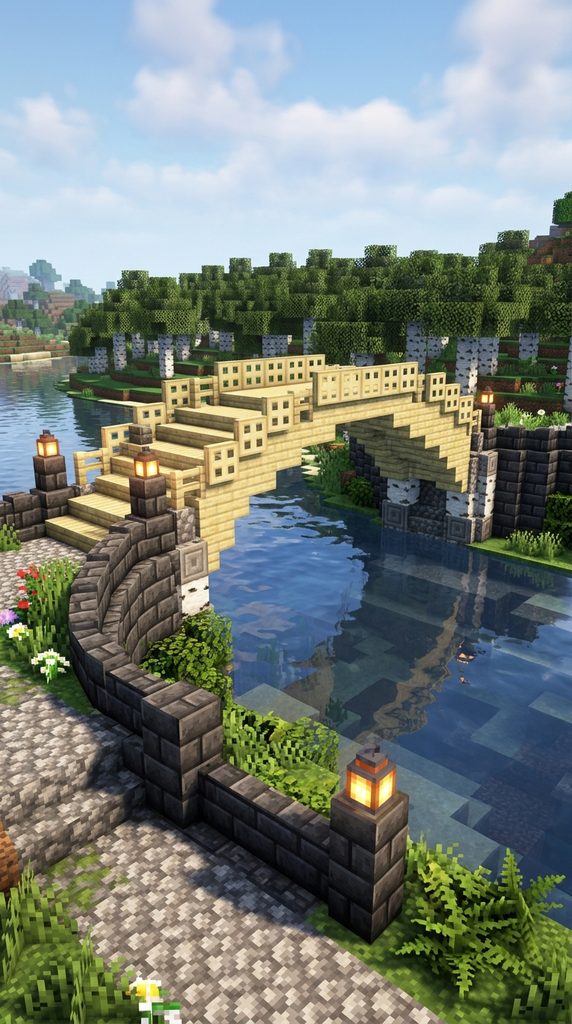
Luminous Pale Forest Boardwalk
Brighten dark forest rivers with the striking contrast of pale birch and cobblestone. The creamy, sunlit tone of stripped birch planks looks clean, modern, and refreshingly vibrant. Paired with rugged gray cobblestone retaining walls, it creates an eye-catching, high-contrast visual statement.
The bridge deck follows a smooth, continuous crescent curve without sharp, broken elevation changes. Birch trapdoors line the lower outer trim to hide exposed dirt banks cleanly. It turns murky river channels into welcoming, luminous transit paths through dense woodlands.
Materials You Will Need
- 40 Birch Planks and 32 Birch Slabs
- 16 Stripped Birch Logs for side stringers
- 30 Cobblestone Blocks and 16 Cobblestone Walls
- 20 Birch Fences and 12 Birch Trapdoors
- 4 Lanterns mounted on decorative stone pedestals
How to Style It
Lay curved cobblestone retaining walls along opposing river edges to establish stable approaches. Place stripped birch logs horizontally along outer margins, stepping up with the natural grade. Infill the central walking path using alternating birch slabs to create a gentle curve.
Fasten birch trapdoors along exposed outer log faces to add clean, layered depth. Mount birch fences atop the stripped logs, forming a lightweight, airy perimeter safety barrier. Top corner cobblestone wall posts with warm brass lanterns to guide travelers home safely.
5. The Low-Clearance Stepping-Stone Pier
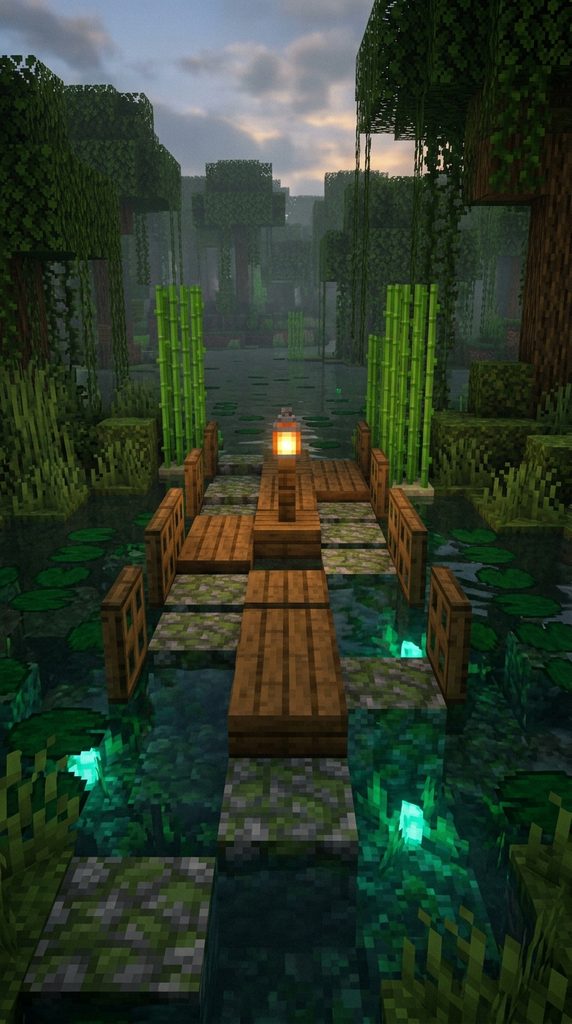
Natural Wetland Footbridge
Cross shallow wetland swamps and bayous without constructing massive, landscape-dominating wooden structures. This minimalist design stays close to murky water surfaces, utilizing organic stone stepping foundations. Weathered oak slabs bridge the gaps between submerged cobblestone boulder footings effortlessly.
The low clearance allows the crossing to blend naturally into tall swamp grasses. Water lilies, cattails, and floating algae cluster around stone piers without disrupting your path. It offers an easy, low-resource solution for players exploring wetlands early on.
Materials You Will Need
- 24 Cobblestone Blocks and 16 Mossy Cobblestone Blocks
- 32 Oak Slabs and 12 Oak Trapdoors
- 8 Oak Fences for low corner hitching posts
- 4 Submerged Sea Pickles or Torches for lighting
- Assorted Lily Pads and Sugar Cane for decoration
How to Style It
Build three submerged stone pedestals across shallow water using cobblestone and mossy blocks. Keep the top of each stone pier level with the natural water surface. Connect the stone pedestals using double-thick oak slabs, arching one half-block high centrally.
Wrap exposed slab edges with open oak trapdoors to create a rustic, floating appearance. Mount oak fences on the center stone pier to support a lone hanging lantern. Scatter lily pads and submerged sea pickles around piers to illuminate surrounding dark waters.
6. The Suspended Timber Trestle
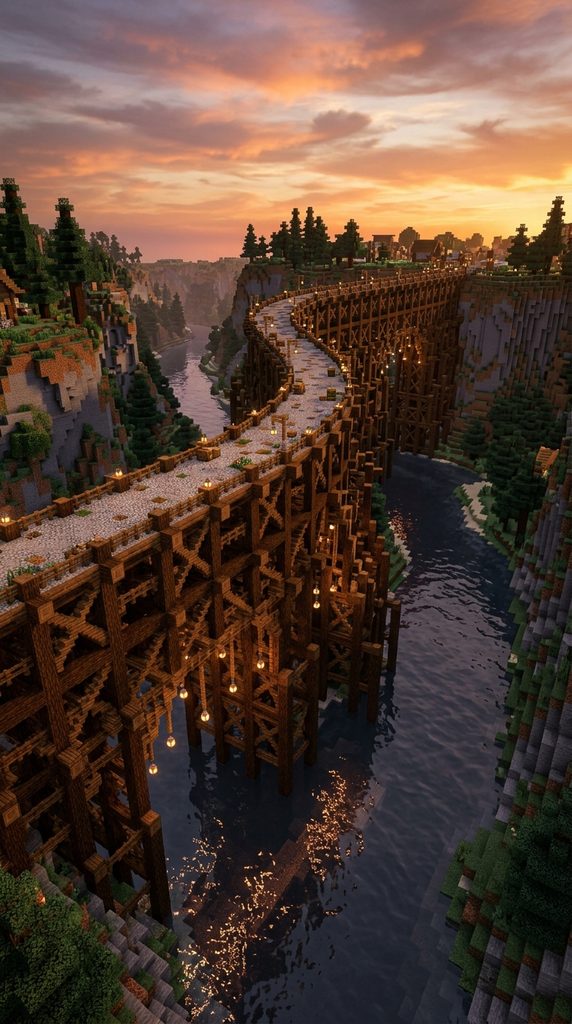
Rugged Frontier Railway Style
Evoke the industrial majesty of historic frontier railway trestles across wide river canyons. This design uses dense clusters of interlocking wooden fences and beams beneath decks. The elaborate timber undercarriage looks remarkably realistic, capable of supporting heavy minecart cargo trains.
A sweeping cobblestone road deck rests firmly atop the complex wooden scaffolding network. The contrasting textures of rough stone and thin wooden beams create breathtaking silhouettes. It provides an impressive, engineering-focused landmark for ambitious survival settlements and bustling trading outposts.
Materials You Will Need
- 64 Oak Fences or Spruce Fences for trestles
- 48 Cobblestone Blocks and 32 Cobblestone Slabs
- 16 Stripped Dark Oak Logs for heavy support pilings
- 16 Cobblestone Stairs for underside arch supports
- 6 Lanterns suspended from lower timber cross-arms
How to Style It
Sink four vertical stripped dark oak logs deep into the riverbed floor. Weave extensive horizontal and diagonal wooden fence networks between logs to form trestle bents. Top the timber trestle towers with an arched bridge deck made of cobblestone.
Invert cobblestone stairs beneath outer slab overhangs to create smooth transitional weight distribution. Line the stone walking deck with low spruce trapdoor curbs instead of full fences. Hang lanterns from lower timber trestle beams to cast dramatic reflections across the water.
7. The Double-Arched Island Hopper
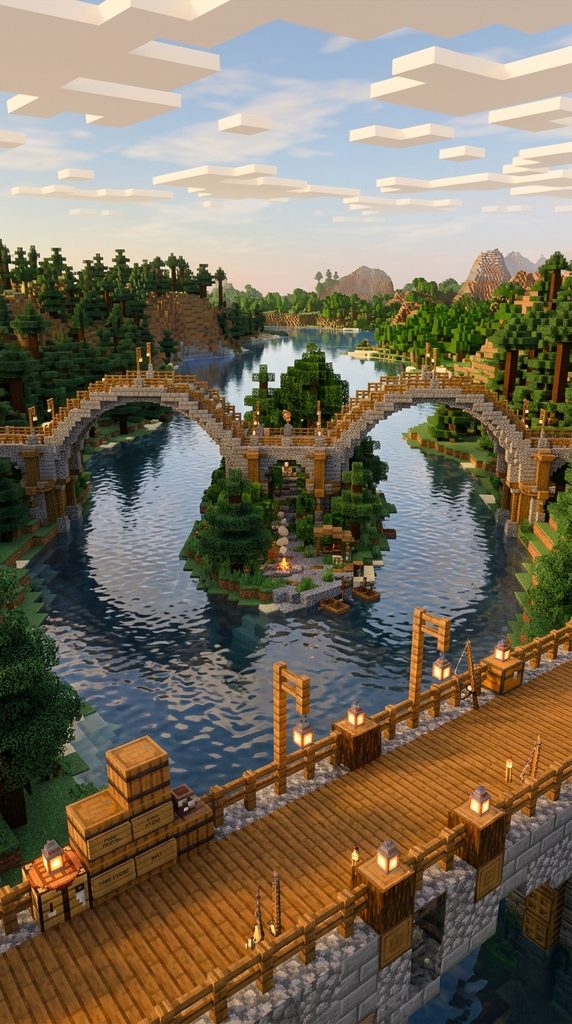
Multi-Channel River Crossing
Tackle wide rivers interrupted by a natural central sandbar using dual sweeping arches. Instead of clearing islands flat, this blueprint embraces river topography by stepping down centrally. Two symmetrical cobblestone arches rise gracefully, meeting atop an island resting platform.
The central island pier provides space for storage barrels, fishing benches, and road signs. Players can pause halfway across long river journeys to fish for salmon safely. It creates an expansive, picturesque river scene that feels completely integrated into nature.
Materials You Will Need
- 60 Cobblestone Blocks and 36 Cobblestone Stairs
- 40 Spruce Planks and 24 Spruce Slabs
- 28 Spruce Fences and 4 Spruce Fence Gates
- 16 Cobblestone Walls for pier collars
- 6 Lanterns and 2 Barrels for decoration
How to Style It
Construct two outer shoreline abutments and one large central island pier using cobblestone. Span each water channel with an independent curved arch using inverted cobblestone stairs. Infill both curved spans with spruce planks, crowning each apex with smooth slabs.
Join the two spans at the central island, creating a paved cobblestone resting deck. Border all walkway edges with spruce fences, leaving gates open at island access steps. Place decorative fish barrels and brass lanterns on the central pier to welcome fishermen.
8. The Overgrown Mossy Aqueduct
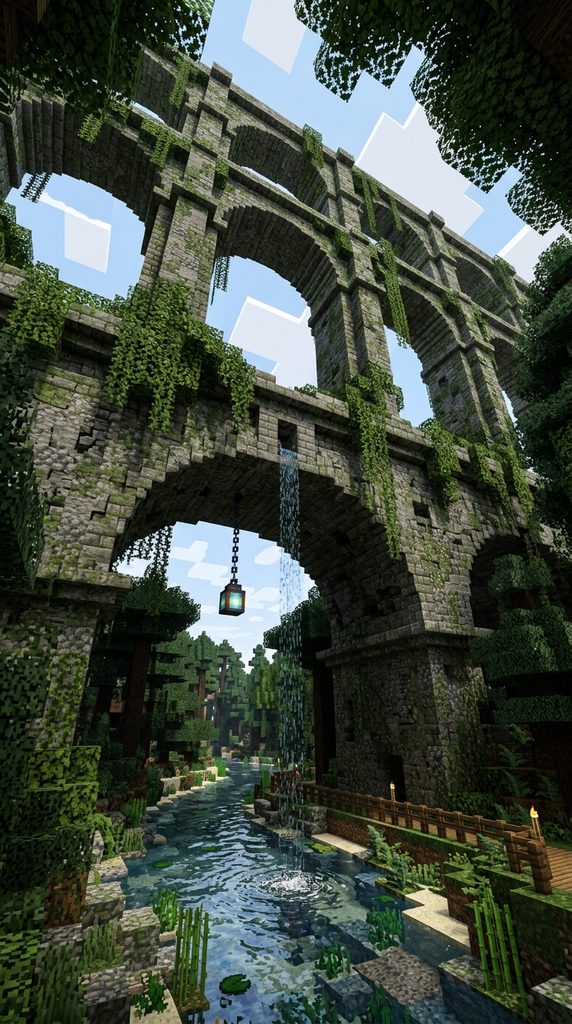
Forgotten Ancient Roman Viaduct
Transform an ordinary river crossing into an evocative, decaying ruin from an ancient civilization. This design channels classic Roman aqueduct architecture with tall, semicircular stone arches. Thick blankets of green moss, trailing vines, and cracked masonry suggest centuries of abandonment.
A narrow wooden boardwalk runs along the top channel where fresh water once flowed. Water leaks through cracked stones, trickling gently down into the rushing river beneath. It adds deep historical mystery and organic beauty to overgrown forest biomes.
Materials You Will Need
- 48 Mossy Cobblestone Blocks and 32 Regular Cobblestone
- 16 Cracked Stone Bricks for structural decay
- 24 Oak Slabs and 16 Oak Trapdoors
- 12 Weeping Vines or Weeping Ivy leaves
- 4 Lanterns and 1 Water Bucket for trickling leaks
How to Style It
Erect two tall, slender stone piers using an alternating mix of mossy and cracked cobblestone. Arch the space between piers using inverted mossy stairs meeting at a central block. Build a recessed wooden path along the top using oak slabs and trapdoors.
Hang trailing vines and weeping leaves down the outer stone faces from upper ledges. Place a water source block inside a cracked masonry gap to create trickling waterfalls. Fasten lanterns to iron chains suspended beneath the main arch to illuminate passing boats.
9. The Fortified Drawbridge Gateway
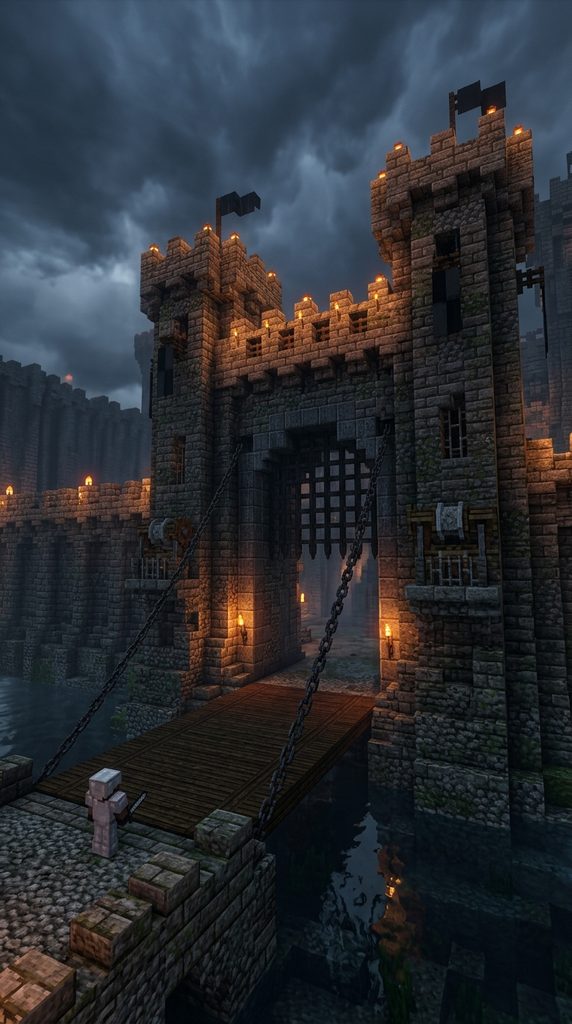
Tactical Castle Moat Sentry
Protect your main survival castle entrance with a heavily fortified stone and timber drawbridge. An imposing cobblestone gatehouse arch commands the shore, complete with arrow slits. The wooden bridge deck extends outward over the moat, appearing raised by chains.
The combination of defensive stone battlements and rich dark oak timber looks impenetrable. Heavy iron chains stretch diagonally from the stone arch down to wooden deck edges. It establishes an authentic medieval military atmosphere before visitors even enter your fortress courtyards.
Materials You Will Need
- 64 Cobblestone Blocks and 24 Cobblestone Stairs
- 16 Cobblestone Walls for arrow slits and battlements
- 36 Dark Oak Planks and 20 Dark Oak Slabs
- 8 Iron Chains and 2 Grindstones for mechanical winches
- 4 Lanterns and 1 Iron Portcullis (Iron Bars)
How to Style It
Build a six-block-tall defensive cobblestone archway on the inner bank of the castle moat. Mount sideways grindstones above the gate opening to simulate heavy mechanical chain winches. Lay a dark oak plank bridge deck arching gently across the moat waters.
Thread iron chains diagonally from upper stone anchor blocks down toward the bridge tip. Inset vertical iron bars beneath the gatehouse arch to represent an open iron portcullis. Top the outer gatehouse towers with cobblestone battlements, mounting bright lanterns for nighttime sentry duty.
10. The Asymmetrical Hillside Stair-Bridge
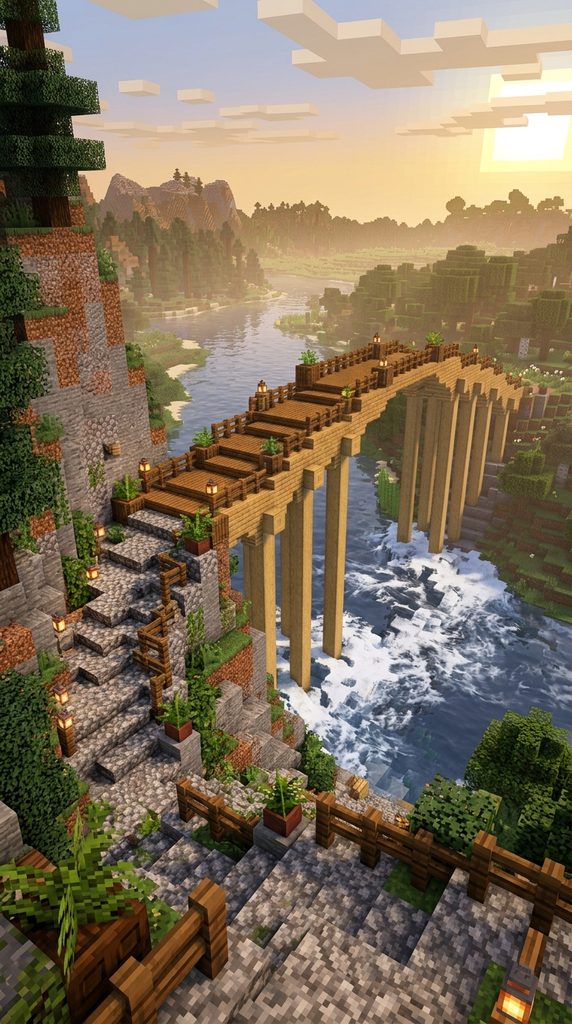
Uneven Cliffside Mountain Connector
Overcome uneven terrain challenges with a creative, asymmetrical bridge that spans differing shoreline heights. Often in survival worlds, one riverbank sits several blocks higher than opposing grassy shores. This design embraces height differences, transitioning smoothly from steep stairs into gentle arches.
Cobblestone steps climb the steep bank before leveling out across a central wooden platform. The asymmetrical silhouette looks delightfully organic, custom-tailored to the natural landscape contours. It eliminates tedious dirt terraforming, preserving the authentic wild character of your survival world.
Materials You Will Need
- 40 Cobblestone Blocks and 28 Cobblestone Stairs
- 32 Spruce Planks and 16 Spruce Slabs
- 20 Spruce Fences and 8 Cobblestone Walls
- 4 Stripped Spruce Logs for hillside foundation stilts
- 4 Lanterns and 2 Potted Ferns for decor
How to Style It
Build a tall cobblestone landing platform anchored directly into the elevated hillside bank. Construct a lower stone footing on the opposite shore, five blocks away horizontally. Step upward from the low shore using spruce slabs, transitioning into steep cobblestone stairs.
Support the high section using vertical stripped spruce log stilts anchored in the riverbed. Edge the climbing pathway with spruce fences, following the stepped diagonal gradient closely. Place potted ferns on stone landing piers and hang lanterns to illuminate stepped elevation changes.
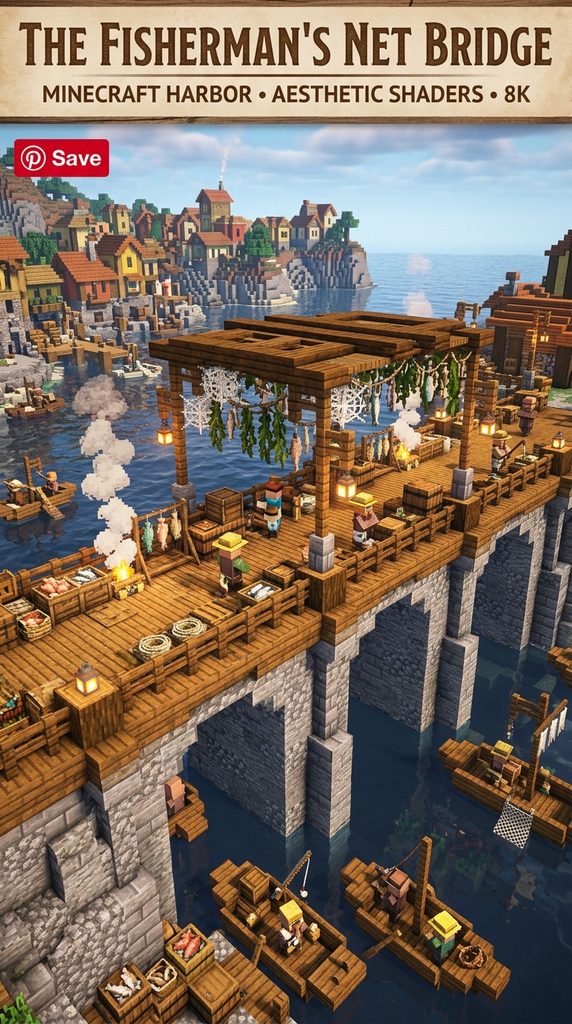
11. The Fisherman’s Shaded Net Bridge
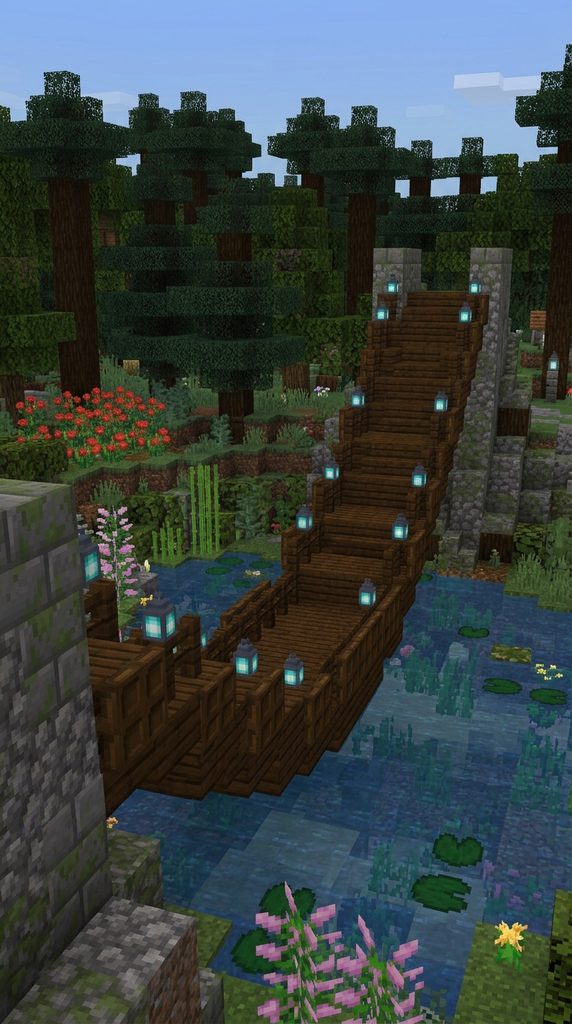
Coastal Village Harborside Pier
Incorporate functional fishing amenities directly into your coastal village wooden river crossing. This wide, welcoming bridge features an integrated wooden pergola roof covering the central deck. Hanging fishing nets, drying kelp, and tackle barrels line the sheltered timber walkway.
The sturdy cobblestone foundation withstands ocean tides while providing anchor points for boats. Players can stand comfortably beneath the wooden sun canopy, casting fishing lines into deep waters. It functions as both a vital pedestrian bridge and a productive survival food-gathering hub.
Materials You Will Need
- 48 Oak Planks and 32 Oak Slabs
- 36 Cobblestone Blocks and 16 Cobblestone Stairs
- 24 Oak Fences for the overhead shade pergola
- 6 Barrels and 4 Dried Kelp Blocks for clutter
- 6 Lanterns and 2 Campfires for fish smoking
How to Style It
Erect two wide cobblestone foundation walls extending outward from opposing riverbank edges. Span the gap with a broad, five-block-wide curved deck of oak planks and slabs. Erect vertical oak fence posts at the bridge center, spanning overhead with open fence pergolas.
Drape white banners or string across the pergola to simulate hanging fish nets. Stack wooden storage barrels and dried kelp blocks against fence posts along the deck. Place smoking campfires beneath floor trapdoors to mimic fresh dockside salmon smoking operations.
12. The Sunken Keel Inverted Arch
Low-Profile Water-Skimming Span
Reverse traditional bridge geometry by building a subtle, inverted arch that hugs water surfaces. Instead of rising high into the sky, this low-profile bridge dips gracefully downward. The center rests barely a half-block above ripples, providing intimate water views.
Massive cobblestone buttresses on either bank anchor the downward tension of the wooden deck. Walking across feels thrilling, as gentle river ripples lap against the bottom wooden slabs. It is an exquisite, peaceful addition for tranquil Japanese zen gardens and decorative palace ponds.
Materials You Will Need
- 32 Dark Oak Slabs and 16 Dark Oak Planks
- 24 Cobblestone Blocks and 16 Cobblestone Stairs
- 12 Cobblestone Walls for shoreline anchor blocks
- 8 Dark Oak Trapdoors for perimeter edge trims
- 4 Soul Lanterns or Standard Lanterns for ambient glow
How to Style It
Build heavy, elevated cobblestone anchor platforms on both opposing pond banks. Step downward toward the water surface using dark oak slabs, bottoming out at the center. Keep the central three-block deck section hovering exactly one half-block above the water.
Fasten dark oak trapdoors along exposed slab edges to create sleek, thin structural profiles. Top the shoreward cobblestone anchor walls with glowing soul lanterns for cool blue lighting. Scatter lily pads and pink blooming azalea bushes around the low-skimming wooden walkway.
13. The Twin-Lantern Merchant Viaduct
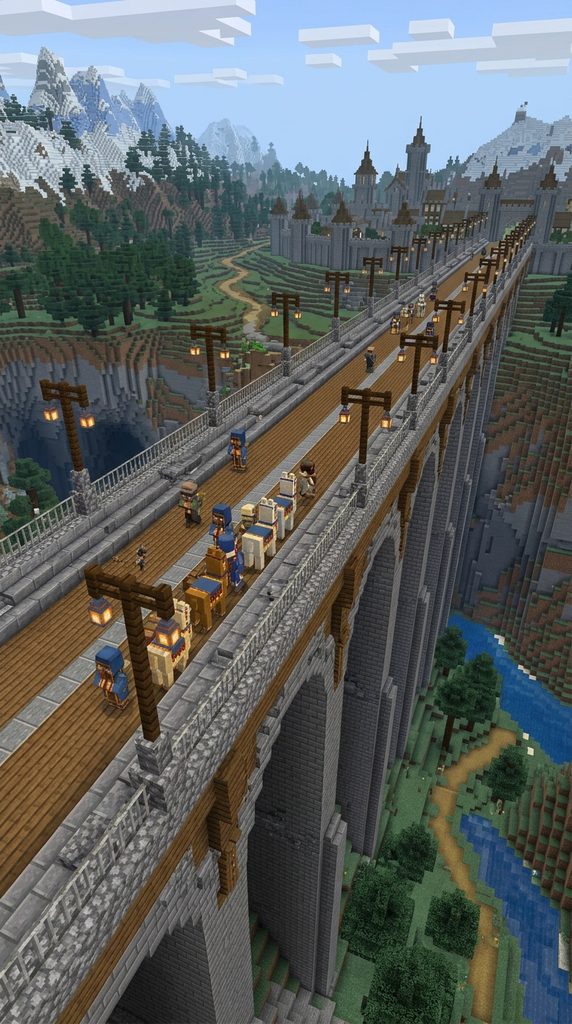
High-Traffic Trading Route Highway
Accommodate busy multi-player servers and wandering villager herds with an expansive merchant highway. This wide, seven-block viaduct features dedicated pedestrian lanes and wide central cart avenues. Majestic cobblestone archways support the heavy roadway, glowing with paired golden lantern posts.
The grand scale conveys imperial wealth, connectivity, and engineering triumph across wide rivers. Integrated stone benches provide resting spaces for players navigating long journeys across maps. It stands as an impressive architectural achievement that anchors your survival world’s central highway system.
Materials You Will Need
- 80 Cobblestone Blocks and 48 Cobblestone Stairs
- 64 Spruce Planks and 32 Spruce Slabs
- 32 Cobblestone Walls and 16 Spruce Fences
- 12 Smooth Stone Slabs for road lane dividers
- 8 Lanterns and 4 Stone Brick Stairs for benches
How to Style It
Construct two massive, multi-tiered cobblestone piers with inverted stair arches beneath. Lay a wide seven-block roadway deck using spruce planks, bordered by smooth stone slabs. Divide the road into walking lanes using embedded cobblestone and smooth stone slab patterns.
Build twin-column lampposts every six blocks along edges using cobblestone walls and fences. Mount pairs of brass lanterns on extended fence arms to illuminate the wide roadway. Place small resting benches made of stone brick stairs against outer railings for weary travelers.
14. The Nether-Warped Fungal Span
Exotic Bioluminescent Woodland Crossing
Incorporate exotic Nether biome timber into the overworld using vibrant turquoise warped wood. This striking design pairs cold, weathered cobblestone masonry with otherworldly cyan-colored planks. The electric turquoise wood glows vibrantly against dark night skies, guiding players home safely.
Twisting warped roots and shroomlights embedded beneath open trapdoors provide natural bioluminescence. The bizarre fungal materials create an enchanting, magical fantasy atmosphere across forest river gorges. It provides a perfect visual bridge between mundane overworld farming and high-tier Nether dimensions.
Materials You Will Need
- 40 Warped Planks and 24 Warped Slabs
- 16 Warped Stairs and 20 Warped Fences
- 36 Cobblestone Blocks and 16 Mossy Cobblestone Walls
- 4 Shroomlights concealed beneath warped trapdoors
- 4 Soul Lanterns for ethereal turquoise lighting
How to Style It
Erect two sturdy cobblestone shore piers, detailing masonry with mossy stone blocks. Bridge the river channel using warped planks and slabs to create a gentle arch. Invert warped stairs underneath the bridge deck edges to smooth out bottom structural curves.
Embed shroomlights directly into the center walking path, covering them with warped trapdoors. Line outer edges with bright cyan warped fences, mounting soul lanterns on corner posts. Plant twisting warped roots and glowing fungi along the rocky riverbank approaches for fantasy charm.
15. The Grand Keystoned Citadel Viaduct

Monumental Fortress Causeway
Crown your survival empire’s capital city with a monumental, multi-tiered fortress viaduct. This imposing structure features a towering central semicircular arch flanked by heavy defensive piers. Thick cobblestone walls and rich dark oak beams give it an indestructible, historic appearance.
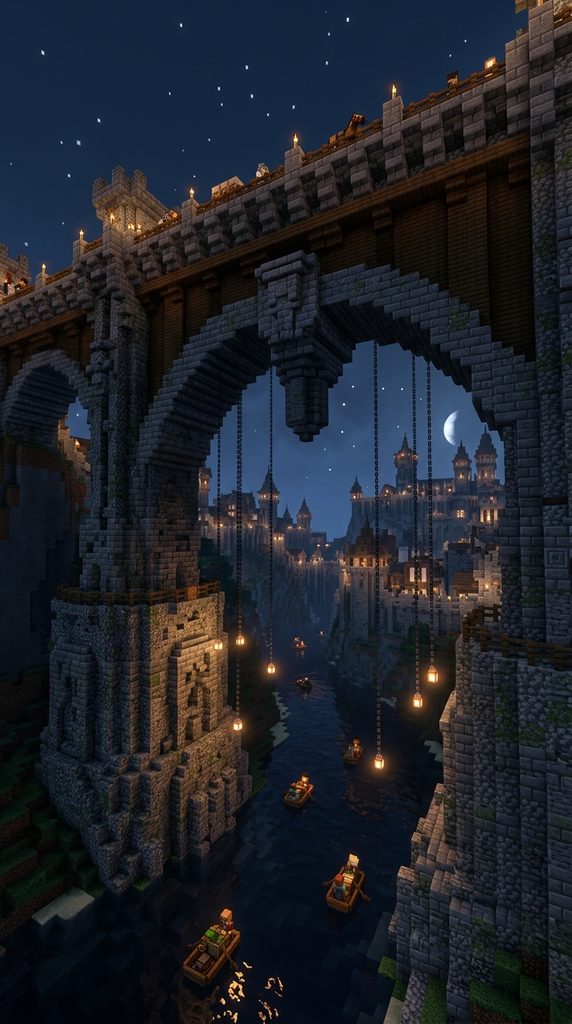
A grand keystone block drops down from the center of the arch to symbolize engineering strength. The high vantage point offers panoramic views across surrounding ocean harbors and agricultural valleys. It stands as the definitive masterpiece of beginner bridge building, blending supreme functionality with majesty.
Materials You Will Need
- 96 Cobblestone Blocks and 48 Cobblestone Stairs
- 32 Cobblestone Slabs and 24 Cobblestone Walls
- 48 Dark Oak Planks and 32 Dark Oak Slabs
- 16 Stripped Dark Oak Logs for structural piers
- 8 Lanterns, 4 Iron Chains, and 1 Chiseled Stone Brick
How to Style It
Construct two colossal, five-block-thick cobblestone piers anchored deep into the riverbed. Span the high chasm with a soaring semicircular arch using inverted cobblestone stairs. Drop an ornate chiseled stone brick down from the arch apex as a prominent keystone.
Lay a broad dark oak plank roadway across the top, framed by thick cobblestone battlements. Run vertical stripped dark oak logs up the pier faces to provide contrasting timber framing. Suspend glowing lanterns from heavy iron chains beneath the central stone keystone for night illumination.