
Mornings can often feel like a whirlwind for families. Between the scramble to get kids out of bed, the rush to prepare breakfast, and the endless hunt for misplaced school supplies, starting the day on the right foot can feel almost impossible. Many parents experience the same recurring issues: kids dawdle over simple tasks, arguments erupt over outfits or shoes, and stress levels rise as the clock ticks closer to school or work deadlines. But it doesn’t have to be this way. One of the most effective and creative ways to take control of chaotic mornings is by using a morning routine chart for kids. These charts are more than simple reminders—they are powerful tools that teach organization, responsibility, and independence, all while making the process fun and visually engaging for children of all ages.
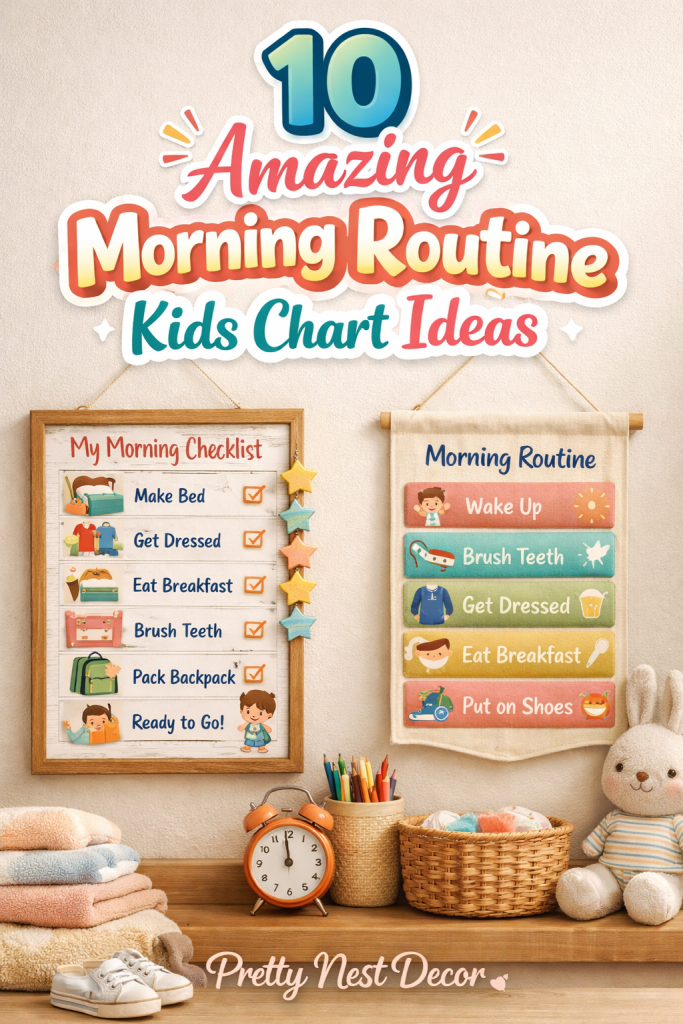
A morning routine chart is essentially a visual guide that clearly lays out the steps your child needs to complete each morning. From brushing teeth and washing the face to getting dressed, making the bed, and packing school bags, each task is presented in a structured, easy-to-follow format. This clarity helps children understand expectations, reduces confusion, and encourages them to take ownership of their own routines. For younger children, charts with colorful pictures, stickers, or magnets work best because they can visually recognize what needs to be done without relying solely on reading skills. Older children may prefer checklists, interactive charts, or even digital charts that allow them to mark completed tasks, track progress, or earn rewards for consistency. By providing a visual roadmap, these charts make mornings predictable, manageable, and stress-free for both parents and kids.
Beyond organization, morning routine charts also play a vital role in fostering independence. Children naturally want to feel capable and in control, and a well-designed chart allows them to complete tasks on their own with minimal supervision. This not only builds confidence but also teaches essential life skills like time management, prioritization, and self-discipline. When children can see the tasks they’ve completed, it instills a sense of accomplishment and pride, motivating them to keep up their routines. Parents, in turn, experience a calmer, more harmonious morning as power struggles over basic chores and instructions diminish. Over time, these structured routines become ingrained habits, creating a smoother transition into school or daily activities while also instilling lifelong organizational skills.
Creativity and personalization are key to making morning routine charts effective and engaging. Parents can tailor charts to suit their child’s age, personality, and learning style. Visual learners benefit from bold, colorful graphics, playful illustrations, and photo-based task representations. Auditory learners may enjoy incorporating songs, rhymes, or verbal cues for each step. Kinesthetic learners thrive when charts include interactive elements, such as movable magnets, stickers, or tokens that can be added as tasks are completed. Charts can also be designed to include rewards or incentives, motivating children to complete their routines consistently. For example, earning points toward a favorite activity, special treat, or weekend outing encourages children to stay engaged and look forward to their morning responsibilities.
Morning routine charts also help parents save time and energy. Rather than repeating the same instructions multiple times each morning, parents can rely on the chart to guide their children independently. This allows parents to focus on their own morning tasks or even enjoy a few moments of peace before the day begins. By reducing repeated reminders, nagging, and arguments, charts improve overall family dynamics and foster a positive, structured start to the day. Some charts are laminated for durability, placed on bedroom doors, hung on the fridge, or used digitally on tablets or smartboards, making them versatile for any household setup. Parents can even create weekly or monthly charts to rotate tasks, add seasonal activities, or keep routines fresh and engaging, ensuring children remain motivated over time.
The benefits of morning routine charts extend beyond just the mornings themselves. By promoting responsibility, time management, and independence, children are better equipped to handle school assignments, homework, and other personal responsibilities. They also develop habits that foster self-sufficiency and confidence, reducing reliance on parents as they grow. Consistency in routines provides children with a sense of stability and security, which is particularly important for young children navigating new experiences or transitions. A well-structured chart creates an environment where children know what to expect, can manage their time effectively, and feel proud of their accomplishments each day.
In this article, we will explore 10 amazing morning routine kids chart ideas that are both creative and practical. Each idea includes a clear definition, step-by-step instructions, a list of materials needed, and tips for customizing the chart to your child’s preferences and developmental stage. These charts are designed to be Pinterest-worthy, visually appealing, and easy to implement in any home. Whether your goal is to encourage independence, create structure, or simply make mornings less stressful, these ideas will provide inspiration and practical guidance. With these charts, you can transform your chaotic mornings into smooth, organized, and enjoyable routines that your children will love and look forward to every day.
Mornings don’t have to be stressful. By introducing these thoughtfully designed charts, you can empower your children, save time, and create a positive, structured start to each day. Let’s dive into these 10 amazing morning routine kids chart ideas, each crafted to bring clarity, fun, and motivation to the most important part of your family’s day.
Idea 1: Colorful Picture-Based Routine Chart
Introduction:
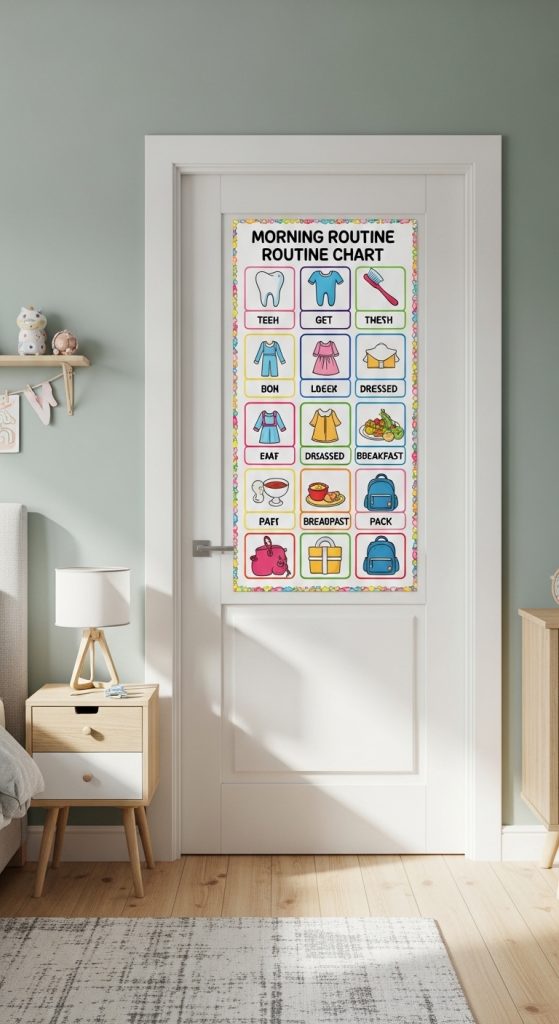
For younger children, visual cues are far more effective than words alone. A colorful picture-based routine chart uses images to represent each morning task, making it easier for kids who are just learning to read or follow instructions independently. These charts transform the mundane morning routine into an interactive experience where children can understand what needs to be done at a glance. Bright colors, fun illustrations, and recognizable icons make the chart engaging and encourage children to participate actively. This type of chart is especially effective for toddlers and preschoolers, as it allows them to follow a structured sequence without feeling overwhelmed by lengthy instructions or complex lists. Picture-based charts also help children build memory and sequencing skills, which are essential for cognitive development. Over time, kids start recognizing the tasks visually and may even anticipate the next step in their routine, fostering independence and confidence.
Step-by-Step How-to:
- Identify all essential morning tasks (e.g., brush teeth, wash face, get dressed, eat breakfast, pack backpack).
- Find or create clear, colorful images representing each task. Clipart, printables, or photos of your child doing the tasks work well.
- Arrange the images in the order they should be completed, either vertically or horizontally.
- Laminate the chart for durability, especially if magnets or stickers will be used.
- Provide a way for children to mark off completed tasks, such as movable magnets, Velcro pieces, or stickers.
- Place the chart at the child’s eye level, in a visible area like their bedroom door or next to the bathroom.
- Review the chart with your child daily until they can follow it independently.
Materials Needed:
- Printouts or laminated images for each task
- Cardstock or poster board
- Laminator (optional)
- Magnets, Velcro, or stickers for interactive elements
- Marker or pen for labeling tasks (if desired)
Idea 2: Magnetic Task Board
Introduction:
A magnetic task board adds an interactive, hands-on dimension to a morning routine chart. Children can physically move magnets from a “to-do” column to a “done” column, making the process tactile and rewarding. This approach works well for kids who enjoy hands-on learning and like to see visible proof of progress. Magnetic boards also allow for flexibility: tasks can be rearranged as needed, and new tasks can be added easily. By providing a structured yet dynamic system, a magnetic board keeps mornings exciting while reinforcing responsibility, memory, and sequencing skills. This format is particularly helpful for children who struggle with attention or motivation, as the act of moving magnets or icons creates a sense of accomplishment and achievement.

Step-by-Step How-to:
- Choose a magnetic board of appropriate size for your space.
- Write down or print task labels (e.g., “Brush Teeth,” “Get Dressed,” “Eat Breakfast”) and attach magnets to each label.
- Divide the board into two sections: “To Do” and “Done.”
- Place all task magnets in the “To Do” section at the start of the morning.
- Teach your child to move each magnet to the “Done” section once completed.
- Review the chart together and praise completion to encourage consistency.
- Update or rotate tasks as needed to match your child’s changing morning responsibilities.
Materials Needed:
- Magnetic board
- Magnetic labels or magnets with task stickers
- Marker or pen
- Optional: Laminator or clear adhesive for durability
Idea 3: Sticker Reward Chart
Introduction:
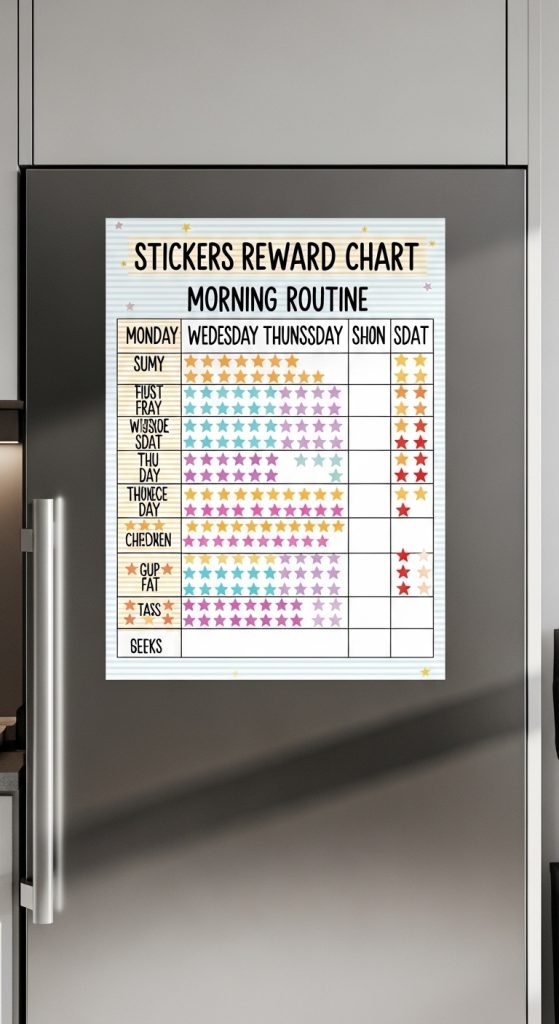
A sticker reward chart combines a morning routine with a motivational system that encourages children to complete their tasks consistently. Each time a child finishes a morning task, they place a sticker in the corresponding spot on the chart. This visual reinforcement helps children associate completing their routine with positive feedback and reward, fostering motivation, discipline, and excitement for following the chart independently. Sticker charts are versatile and can be adapted for various ages and learning styles, with themes such as animals, superheroes, or favorite characters to make it more engaging. For younger children, the act of placing the sticker adds a hands-on component that helps them recognize the sequence of tasks. For older children, stickers can be replaced with points, stamps, or stars that accumulate toward a larger weekly reward.
Step-by-Step How-to:
- Create a chart with columns for each day of the week and rows for each morning task.
- Decorate the chart with colorful borders, fun graphics, or favorite characters to attract attention.
- Provide a selection of stickers and explain that a sticker is earned for every completed task.
- Place the chart in a prominent location where your child can access it easily.
- Encourage children to place stickers themselves after completing each task.
- Offer a small reward for completing the chart for the week, like extra playtime or a fun outing.
- Celebrate achievements and review the chart daily to reinforce positive behavior.
Materials Needed:
- Poster board or cardstock
- Stickers (variety of shapes/colors)
- Marker or pen for task labels
- Optional: Laminator for durability
- Reward system (small toys, extra playtime, or treat)
Idea 4: Dry-Erase Daily Routine Chart
Introduction:
A dry-erase morning routine chart is reusable, flexible, and ideal for families who want to rotate tasks or adjust routines frequently. These charts allow children to check off tasks using a marker and then erase them for the next day, reinforcing accountability and repetition. This format works well for older preschoolers and school-aged children who can write or draw symbols themselves, giving them more ownership of their routine. The interactive nature of a dry-erase board also makes it visually appealing and encourages children to actively participate in completing their morning tasks. Dry-erase charts are also convenient for families with multiple children, as each child can have a personalized section or board.

Step-by-Step How-to:
- Obtain a dry-erase board of appropriate size for the space.
- Write the list of morning tasks on the board, either with text or symbols.
- Draw checkboxes or lines next to each task for children to mark completion.
- Teach your child to check off tasks as they complete them each morning.
- Erase the board at the end of the day and prepare it for the next morning.
- Encourage children to participate in creating or decorating the board to increase engagement.
- Review the board together daily and praise completion.
Materials Needed:
- Dry-erase board
- Dry-erase markers
- Optional: Magnets or sticky notes for interactive elements
- Eraser for daily reuse
Idea 5: Printable Routine Cards
Introduction:
Printable routine cards are a simple and portable way to help children follow their morning tasks. Each card represents a single task and can be laid out in sequence, shuffled, or attached to a ring for easy handling. These cards are especially useful for travel, morning flexibility, or for children who respond well to tactile, hands-on learning. The physical act of moving from one card to the next helps children understand sequence and progress, while the portability ensures the routine can be consistent even outside the home. Cards can be color-coded, numbered, or decorated to make them visually appealing and engaging, and they can be laminated for durability and repeated use.

Step-by-Step How-to:
- Create or download printable cards, each representing a single morning task.
- Laminate the cards to make them durable and reusable.
- Arrange the cards in the order tasks should be completed.
- Teach your child to move through the cards, completing each task before moving to the next.
- Optionally, attach the cards to a keyring or ribbon for portability.
- Praise and encourage your child as they complete each card.
- Refresh or update the cards periodically to maintain interest.
Materials Needed:
- Printable cards (DIY or downloaded)
- Laminator for durability
- Keyring, ribbon, or magnetic backing (optional)
- Marker or pen for labeling tasks
- Decorative stickers or icons (optional)
Idea 6: Magnetic Reward Strip Chart
Introduction:
A magnetic reward strip chart combines task tracking with an interactive reward system, making mornings both structured and motivating. This type of chart features magnetic strips for each task, allowing children to move their magnet along the strip as they complete tasks. The visual and hands-on nature of this chart helps children clearly see their progress and understand the sequence of tasks. It’s ideal for children who respond well to visual progress indicators or who need a little extra motivation to complete their morning routine consistently. By providing a tangible representation of accomplishment, the magnetic reward strip chart encourages self-discipline, independence, and responsibility. This chart can also incorporate small rewards at the end of the strip, giving children something to look forward to once all tasks are completed. Over time, children develop habits that allow them to follow routines independently while enjoying the satisfaction of visible progress.

Step-by-Step How-to:
- Select a magnetic board or a flat surface suitable for magnets.
- Create magnetic strips for each task using printed labels or colored strips of paper laminated with magnetic backing.
- Attach each task strip horizontally or vertically on the board.
- Provide a magnetic piece for your child to move along the strip as tasks are completed.
- Optionally, add a reward section at the end of each strip (e.g., star, sticker, or small treat).
- Demonstrate the process to your child and practice together until they understand.
- Encourage your child to move their magnet along each strip daily and praise completion.
Materials Needed:
- Magnetic board
- Magnetic strips or printed magnetic labels
- Movable magnets
- Laminator or clear adhesive (optional)
- Reward system (stickers, stars, or small treats)
Idea 7: Personalized Character Chart
Introduction:
Personalized character charts make morning routines fun and relatable by incorporating a child’s favorite cartoon, superhero, or animal character into the chart. Children are naturally drawn to characters they love, which increases engagement and motivation to follow the routine. By customizing the chart with familiar characters, parents can make the experience enjoyable, encouraging children to complete tasks without nagging. Each character can represent a specific task, and children can “help” their character complete the routine. This approach works well for children who need additional visual and emotional cues to stay on track. Additionally, a character chart adds a creative and playful element to mornings, making daily routines more entertaining while teaching responsibility, time management, and independence.

Step-by-Step How-to:
- Choose your child’s favorite character or theme.
- Create or download a chart featuring the chosen character. Each task should be associated with an image or action of the character completing the task.
- Arrange the tasks in sequential order for the morning routine.
- Laminate the chart for durability, if desired.
- Provide a way for children to mark tasks as complete, such as stickers, magnets, or checkboxes.
- Introduce the chart to your child, explaining how their favorite character “guides” them through the morning.
- Praise and reward consistency to maintain motivation and excitement.
Materials Needed:
- Poster board or cardstock
- Printed images of favorite characters
- Laminator (optional)
- Stickers, magnets, or markers for task completion
- Marker or pen for labeling tasks
Idea 8: Routine Wheel Chart
Introduction:
A routine wheel chart is a circular chart that allows children to spin or move an arrow to indicate the current task. This visual and interactive format makes routines exciting and engaging while providing a clear sense of direction and sequence. The circular design helps children understand the concept of time and the order of tasks in a fun, playful way. Routine wheel charts are particularly effective for children who enjoy movement-based learning or need a visual representation of progress. The act of spinning the wheel or moving the arrow gives them a hands-on way to navigate their routine while reinforcing task completion and accountability. This chart encourages independence, reduces parental reminders, and turns mundane tasks into a game-like experience.

Step-by-Step How-to:
- Create a circular chart divided into segments, each representing a morning task.
- Label or illustrate each segment with the task and, if desired, use colors or pictures to enhance visual appeal.
- Attach a movable arrow at the center of the wheel using a brad or spinner mechanism.
- Teach your child to move the arrow to the next task as they complete each step.
- Optionally, incorporate a reward segment at the end to provide motivation.
- Place the chart where it is easily visible and accessible to your child.
- Encourage consistent use and celebrate completion daily.
Materials Needed:
- Cardstock or poster board
- Marker or pen
- Laminator (optional)
- Brad or spinner mechanism for movable arrow
- Stickers or reward symbols (optional)
Idea 9: Dry-Erase Checklist with Time Slots
Introduction:
For older children, a dry-erase checklist with time slots is an excellent way to combine task completion with time management. This type of chart breaks down the morning into specific time intervals, helping children understand how long each task should take and encouraging punctuality. By visually connecting tasks with time, children learn to prioritize and manage their morning efficiently. This method is particularly useful for school-aged children who have multiple responsibilities, such as breakfast, dressing, hygiene, and packing school supplies. Dry-erase charts with time slots are reusable, flexible, and allow for adjustments as schedules change. They also promote independence, accountability, and the development of practical life skills, making mornings less stressful and more productive for both children and parents.
Step-by-Step How-to:

- Choose a dry-erase board and divide it into columns for time slots and tasks.
- List all morning tasks and assign estimated time frames for each.
- Draw checkboxes or lines next to each task for marking completion.
- Teach your child to follow the chart, checking off tasks and noting the time spent.
- Erase and update the chart daily as needed.
- Optionally, include motivational messages or stickers for tasks completed on time.
- Review the chart together weekly to assess routine effectiveness and make adjustments.
Materials Needed:
- Dry-erase board
- Dry-erase markers
- Ruler for creating time slot columns
- Eraser for daily reuse
- Optional: Stickers or motivational graphics
Idea 10: Portable Routine Flip Cards
Introduction:
Portable routine flip cards are a compact and interactive solution for children who need a hands-on, tactile way to navigate their morning routine. Each card represents a single task and can be flipped over or moved to indicate completion. This format is excellent for children who like to physically manipulate objects and provides a sense of accomplishment with each task completed. Flip cards are versatile, allowing parents to rearrange tasks, rotate activities, or customize the sequence for individual needs. They are also convenient for travel or homes with limited wall space, ensuring consistency even outside the typical environment. By giving children control over their routine in a fun, manageable way, flip cards encourage independence, motivation, and accountability.

Step-by-Step How-to:
- Create or print cards, each representing a morning task.
- Laminate cards for durability and punch a hole at the corner for a ring or binding.
- Teach your child to flip each card over or move it along a ring after completing the task.
- Optionally, use color-coding or illustrations to make cards visually engaging.
- Encourage children to follow the sequence daily, offering praise or rewards for consistent completion.
- Rotate or update cards periodically to maintain interest and relevance.
- Store the flip cards in a portable pouch or hang them in a visible area for easy access.
Materials Needed:
- Printable cards or cardstock
- Laminator for durability
- Hole punch and keyring or binding
- Marker or pen for labeling tasks
- Optional: Stickers, icons, or color coding